
Pakistan: Lower duties on completely built-up vehicles risk local vendors, auto experts say
Source Xinhua, Dawn, Arab News, Anadolu and Minute Mirror

- Unlike industries like tiles, ceramic, and cement, Pakistan’s auto sector is complex, one expert says
Reducing duties on completely built-up (CBU) vehicles could divert market demand away from locally assembled vehicles and hurt business volumes for domestic auto-parts vendors, auto experts told Business Recorder, urging the government to safeguard the local vendor industry.
Auto expert Aamir Allawala said unlike simpler industries like tiles, ceramic, and cement, Pakistan’s auto sector is a complex, interdependent ecosystem comprising three distinct industries: raw materials, over 1,200 parts manufacturing vendors, and more than 100 vehicle assemblers (cars, motorcycles, eBikes, trucks, buses & tractors).
He said domestic automotive production faces high utility, interest, and taxation costs, alongside low production scales. “To offset these financial burdens, each sector segment requires a protective tariff differential”.
The Pakistan Association of Automotive Parts & Accessories Manufacturers (PAAPAM) has proposed that the government maintain a minimum 50% tariff protection on completely CBU vehicle imports and a 40% tariff on locally manufactured parts.
Allawala said Pakistan’s auto policies from 2016 to 2026 were heavily assembly-centric, offering low tariffs on completely knocked-down (CKD) parts. “While this successfully expanded assembly plants from 3 to 14 global brands, localisation remained weak. Traditional Japanese assemblers achieved 65% local content (by value), whereas Korean brands hit 25%, and Chinese brands managed less than 10%.”
“The vendor industry now fears that the National Tariff Policy (NTP)’s proposed 15% peak tariff reduction will destroy local parts manufacturing. Furthermore, lowering duties on completely built-up (CBU) vehicles risks shifting market demand away from domestic assembly, critically damaging business volumes for local parts vendors,” he said.
The auto expert said Pakistan’s auto parts manufacturers meet global standards, exporting over $200 million annually with a 10-fold growth potential. “However, four external structural factors restrict this growth: First, when it comes to security concerns, negative travel advisories and high security costs prevent Western buyers from visiting Pakistan to audit manufacturing facilities. Secondly, as far as weak free trade agreements are concerned, a lack of intelligent trade pacts leaves Pakistani parts facing 25–30% tariffs in African markets, whereas competitors like South Africa enjoy zero duties. Thirdly, production costs keep rising as elevated utility prices, high interest rates, and heavy taxation severely dent regional competitiveness. Lastly, when it comes to lack of state incentives, unlike global rivals, local manufacturers receive zero government export support.”
Addressing these exogenous barriers that are beyond the industry’s control is vital to unlocking Pakistan’s true automotive export potential, according to Allawala.
“It is time for our government to improve its performance to remove growth barriers for the private sector.”
He said regional auto manufacturing countries heavily safeguard their strategic domestic industries.
“While India, Thailand, and Indonesia impose strict CBU tariffs of 120%, 80%, and 55% respectively – and ban used vehicle imports – Pakistan maintains a low 30%–50% tariff despite a much smaller market of 0.25 million units compared with 6 million for India, 1.5 million for Thailand and 1.2 million for Indonesia.
“Pakistan’s automotive ecosystem comprises raw material suppliers, 1,200 parts vendors, and over 100 assemblers. Implementing the proposed 15% National Tariff Policy CBU rate would devastate each of these sectors. It risks wiping out 300,000 direct jobs and permanently eliminating critical domestic skills required for manufacturing engineering and defense products.”
Allawala said Pakistani-made cars face heavy domestic taxation, with government taxes accounting for 40–45% of their retail price.
“Despite this burden making vehicles less affordable for local consumers, Pakistani cars are actually cheaper in US dollar terms (net of taxes) than comparable models in Thailand, Indonesia, and Malaysia. Furthermore, local production by 14 global brands matches international quality standards, offering over 100 variants.”
To protect consumers and pedestrians, he stressed, the government must halt the risky import of accidental and old used vehicles, which he believes frequently cause severe road accidents, especially from brake failures and structural damage, and strictly enforce minimum safety standards on all vehicles, imported and locally assembled.
Allawala further said the government must define its objective for the auto industry.
“While intense competition among 14 assemblers has resolved past issues regarding quality, choice, and delivery delays, the primary challenge now is utilising this sector to generate skilled youth employment.
“Despite Pakistan being the world’s fifth-largest population, economic mismanagement has stagnated annual vehicle demand at 250,000 units. To counter this, the state should slash heavy automotive taxes. Prioritising domestic production serves the common citizen by creating livelihoods, rather than facilitating luxury vehicle imports for the wealthy segment spending millions.”
Meanwhile, Pakistan Association of Automotive Parts & Accessories Manufacturers (PAAPAM) senior vice chairman Shehryar Qadir said, “PAAPAM has shared its proposed survival duty structure with the Ministry of Industries and Production, which we believe is essential to safeguard the domestic vendor industry, including CBU: 50%, localised parts: 40%, CKD: 30%, imported raw material: 0% and local raw material: 5%”.
Speaking about shortcomings in the five-year auto policy 2026-2030, he said that rather than addressing the long-standing structural constraints that continue to undermine the competitiveness of domestic manufacturers, the revised tariff regime has significantly exacerbated the situation.
He said that instead of mitigating the cost disadvantages faced by the local manufacturing industry through targeted policy support, the revised tariff structure has introduced drastic reductions in customs duties on CBU vehicle imports and commercially imported parts, while industrial imports of CKD kits continue to attract comparatively higher duty rates.
“This fundamentally undermines the rationale for local manufacturing and sends a deeply discouraging signal to domestic investors.”
Despite assurances from the Ministry of Industries & Production and the Ministry of Commerce to abolish Customs Duty (CD) and Additional Customs Duty (ACD) on raw materials imported under SRO 655, a 1% CD and 2% ACD remain in place, according to Qadir.
“Similarly, the government’s commitment to substantially cut or remove CD, ACD, and Regulatory Duty (RD) on raw materials used by local auto parts manufacturers – meant to boost their international competitiveness – has not been honored.”
He said the sub-850cc is a segment which dominates Pakistan’s auto market and has the highest localisation levels, and is worst affected.
“The revised tariff regime has cut CBU import duty to 30% while keeping CKD duty at the same 30%, erasing the tariff gap that once made local assembly worthwhile.”
Qadir said imported built-up vehicles now compete on equal footing with locally assembled ones, despite adding far less in domestic value, jobs, technology transfer, or industrial growth.
“This undermines the entire localisation strategy and risks unravelling years of investment and capacity-building by making local parts manufacturing commercially unviable.”
He said the impact of reducing CBU duties remains the same. “It undermines local manufacturing”.
Commenting on expansion of the country’s footprint in global supply chains, he said local auto parts manufacturers already operate at an estimated cost disadvantage of approximately 34% compared to their international competitors, primarily due to prohibitively high energy tariffs, elevated freight and logistics costs due to unavailability of raw materials, persistently high financing costs, a predatory taxation regime, and the absence of sufficient market scale, resulting in substantially higher fixed costs per unit.
Qadir said a lack of intelligently negotiated Free Trade Agreements (FTAs) means Pakistani auto and auto parts are at a significant tariff disadvantage compared to other exporting countries in the region.
“These issues, coupled with an extremely negative security perception, mean foreign investment is restricted, technology transfer becomes difficult, and exports become impossible since technical experts or buyers cannot visit the country freely compared with regional competitors.”
He said until the government addresses these issues, it will remain a challenge to expand the country’s footprint in global supply chains.
Talking about strict regulations on the prevention of the import of unsafe vehicles, he said it is not difficult to prevent the import of accidental and unsafe vehicles into Pakistan.
“There are several credible testing agencies present in the countries where these vehicles are imported from. Only vehicles with valid, original certificates that meet the required safety and environmental standards issued before shipment should be allowed entry into Pakistan.
“The retail prices of all locally manufactured vehicles include government taxes of over 40-50%. This needs to be looked into very seriously as we keep talking about affordability of vehicles while the incidence of taxation keeps increasing every year,” he said.
Reference Link:- https://www.brecorder.com/news/40438498
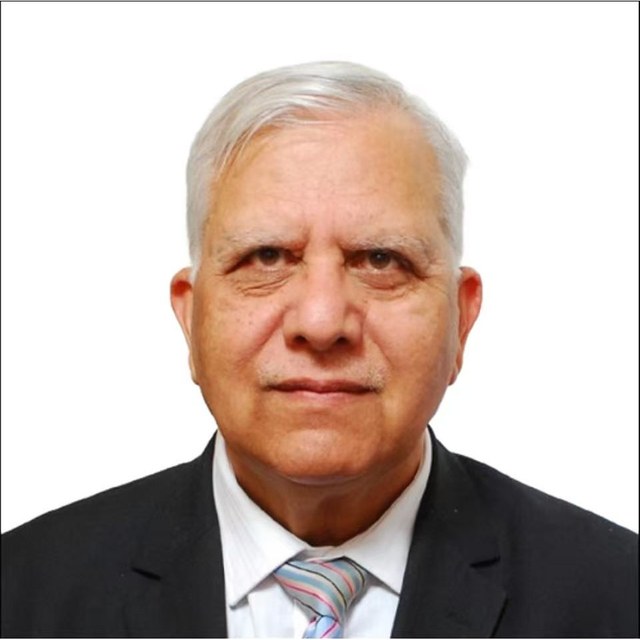
Zamir Ahmed Awan is the founder and Chair of the Global Silk Route Research Alliance, a think tank in Islamabad. He studied engineering at Shanghai University in the 1980s, and years later he went back to China as Pakistan's science counsellor in Beijing, from 2010 until 2016, working on science and higher education cooperation between the two countries.…