Jilin University lab leverages AI to study ancient Chinese scripts and relics
Source Xinhua, Dawn, Arab News, Anadolu and Minute Mirror


A member of the Key Laboratory of Ancient Chinese Script, Culture Relics and Artificial Intelligence of Jilin University observes details of pottery inscriptions of the Warring States Period (475 BC-221 BC) at Jilin University in Changchun, northeast China’s Jilin Province, Sept. 2, 2026.
Established in 2023, the Key Laboratory of Ancient Chinese Script, Culture Relics and Artificial Intelligence of Jilin University brings together researchers in the fields of paleography, archaeology, history, artificial intelligence, etc.
With oracle bone inscriptions, bronze inscriptions, Warring States scripts, and Qin and Han scripts as core subjects for research, the laboratory sorts and catalogs scripts and culture relics in a systematic manner, and facilitates its work with artificial intelligence (AI) technologies.
“We hope to bridge the past and the present via AI, and accelerate research of ancient characters with a ‘smart engine,’ and ‘wake up’ the ancient books and documents that have been dormant for ages,” said Li Chuntao, director of the laboratory. (Xinhua/Xu Chang)

Li Chuntao (5th R), director of the Key Laboratory of Ancient Chinese Script, Culture Relics and Artificial Intelligence of Jilin University, poses for a group photo with his team members in front of the laboratory at Jilin University in Changchun, northeast China’s Jilin Province, Sept. 2, 2026.(Xinhua/Xu Chang)

Li Chuntao, director of the Key Laboratory of Ancient Chinese Script, Culture Relics and Artificial Intelligence of Jilin University, studies rubbings of bronze inscriptions at his office in Jilin University in Changchun, northeast China’s Jilin Province, Sept. 2, 2026. (Xinhua/Xu Chang)

A member of the Key Laboratory of Ancient Chinese Script, Culture Relics and Artificial Intelligence of Jilin University views a 3D-printed replica of culture relics at Jilin University in Changchun, northeast China’s Jilin Province, Sept. 2, 2026.(Xinhua/Xu Chang)

A student views digital exhibits of culture relics via a VR device at a digital museum in Jilin University in Changchun, northeast China’s Jilin Province, Sept. 2, 2026.(Xinhua/Xu Chang)

A member of the Key Laboratory of Ancient Chinese Script, Culture Relics and Artificial Intelligence of Jilin University makes rubbings at Jilin University in Changchun, northeast China’s Jilin Province, Sept. 2, 2026.(Xinhua/Xu Chang)

Li Chuntao, director of the Key Laboratory of Ancient Chinese Script, Culture Relics and Artificial Intelligence of Jilin University, gives a lecture on bronze wares to his team members at Jilin University in Changchun, northeast China’s Jilin Province, Sept. 2, 2026.(Xinhua/Xu Chang)

Li Chuntao (R), director of the Key Laboratory of Ancient Chinese Script, Culture Relics and Artificial Intelligence of Jilin University, discusses pottery inscriptions with a student at Jilin University in Changchun, northeast China’s Jilin Province, Sept. 2, 2026.(Xinhua/Xu Chang)

Li Chuntao, director of the Key Laboratory of Ancient Chinese Script, Culture Relics and Artificial Intelligence of Jilin University, uses a 3D scanner to collect digital information from cultural relics at the laboratory in Jilin University in Changchun, northeast China’s Jilin Province, Sept. 2, 2026.(Xinhua/Xu Chang)

Li Chuntao (1st L), director of the Key Laboratory of Ancient Chinese Script, Culture Relics and Artificial Intelligence of Jilin University, instructs his students on rubbings making at Jilin University in Changchun, northeast China’s Jilin Province, Sept. 2, 2026.(Xinhua/Xu Chang)
Reference Link:- https://english.news.cn/20260912/a52e1066b85f452199da0bebc1614979/c.html
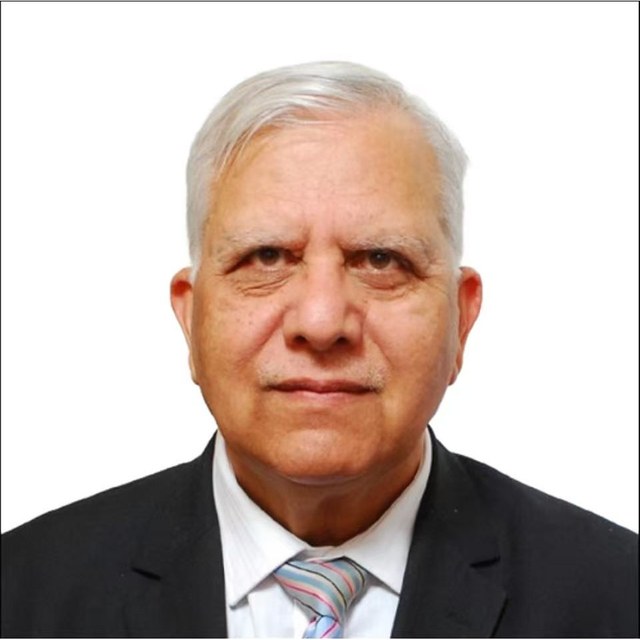
Zamir Ahmed Awan is the founder and Chair of the Global Silk Route Research Alliance, a think tank in Islamabad. He studied engineering at Shanghai University in the 1980s, and years later he went back to China as Pakistan's science counsellor in Beijing, from 2010 until 2016, working on science and higher education cooperation between the two countries.…