US-Iran talks ‘must succeed’ in the interest of global and regional peace, FM Dar tells UNSC
Wire desk byline Sourced from Xinhua, Dawn, Arab News, Anadolu and Minute Mirror. Translated and abridged by the GSRRA Desk.

‘Another prolonged conflict would serve no one,’ DPM Dar warns UNSC, urges restraint in the Middle East

Deputy Prime Minister and Foreign Minister Ishaq Dar addresses an open debate of the United Nations Security Council in New York on Tuesday. SCREENGRAB
Deputy Prime Minister and Foreign Minister Ishaq Dar on Tuesday called for restraint and de-escalation in the Middle East, warning the United Nations Security Council that another prolonged conflict would endanger regional peace and further strain the fragile international order.
He arrived in New York on Tuesday for an official visit from May 26 to 28 to participate in a high-level United Nations Security Council (UNSC) open debate convened under China’s presidency of the council. The high-level debate is titled “Maintenance of International Peace and Security: Upholding the Purposes and Principles of the UN Charter and Strengthening the UN-Centered International System”.
Addressing an open debate of the United Nations Security Council during China’s presidency, FM Dar said, while referring to the ongoing efforts to achieve a resolution to the conflict between Iran and the United States: “The entire world is watching. We must succeed in the interest of regional and global peace and security.”
He added that the principle of peaceful settlement must apply equally to all long-standing disputes on the Security Council’s agenda.
Dar said Pakistan had consistently advocated restraint, de-escalation and diplomacy.
“As a friendly neighbour of Iran and brotherly countries of the Gulf, Pakistan consistently stood for restraint, de-escalation and a return to diplomacy,” he said.
He added that during his recent visit to Beijing, Pakistan and China had announced a five-point initiative for peace and stability in the Gulf and Middle East while warning that another conflict would be a great threat not only for the region but for the entire world.
“Another prolonged conflict would serve no one,” Dar warned. “It would endanger regional peace, disrupt global energy flows, deepen humanitarian suffering and strain an already fragile international order.”
The foreign minister said Pakistan had worked to facilitate “a durable solution that results in lasting peace and stability in the region and keeps maritime routes open for all”.
FM Dar said the world was facing “deepening divisions and growing disregard for international law”, stressing the need for a stronger UN-centred international system.
“At a time of deepening divisions and growing disregard for international law, China’s call for a strong UN-centred international system is most timely and vital,” Dar said.
He described the UN Charter as “the moral foundation of the international order”, saying it affirmed the sovereignty and equality of states, prohibited the threat or use of force, and upheld the peaceful settlement of disputes and the right to self-determination.
“For Pakistan, these principles of the UN Charter are sacrosanct,” he said. “They are the foundation of our foreign policy, the basis of our international engagement and the guiding framework for our contribution to peace and security.”
Dar said Pakistan had remained committed to the United Nations through peacekeeping efforts and advocacy for decolonisation, sovereignty and conflict prevention.
“It reaffirmed a powerful truth — diplomacy is not weakness, dialogue is not concession, and peaceful settlement is not an option of last resort,” he said. “It is the first duty of states under the Charter for promoting international peace and security.”
Turning to South Asia, Dar reiterated Pakistan’s position on the Indian Illegally Occupied Jammu and Kashmir dispute, saying durable peace in the region could not be achieved without the implementation of UN resolutions.
“For nearly eight decades, the Jammu and Kashmir dispute has remained unresolved despite clear and multiple Security Council resolutions promising the Kashmiri people their right to self-determination,” he said.
“Durable peace in South Asia cannot be built on denial, unilateralism or repression, nor can it co-exist with attempts to hold the Indus Waters Treaty in abeyance.”
“Water must never be weaponised,” he added. “Treaties must always be honoured.”
On Palestine, Dar said peace in the Middle East would remain elusive while “occupation, collective punishment, forced displacement and illegal expansion of settlements continue”.
He reaffirmed Pakistan’s support for the Palestinian people’s right to self-determination and for an independent Palestinian state based on pre-1967 borders with Al-Quds Al-Sharif as its capital.
Dar said the crisis facing the international system stemmed not from a lack of principles, but from their uneven implementation.
“When sovereignty is defended in one case but disregarded in another, the Charter of the UN is weakened,” he said. “When Security Council resolutions are invoked selectively, the credibility of this Council is eroded.”
“This selectivity is very dangerous,” he added. “It breeds mistrust, fuels grievances, encourages unilateralism, and weakens the very multilateral system we all claim to uphold.”
Calling for reforms to the Security Council, Dar said the body should become “more representative, democratic, transparent, accountable and effective”.
“Reform must not enlarge privilege or create new permanent centres of power,” he said, adding that increasing elected non-permanent seats for regions was “the only feasible way forward”.
Concluding his remarks, Dar said peace could not be reduced to the absence of conflict.
“Peace is not merely the silence of guns,” he said. “Peace is the presence of justice, the protection of civilians, the dignity of people, the promise of development, and the hope of equal rights for all.”
Upon his arrival in New York, the deputy prime minister was received by Pakistan’s Permanent Representative to the United Nations, Asim Iftikhar Ahmad, and Pakistan’s Consul General in New York, Aamer Ahmad Atozai
During the visit, Dar is also expected to hold bilateral meetings with his counterparts from various countries, as well as senior United Nations officials, to discuss regional and international developments and matters of mutual interest.
Read: Dar to visit New York to participate in UNSC open debate: FO
Dar would also attend a meeting of the Group of Friends on Global Governance on May 28 under the theme “Reforming and Improving Global Governance, Working Together to Address Global Challenges.”
enName=etribune&theme=light&widgetsVersion=6a3ad42b224df%3A1778106238597&width=550px
Dar was previously in Beijing, having accompanied Prime Minister Shehbaz Sharif, who arrived in Hangzhou on Saturday to mark the 75th anniversary of the establishment of diplomatic relations between the two countries.
On Monday, the Foreign Office said that Pakistan welcomed the timely Chinese initiative focused on strengthening multilateralism and reinforcing the central role of the United Nations in addressing global challenges.
Reference Link:- https://tribune.com.pk/story/2610136/dpm-dar-lands-in-new-york-ahead-of-unsc-debate
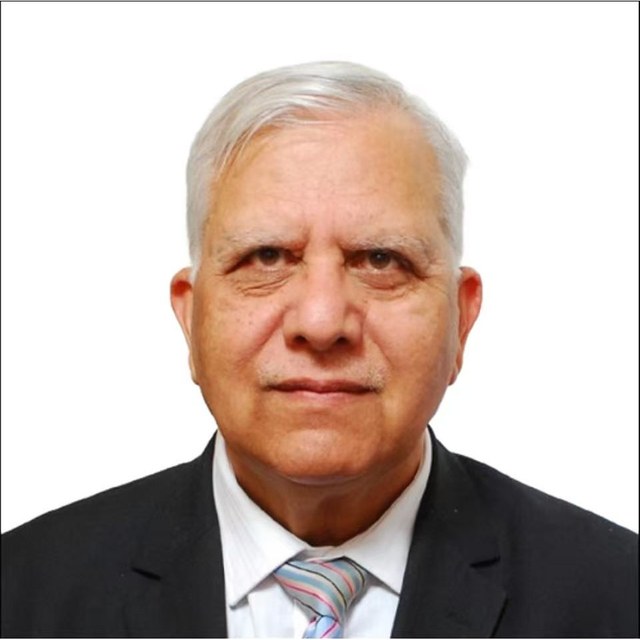
Zamir Ahmed Awan is the founder and Chair of the Global Silk Route Research Alliance, a think tank in Islamabad. He studied engineering at Shanghai University in the 1980s, and years later he went back to China as Pakistan's science counsellor in Beijing, from 2010 until 2016, working on science and higher education cooperation between the two countries.…