Pakistan’s Critical minerals: ADB’s financing facility
Wire desk byline Sourced from Xinhua, Dawn, Arab News, Anadolu and Minute Mirror. Translated and abridged by the GSRRA Desk.

President Asian Development Bank (ADB), Masato Kanda, launched a new financing facility to help member countries develop a critical mineral supply chain, including rare earths, for clean energy, batteries, electric vehicles, and digital technology on the first day of its annual meeting being held in Samarkand.
Kanda added that the facility has two parts: (i) a grant window that will fund feasibility studies, environmental studies, social assessments, technical assistance and knowledge sharing with the government of Japan committing 20 million dollars; and (ii) a catalytic window designed to bring co-financing and risk sharing from other partners with Korean Ex-Im Bank and Korean Trade Insurance dedicating 500 million dollars each for this purpose.
Refining of rare earths is an operation fraught with environmental hazards, and needless to add, all ADB projects, like those funded and implemented by other multilaterals, have to undertake environmental fallout of any project, an exercise included in the grant by Japan, but which is almost certainly not likely to be met in the event of refining of rare earths.
A brief background to this launch is critical to understanding the geopolitics at play. President Trump soon after his inauguration on 20 January 2025, launched a series of tariffs on all of its trading partners, allies, and peer competitors/rivals alike, including China. Countries other than China began to negotiate to bring down tariffs with the US; however, China was the only country with more than enough leverage to challenge the US by imposing its own tariffs on US imports, as well as export restrictions on rare earths.
China controls around 60 percent of the global rare earth element, over 90 percent of global processing, and 100 percent of specific magnet manufacturing — inputs required for not only manufacturing the items listed above, but are also key to producing 78 percent of defence-related products, including fighter jets, missiles, sonar, and lasers. China’s decision last year to limit export of certain rare earth minerals, heavy rare earths, and magnets to the US (and Europe) has, without doubt, degraded the US capacity to manufacture defence-related products. It is therefore relevant to note that the decision by Japan and South Korea, two nations that house large US bases (the Japanese Prime Minister recently angered China when she announced that any invasion of Taiwan by China would be regarded as a red line for Japan), to invest in this new financing facility through ADB may be seen as involving the Bank in geopolitics.
In its quest for finding alternatives to Chinese supplies of rare earths, the US has engaged with many countries recently, including Ukraine and Pakistan. However, while rare earths are present in several countries, including the US, developing their processing capacity is a long-term project, estimated at around 10 to 12 years, with serious environmental fallout. This makes the ADB President’s launch reek of the Bank, always led by a Japanese, making a foray into geopolitics, which is not its domain.
While the ADB President would no doubt justify this launch as money pledged by two member countries for a specific purpose, a dedicated fund that previously other countries have pledged for development of other sectors, yet multilateral banks would be well advised not to so overtly engage in the launch of any funding that has such obvious geopolitical implications.
Reference Link:- https://www.brecorder.com/news/40419566/critical-minerals-adbs-financing-facility
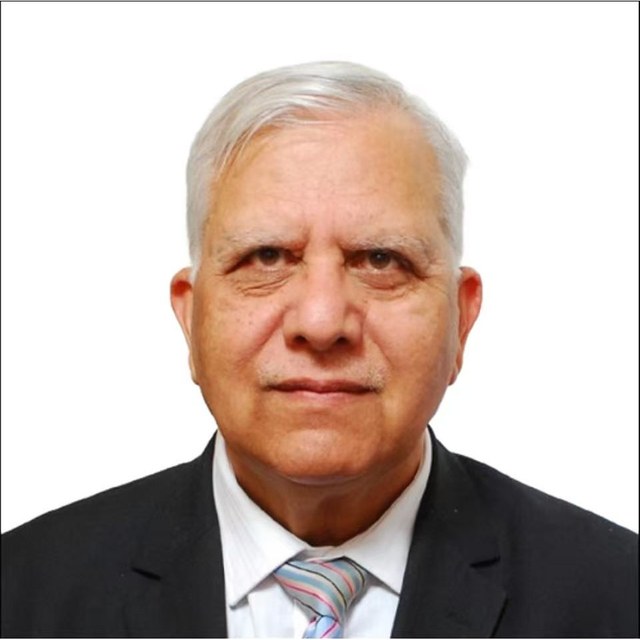
Zamir Ahmed Awan is the founder and Chair of the Global Silk Route Research Alliance, a think tank in Islamabad. He studied engineering at Shanghai University in the 1980s, and years later he went back to China as Pakistan's science counsellor in Beijing, from 2010 until 2016, working on science and higher education cooperation between the two countries.…