
Learning from China’s economic philosophy and policy — VI
Wire desk byline Sourced from Xinhua, Dawn, Arab News, Anadolu and Minute Mirror. Translated and abridged by the GSRRA Desk.

It needs to be pointed out here that in addition to supervision gains of local governments in running infrastructure projects, another benefit of LGFVs is indeed to reduce the burden of infrastructure financing directly from budget, where in addition to tapping bank borrowing, there was also the advantage of sharing financing burden, and to be more ambitious than the limits of budget would ascertain in terms of extent of infrastructural spending through pursuing ‘public-private partnerships’ (PPPs), and also launching ‘special-purpose bonds.’
This opens up new avenues of learning for Pakistan, especially in terms of involving local governments to forge PPPs – with the usual benefits of closer monitoring and evaluation done by local governments, along with better understanding and internalizing the rights and interests of the local population while negotiating contracts with the private sector – and issue ‘special-purpose bonds.’
‘The handbook of China’s financial system’ pointed out about PPPs: ‘Since 2014, China’s government promoted PPPs as a new model for carrying out and financing public investment projects. The policy goal is to leverage private enterprises and the financial sector to invest in infrastructure, while limiting the government’s direct exposure to debt.
PPP projects are normally implemented by special-purpose vehicles (SPVs) that are set up and owned either solely by private partners or jointly with the government. The SPVs will sign contracts with the government to carry out investment projects. In return, it will receive future income streams either directly from the government or from the projects (e.g., road fees). In principle, the government should not be accountable for any debt of the SPVs.’
Also read: Learning from China’s economic philosophy and policy — V
This is critical because governments in the country primarily finance infrastructure projects through the state budget, and general debt is typically government-guaranteed. Furthermore, public-private partnerships (PPPs) are negotiated at the provincial level; these authorities lack the capacity to understand local needs and cannot monitor projects precisely due to their distance from local governments.
About ‘special-purpose bonds,’ the same handbook indicated the following: ‘With the 2014 revision of the Budget Law, local governments were permitted to issue bonds, subject to annual debt ceilings and approval by the central government.
There are two types of government bonds: local government general bonds, which are used for financing of general budget deficits; and local government special-purpose bonds, which are used for financing of public capital spending outside the general budget.
The central government manages local government bonds through setting both national and provincial debt ceilings in the annual budget. …A large number of proceeds from special-purpose bonds are used for infrastructure investment such as land development and road construction.’
In addition to ‘special-purpose bonds,’ local governments also issue ‘LGFV bonds,’ regarding which the same handbook pointed out: ‘Local government financing platforms started to issue bonds in the mid-2000s amid the rapid expansion of the interbank market. LGFV bonds, or “cheng tou zhai,” grew rapidly to become a sub-asset class on the domestic market.’
At the same time in an overall effort to better manage debt burden and to more appropriately regulate borrowing through LGFV bonds, the same handbook indicated that ‘In an attempt to regulate LGFV borrowing and reduce the effective borrowing costs of local governments, the 2014 revision of the Budget Law allowed local governments themselves to issue bonds.
Also read: Learning from China’s economic philosophy and policy —IV
Meanwhile, the government initiated a large-scale bond swap program in 2014, allowing local governments to issue bonds to replace both the debt of LGFVs and other debt that was identified to be “government debt” in nature. …The bond swap program came to an end in 2018. As swap-bond issuance declined, issuance of local government special-purpose bonds increased… These special-purpose bonds largely go to financing land development and infrastructure investment…’
Moreover, in addition to these sources of finance for local governments and LGFVs, the same handbook pointed out the following: ‘Aside from the bond market, local governments and LGFVs alike may obtain financing from a few other channels.
A large number of LGFVs became publicly listed companies and tapped into financing from the equity market. LGFVs have also leveraged the shadow banking system. The asset pool of wealth management products may include a sizable amount of financing to LGFVs.’
Hence, LGFVs help deepen the bond market and widen the stock market by creating greater demand for financing through them, while allowing greater opportunity to earn on investment in a more empowered way in terms of where to invest, rather than just leaving those decisions to the intermediary of banks, for instance.
Also read: Learning from China’s economic philosophy and policy — III
This direct involvement also helps increase their interest in putting pressure for results from the project they know they have invested in, as responsible citizens, but also as investors caring for securing returns on their investment, which, in turn, also means more aware and politically active demos, improving, in turn, the effectiveness of investments overall, and the quality of democracy.
Moreover, LGFVs redirect investment away from underdeveloped or speculative sectors—such as real estate and financial manoeuvres like share buybacks—thereby reducing the frequency and intensity of asset bubble bursts and the economic uncertainty they cause.
By shifting capital toward broader sectors of the economy, LGFVs improve the quality of growth in terms of sustainability and inclusivity, while also boosting overall aggregate supply and fostering greater macroeconomic stability and growth.
From this it could be inferred that rather than outsourcing projects to private sector while providing funding directly from budget, the government not only played a role in hiring of workers/managers to their satisfaction which, in turn, built up local government’s capacity to have skills to hire properly, and to check performance, better protecting public interest in terms of not only quality but also having the capacity to have better understanding on labour/managerial costs of effort/labour.
Moreover, significant off-budget financing arrangements by local governments place greater responsibility on them regarding repayment pressure from financing sources, such as banks. Unlike taxpayers’ money—which often comes with fewer strings attached, carries a higher risk of corruption, and may be managed with less care—bank loans demand strict accountability.
This puts greater pressure on governments to deliver projects successfully so they can generate the returns needed to repay the loans beyond mere government guarantees. For example, an unfinished or poor-quality road will accrue little to no toll revenue, failing as a viable source of repayment.
Also read: Learning from China’s economic philosophy and policy — II
This approach will bring greater sustainability to infrastructure investments. It will likely enhance project completion rates, leading to improved timeliness, lower costs, and reduced time spent by planning departments on monitoring and evaluation.
This efficiency is achieved when local governments are directly responsible for infrastructure activities, rather than the typical scenario—such as in Pakistan—where private contractors operate under loose controls, and central-level ministries or provincial departments manage budgetary allocations, often resulting in less successful projects.
Consequently, this highlights the critical need for meaningfully empowered local governments. Achieving this requires well-entrenched electoral systems that deliver results with minimal to no rigging, as well as processes that reduce the influence of money in campaigns, thereby lowering financial hurdles for competent potential public representatives.
Moreover, another factor likely to add to bringing greater quality of infrastructure projects, and promptly, is greater pressure on local government from local voters, who will have more reach in terms of holding accountable local government representatives, rather than some less known or unknown non-representative public official in a relatively distant central ministry/provincial department.
The private sector involvement in terms of technical expertise hired will, in turn, face greater scrutiny from local government under the pressure of getting re-elected, but before that, pressure from local voters in terms of accountability.
Also read: Learning from China’s economic philosophy and policy – I
Such creation of innovative finance requires better employment in terms of enhanced level of economic institutions, organizations, and market so that the debt created through this channel remains sustainable. So, even if this amassed a lot of debt for China, given the high level of economic productivity, the investments are likely to keep the debt burden of financing under sustainable levels.
This is another example of this interconnectedness, reflecting an overall sense of purpose toward employing finance from various sources—including the stock market—to achieve greater country-wide economic gains.
The same handbook pointed out about huge growth in stock market as ‘While the stock market contributes less to the AFRE than do the banking sector and even the bond market, it has grown into the second largest equity market in the world with a total market capitalization of $8.7 trillion at the end of 2017, trailing only the U.S. equity market with $32 trillion and ahead of Japan with $6.2 trillion.’
An August 25, 2025, ‘Visual Capitalist’ published article, ‘The $127 trillion global stock market in one giant chart,’ pointed out that currently the total market capitalization globally stands at around $127 trillion, where the share of the U.S. is around $62.2 trillion, and next in line is China with a market capitalization of around $11.8 trillion.
A clear, shared purpose among the banking sector, bond markets, and stock market is currently lacking. This alignment is essential to serve the broader economic goals of the country while maintaining an effective balance between individual economic freedoms and national-level objectives.
Over the years, the practice of neoliberal and austerity policies—heavily influenced by neoclassical and monetarist schools of economic thought—has faced serious criticism. These policies have contributed to a significant rise in financial crises, substantially increased income inequality, and eroded the public sector’s crucial footprint. A strong public sector is needed to influence both the real and financial sectors—much like in China—in order to provide meaningful direction, support, and effective regulation to the private sector.
The same handbook pointed out in this regard the following: ‘China’s financial system has undergone many reforms in the past four decades, yet in many respects it remains substantially different from those in a typical Western country. Many of these differences are rooted in the institutional foundation of China’s financial system.
It is particularly useful to recognize that the government has consciously used the financial system as a toolbox to implement government policies and to resolve financing issues it has encountered during the country’s economic reforms. …it explains banks’ lending preferences to state-owned enterprises (SOEs) – a key feature of China’s banking sector…, and it further explains the advantages of SOEs in qualifying for public listing in China’s stock market.’
Reference Link:- https://www.brecorder.com/news/40437826
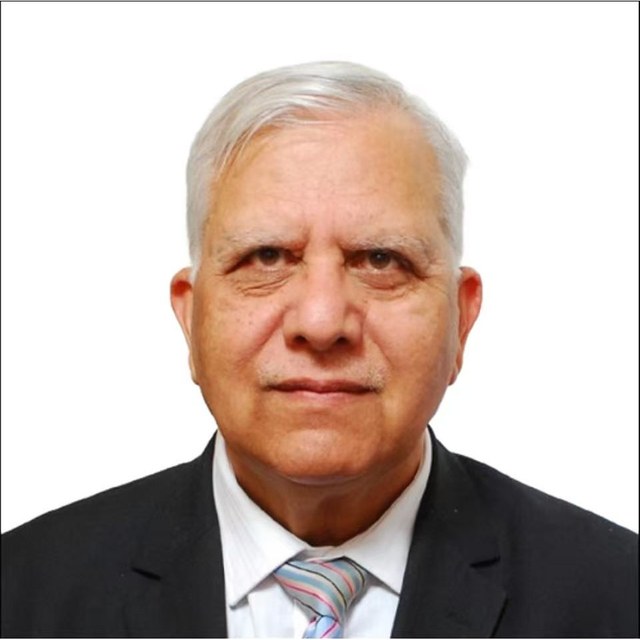
Zamir Ahmed Awan is the founder and Chair of the Global Silk Route Research Alliance, a think tank in Islamabad. He studied engineering at Shanghai University in the 1980s, and years later he went back to China as Pakistan's science counsellor in Beijing, from 2010 until 2016, working on science and higher education cooperation between the two countries.…