
Israel Is Expanding and Upgrading Compounds for Palestinian Militias in Gaza
Wire desk byline Sourced from Xinhua, Dawn, Arab News, Anadolu and Minute Mirror. Translated and abridged by the GSRRA Desk.

At least five Israeli-backed Palestinian militias are operating out of compounds close to Israeli military bases across the Gaza Strip in areas east of the yellow line At least five Israeli-backed Palestinian militias are operating out of compounds in areas under Israeli military control across the Gaza Strip. Source: Forensic Architecture.At least five Israeli-backed Palestinian militias are operating out of compounds in areas under Israeli military control across the Gaza Strip, according to satellite imagery and videos published online. Since the so-called ceasefire went into effect nearly a year ago, these compounds have been upgraded and expanded in size and sophistication, according to a preliminary analysis by Forensic Architecture. Many of these upgrades resemble Israeli military infrastructure, with berms, barracks, fences, and buildings. At least one compound in East Rafah includes new shops, classrooms, and a playground.While there have been some splinter groups and defections, the five main Israel-backed Palestinian militias are known as: Northern forces/Popular Army in Beit Lahia, led by Ashraf Al-MansiPopular Defense Forces in Shujaieya, east of Gaza City, led by Rami HalasFree Homeland Forces in central/eastern Gaza near Deir al-Balah, led by Shawqi Abu NasiraCounter-Terrorism Strike Force in southeastern Khan Younis, led by Hussam al-AstalPopular Forces/Counter-Terrorism Service in East Rafah, led by Ghassan Al-DuhainiMany of the militia leaders who rose to power in collaboration with Israel during the genocide in Gaza are former gang leaders with a history of criminal activity, were associated with jihadi groups, or are former Palestinian Authority security forces that were all sidelined after Hamas gained control of the enclave in 2007.“These militias are not just Israel-backed. These militias are Israel-created,” Muhammad Shehada, a writer and analyst from Gaza and a visiting fellow at the European Council on Foreign Relations, told Drop Site News. “The IDF and the Shin Bet [Israel’s domestic intelligence service] were the ones that recruited, funded, trained, provided shelter, accommodation, food, and so on to these gangs, brought them together, and designated each one of them a very specific turf that they operate in.” Four of the five compounds where the militias are based are located very close to the “yellow line”—the demarcation of Israel’s line of control—and all are close to Israeli military bases. Israel has established nearly 40 military bases in areas across Gaza east of the yellow line. One militia compound located in east Khan Younis, right on the yellow line, is less than one kilometer from two Israeli military bases.Initially, Israel’s primary objective for the gangs was to systematically loot aid coming into Gaza, starting around May 2024, as Israeli troops stood by and did not intervene. “That was the first use that Israel had for them: loot aid systematically while giving Israel plausible deniability,” Shehada said. “They eventually dressed them up in police uniforms with Palestinian logos on to pretend that they were some sort of a legitimate authority with a propaganda psyop operation behind them.” He added, “They suddenly became an organized militia instead of just bandits.”Militia members are granted relative freedom of movement by the Israeli military and privileged access to resources, such as weapons and medical treatment within Israel. Militias have also conducted armed raids and attacks on Palestinians living near the yellow line in coordination with the Israeli military, who have backed them up with artillery and aerial support.At least one compound in East Rafah includes new shops, classrooms, and a playground. A video published on April 2, 2026 shows the inside of a classroom equipped with air conditioning inside the compound of the Counter-Terrorism Service militia. In the video, Ghassan Al-Duhaini—who took over as commander of the Popular Forces militia, also known as the Counter-Terrorism Service, following the killing of its former leader Yasser Abu Shabbab—is seen touring a classroom as schoolchildren receive educational instruction. These compounds are not open to all Palestinians but are used for a select few, including the families of those affiliated with the militias.Since the so-called ceasefire went into effect nearly a year ago, Israel has been fortifying military bases in the eastern part of the territory it controls and constructing a physical barrier walling off Palestinians from most of the Gaza Strip. In parallel, the compounds for the Israel-backed Palestinian militias have also been upgraded and fortified, including using Israeli construction materials such as T walls (a T-shaped structural barrier or wall panel).The ongoing construction and fortification of the Israeli military bases and Palestinian militia compounds comes despite a complete lack of reconstruction in the western part of Gaza, where nearly all Palestinians in Gaza have been corralled. Israel has not allowed reconstruction materials and equipment into Gaza over the past year, in violation of the ceasefire agreement. Hundreds of thousands of Palestinians are living in dilapidated tent encampments or seeking shelter in buildings badly damaged by the Israeli assault that are at risk of collapse. Last week, in just the latest incident, at least 21 Palestinians, including 12 children, were killed and 45 others injured when a residential building collapsed in Gaza City. More than 100 people, including 50 children, are estimated to have been sheltering in the building.“The thing to know about these gangs is that their structures are entirely unsustainable,” Shehada said. “They have been artificially created by the Israeli government, the army, the Shin Bet—and the only thing that binds them together is basically the bribes that they receive from the IDF, the protection that they receive from the IDF, the territory that they are allowed to live in, with upgraded privileges compared to the rest of the population in western Gaza. If these things disappear, the gangs will disintegrate.”The Forensic Architecture Analysis: Militia compounds in Gaza. At least five Palestinian militias are operating in the area under Israeli military control. These are Palestinian armed groups backed by Israel, who provide them with resources and freedom of movement.Their compounds are located in the Israeli-controlled area, between military bases.   Still from a video published on social media on May 25, 2026, showing armed members of an Israeli-backed militia in northern Gaza, on the pier along the coast north of Gaza City.Militias are given freedom of movement. This compound in Khan Younis is located on the ‘yellow line’, less than 1km from two Israeli military bases. Still from a video published on social media on May 25, 2026, showing armed members of an Israeli-backed militia in northern Gaza, on the pier along the coast north of Gaza City.Militias are given freedom of movement. This compound in Khan Younis is located on the ‘yellow line’, less than 1km from two Israeli military bases. A video shows the group operating in the Palestinian area. A video shows the group operating in the Palestinian area. Still from a video published on social media on April 20, 2026, showing members of a militia operating in the Palestinian area of Khan Younis.Since the ceasefire, militia compounds have developed. Another militia compound is located near an Israeli military base in east Rafah. This group, known as the Counter-Terrorism Service, existed before the ceasefire, but since the ceasefire its presence has grown.While Israel has continued to demolish buildings nearby, new structures have been added to the compound. Videos show it has new shops, classrooms, and a playground—facilities that are accessible only to militia members and their families.Israel has allowed the militias to use large machinery and Israeli materials. Still from a video published on social media on April 20, 2026, showing members of a militia operating in the Palestinian area of Khan Younis.Since the ceasefire, militia compounds have developed. Another militia compound is located near an Israeli military base in east Rafah. This group, known as the Counter-Terrorism Service, existed before the ceasefire, but since the ceasefire its presence has grown.While Israel has continued to demolish buildings nearby, new structures have been added to the compound. Videos show it has new shops, classrooms, and a playground—facilities that are accessible only to militia members and their families.Israel has allowed the militias to use large machinery and Israeli materials.    Still from a video published on May 3, 2026 showing construction work underway for the base of the Counter-Terrorism Service militia. Still from a video published on May 3, 2026 showing construction work underway for the base of the Counter-Terrorism Service militia. Still from a video published on April 2, 2026, showing classrooms and a playground built at the compound of the Counter-Terrorism Service militia. Still from a video published on April 2, 2026, showing classrooms and a playground built at the compound of the Counter-Terrorism Service militia. Still from a video published on April 2, 2026 , showing the inside of a classroom equipped with air conditioning inside the compound of the Counter-Terrorism Service.These upgrades share similarities with Israeli military infrastructure. Many of these upgrades share architectural components with Israeli military infrastructure: berms, barracks, fences, and buildings. Still from a video published on April 2, 2026 , showing the inside of a classroom equipped with air conditioning inside the compound of the Counter-Terrorism Service.These upgrades share similarities with Israeli military infrastructure. Many of these upgrades share architectural components with Israeli military infrastructure: berms, barracks, fences, and buildings. Leave a comment Share  A guest post by Forensic Architecture Forensic Architecture is a research agency based at Goldsmiths, University of London. Our investigations employ cutting-edge techniques in spatial analysis and digital modelling to reconstruct incidents of state violence and human rights violations. |
Reference Link: https://mail.yahoo.com/c/n/list/folders=00_1&listFilter=ALL_INBOX/messages/00_AAeC4qZP8cgvraSGpRutS6veNAL?reason=invalid_cred
Filed under News
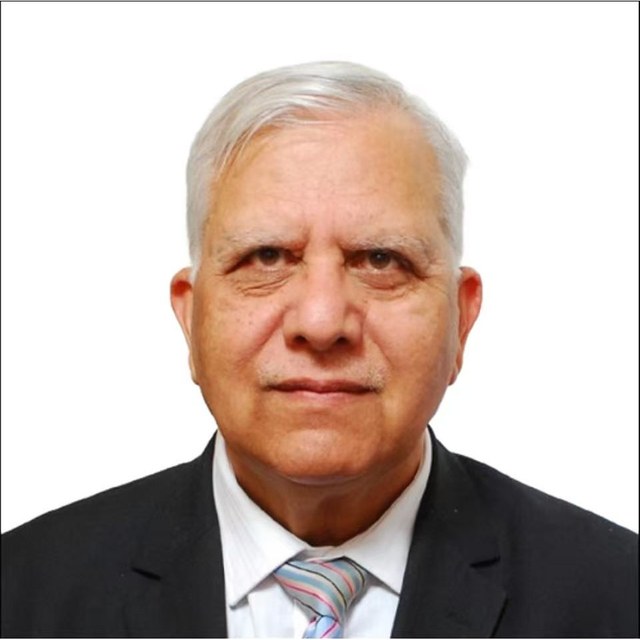
Prof. Engr. Zamir Ahmed Awan Founder & Chair, Global Silk Route Research Alliance
Zamir Ahmed Awan is the founder and Chair of the Global Silk Route Research Alliance, a think tank in Islamabad. He studied engineering at Shanghai University in the 1980s, and years later he went back to China as Pakistan's science counsellor in Beijing, from 2010 until 2016, working on science and higher education cooperation between the two countries.…