
Israel announces countermeasures against Britain in response to a ban on trade with settlements. Former Israeli PM confirms UAE warned Netanyahu about Hamas’ October 7 attack.
Source Xinhua, Dawn, Arab News, Anadolu and Minute Mirror

Following a Haaretz exposé that UAE President Mohamed bin Zayed personally warned Netanyahu in a phone call about a week and a half before Hamas’ October 7 attack that the organization was preparing a major operation, Israel’s opposition leaders jointly called to immediately launch a state probe into the events of the massacre, saying there was “no longer any room for excuses, denials or concealment.”The call between Netanyahu and MBZ took place in late September 2023, and lasted 45 minutes, according to three foreign senior sources who are familiar with the contents of the conversation. While bin Zayed urged Netanyahu to take the situation seriously, the Israeli PM said that, in his assessment, Hamas intended to operate in the West Bank, and that Israel was prepared for any scenario. The premier did not brief Israel’s security chiefs about the call.In their statement, Gadi Eisenkot, Naftali Bennett, Yair Lapid, Yair Golan and Avigdor Lieberman accused Netanyahu of showing “arrogance” and betraying the trust of Israeli citizens by failing to act on MBZ’s warning.“Why did he not inform the security establishment?” The leaders asked, and pledged to establish a state commission of inquiry that would “investigate the failures that led to the October 7 disaster, establish the facts and help ensure that a similar catastrophe does not happen again.”In an interview with Israel’s public broadcaster, former premier Bennett said he was aware Netanyahu had received warnings from bin Zayed as well as Egypt’s former intelligence chief that Hamas was planning something, but chose to ignore them. Netanyahu’s bureau said he “didn’t speak to the president of the UAE during the period in question and received no warning from him,” and dismissed the report as an “absolute lie.”U.K. unveils settlement sanctions, declares Israeli occupation of Palestinian territories unlawful Citing actions by the Netanyahu government that are “undermining the possibility of a two-state solution,” such as the E1 settlement project in the West Bank, the U.K., France and Canada said that they are leading a 12-country effort to restrict trade with Israeli settlements. Denmark, Finland, Iceland, Ireland, Norway, Poland, Portugal, Spain and Sweden joined the statement.Soon after the announcement, U.K. Foreign Secretary Ed Miliband unveiled a package of measures against settler activity in the West Bank, including a ban on imports from illegal settlements. Britain will also sanction “a further set of extremist settlers,” along with companies and individuals providing services for settlement expansion.Miliband added that Britain views the Israeli occupation of the Palestinian territories “as a whole” as unlawful and “agrees that ethnic cleansing of Palestinians is taking place in parts of the West Bank.” Miliband quoted former Israeli PM Ehud Olmert and retired general Ephraim Sneh, both of whom used the term “ethnic cleansing” to describe Israeli actions in the West Bank.Britain will also refuse new license applications for arms and other exports that materially contribute to the occupation, but will continue to back trade with Israel within the Green Line. Britain’s dispute “is not with the people of Israel but with the conduct of its government,” Miliband said, adding that “anyone who questions Israel’s right to exist, you are wrong.”The Jewish Leadership Council, an umbrella group for the U.K.’s Jewish communal organizations, condemned the decision to ban imports from settlements, calling its approach toward Israel “increasingly punitive and unbalanced” and warning that it could harm Jewish life in Britain.Whatever our view of sanctions, we can do more than express discomfort. For a less isolated Israel and, most importantly, greater safety for those living through this conflict, we should increase support for those leaders on the ground – Jewish and Palestinian – struggling daily against violent extremism and for a just, safe and equal future. Caring about Israel means more than resisting its isolation. It means standing with those refusing to let its future be determined by people who burn homes, drive out families and call that patriotism, writes David Davidi Brown
Israel to close British consulate in Jerusalem, bar elected officials from entering country Responding to Miliband’s announcement, Israeli Foreign Minister Gideon Sa’ar announced a series of countermeasures, including the closure of the British Consulate in Jerusalem, removing British representatives from the base in central Israel that monitors the Gaza truce, ending British activities to train Palestinian Authority security forces, and barring 12 elected representatives, officials and nationals from entering Israel.Sa’ar called his British counterpart’s accusations “outrageous lies” and said the measures were “morally distorted” and amounted to “blatant interference” in Israel’s affairs and electoral process.The minister went on to accuse Britain of ignoring Palestinian terrorism and argued that the new measures would directly harm Palestinians, including tens of thousands of Palestinian workers employed in Israeli settlements.Prior to Miliband’s statement, Israeli President Isaac Herzog warned that banning trade with settlements would amount to “blatant interference” in Israel’s election and said “sanctions are not a solution. Dialogue is.” For their part, National Security Minister Ben-Gvir urged Netanyahu to recognize Argentina’s claim to the Falkland Islands, and Finance Minister Bezalel Smotrich called to expel London’s envoy from Israel.
Reference Link: https://mail.yahoo.com/c/n/list/folders=00_1&listFilter=PRIORITY/messages/00_AAABWQrIFRyvSFbJcEmEgIPHu2i?reason=invalid_cred&listFilter=PRIORITY
Filed under News
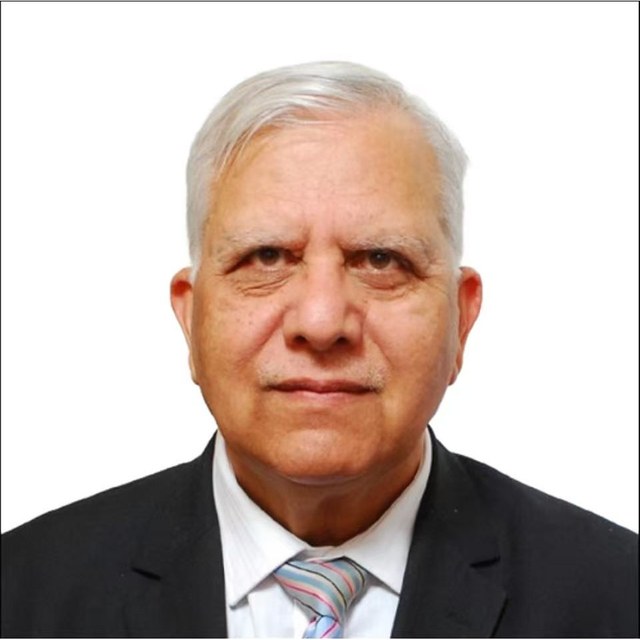
Prof. Engr. Zamir Ahmed Awan Founder & Chair, Global Silk Route Research Alliance
Zamir Ahmed Awan is the founder and Chair of the Global Silk Route Research Alliance, a think tank in Islamabad. He studied engineering at Shanghai University in the 1980s, and years later he went back to China as Pakistan's science counsellor in Beijing, from 2010 until 2016, working on science and higher education cooperation between the two countries.…