
Across rivers and ridges — China ensures school access for children
Wire desk byline Sourced from Xinhua, Dawn, Arab News, Anadolu and Minute Mirror. Translated and abridged by the GSRRA Desk.

* In 2022, a 268-meter-high elevator and an aerial cable car system came into service, giving children from the deep mountains a “sky shuttle” to the clifftop school. A second elevator, rising 288 meters, opened at the end of July this year as visitor numbers grew.
* Across China, governments are tailoring school transport to local needs, finding different ways to close the distance between home and school.
* The efforts, backed by national policy, reflect a broader commitment — ensuring that geography does not determine a child’s access to education.
At age 12, Lei Xin had already mastered a skill most adults would never attempt: navigating a treacherous cliffside trail in the dark — not for adventure, but to go to school.
For years, reaching school meant a three-hour trek for Lei and his peers from Nizhuhe Village in Xuanwei City, southwest China’s Yunnan Province. The village sits at the bottom of the Nizhu River Grand Canyon near the border with Guizhou Province, while their school is perched more than 500 meters above them on the cliffs.
Children used to leave home well before sunrise, often returning exhausted. For parents, the daily trek was a source of constant worry.
Now, the most daunting stretch of the route Lei once took to school can be covered in just 57 seconds, with a new 288-meter-high cliffside elevator whisking students up the canyon wall at five meters per second.

Lei’s story is not unique. Across China’s vast, often rugged frontier regions, millions of children face long, perilous journeys to school. From sheer cliffs to winding rivers, the obstacles vary, but so do the solutions. The efforts, backed by national policy, reflect a broader commitment — ensuring that geography does not determine a child’s access to education.
CROSSING EVERY DIVIDE
Guanzhai Primary School, perched on the cliffs above, serves children from surrounding mountain communities, including four in Nizhuhe Village.
Cut off from the school above by sheer cliffs, the children had to follow a rudimentary trail carved into a rock face hundreds of meters high. Narrow and steep, strewn with loose gravel, the trail had sections barely half a meter wide. The steepest stretches required them to climb by hand.
“Back then, I wasn’t afraid my child would be tired. I was afraid something might happen to him on the way,” said Zhao Suzhen, the mother of Lei, who had accompanied him along the treacherous trail countless times over the years.

The change came with the development of the Nizhu River Grand Canyon scenic area. In 2022, a 268-meter-high elevator and an aerial cable car system came into service, giving children from the deep mountains a “sky shuttle” to the clifftop school. A second elevator, rising 288 meters, opened at the end of July this year as visitor numbers grew.
Together, the two elevators can carry up to 1,200 passengers per hour, significantly boosting the scenic area’s capacity while eliminating the congestion that once forced students to compete with tourists for rides during peak seasons.
Now, the entire journey from the village to school takes about 30 minutes. Students take a shuttle bus to the foot of the cliff, ride an elevator, then continue by cable car to reach the school.

On Aug. 30, as many primary and secondary schools across Yunnan welcomed students back for the new semester, Lei once again boarded his unusual ride. Stepping into the new elevator, he watched the numbers on the display tick upward.
“The first elevator takes 90 seconds. This one, 33 seconds faster,” he said, sharing his calculation. “I feel like an immortal carrying me through the sky.”
Free for local students and villagers, the “sky shuttle” also features dedicated student passages, with police officers and staff on hand during peak hours to keep the children safe. By the end of August, the service had safely carried nearly 1,000 student trips between the village and school.
More than 500 km away from Puli Township, which administers Nizhuhe Village, another group of children in Yunnan began the school day on the water.

At a ferry crossing in Banda Village of Bo’ai Town, located in a reservoir area, village official Liang Guoyou arrived early in the morning to help students board. One by one, the children stepped onto a ferry that carried them across the water. It’s their version of a “school bus.”
The journey was not always this secure. “Years ago, privately operated ferries lacked unified standards, and safety was a constant concern,” Liang said. Since 2021, local authorities have worked with schools, parents and transport officials to build a coordinated school transport system. Seven dedicated ferries now serve 12 crossings across the township for 329 primary and secondary school students and preschoolers.
For 55-year-old ferryman Wei Jinlin, the difference could not be starker. “When I was young, getting to school meant walking nearly 20 kilometers to town,” he said. “Now the children can take the ferry. It’s much safer and far more convenient.”
According to local authorities, the ferry routes have safely carried students more than 147,000 times over the years, covering over 70,000 kilometers in total.

Across China, governments are tailoring school transport to local needs, finding different ways to close the distance between home and school.
In March, mountainous Chengkou County of southwest China’s Chongqing Municipality launched a “Hope Line” school bus service, with 33 dedicated routes now in operation. The service uses fixed routes combined with flexible pickup points to tackle the “last mile” challenge for students living in scattered rural communities.
In Panxi Town, Guizhou, authorities faced similar challenges reaching students scattered across remote areas and recently surveyed the travel needs of 121 students before launching three customized school bus routes. Four vehicles now connect eight villages, providing point-to-point service during school hours.
BEYOND SCHOOL RIDES
The impact, it turns out, goes far beyond the ride to school.
Li Zhiguang, principal of Guanzhai Primary School, said that as the “sky shuttle” has made the journey less daunting and physically demanding, students become more cheerful, confident and engaged in school life. “They are more willing to speak up in class and eager to explore the wider world,” Li added.
They also have more time for the things they enjoy. “Now I can use those hours saved on the journey to read and exercise,” said Wang Sichun, a third-grade student at the school, her voice bright.

The benefits ripple outward. The “sky shuttle” has also enabled local co-development of education and rural revitalization.
As the canyon’s scenery and cliff elevators attracted more visitors, Zhao turned part of her home into a three-story guesthouse with 12 rooms. During peak season, bookings can be made weeks in advance. “Now I can look after my children while earning a living without leaving my hometown,” she said.
More villagers are following suit, opening guesthouses, selling local specialties or working as guides. Official data show that Puli Township now boasts 46 guesthouses and 159 specialty restaurants, with tourism supporting nearly 3,500 jobs.
Cai Xiong, chairman of the company behind the elevator project, grew up in the mountains himself and watched generations of children make the arduous climb to school. “I know how difficult the journey can be,” he said. “I hope the ‘sky shuttle’ can give them a safer way to school, so they can focus on their studies, pursue their dreams, and one day give back to their hometown.”
Yang Bin, a professor at Yunnan Normal University who has long studied education development in western China, praised the local approach of repurposing cultural tourism infrastructure for public educational services.
“This is not merely an improvement in transportation infrastructure. It is a safeguard of rural children’s right to education, ensuring that frontier children truly have access to equitable and quality schooling,” Yang said.
He added that better educational conditions also support rural revitalization by helping to retain population and stabilize communities, providing a lasting social foundation for tourism and other industries.

The efforts are now finding institutional backing. A national plan to build a strong country through education by 2035 calls for advancing high-quality, balanced compulsory education and greater integration of urban and rural education, while narrowing gaps among regions, schools and student groups.
Earlier this year, China issued a plan to accelerate agricultural and rural modernization during the 15th Five-Year Plan period (2026-2030), calling for stronger basic public services in rural areas. It specifically requires more balanced compulsory education and better conditions for rural schools, including necessary small-scale village schools and kindergartens.
Yang noted that these efforts can help address the longstanding challenges in rural education and narrow the urban-rural development gap. “The road to school is, in many ways, the first step toward educational equity,” he said.
Reference Link:- https://english.news.cn/20260903/1538587e09e1413580fdbe6d718e010f/c.html
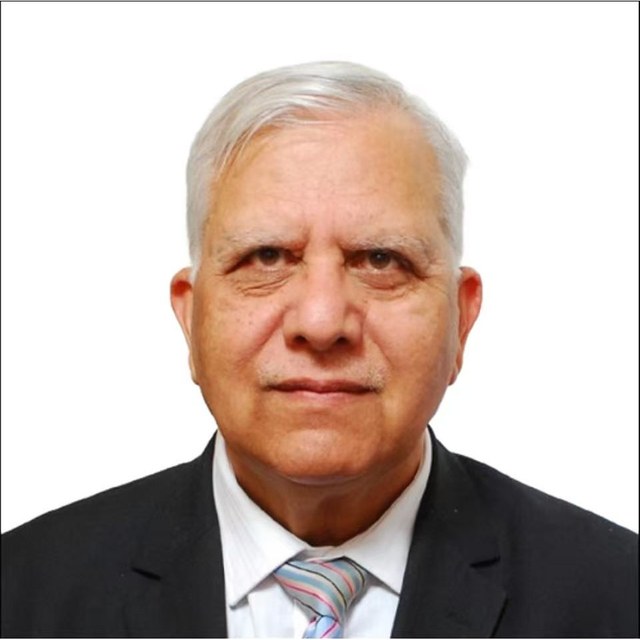
Zamir Ahmed Awan is the founder and Chair of the Global Silk Route Research Alliance, a think tank in Islamabad. He studied engineering at Shanghai University in the 1980s, and years later he went back to China as Pakistan's science counsellor in Beijing, from 2010 until 2016, working on science and higher education cooperation between the two countries.…