

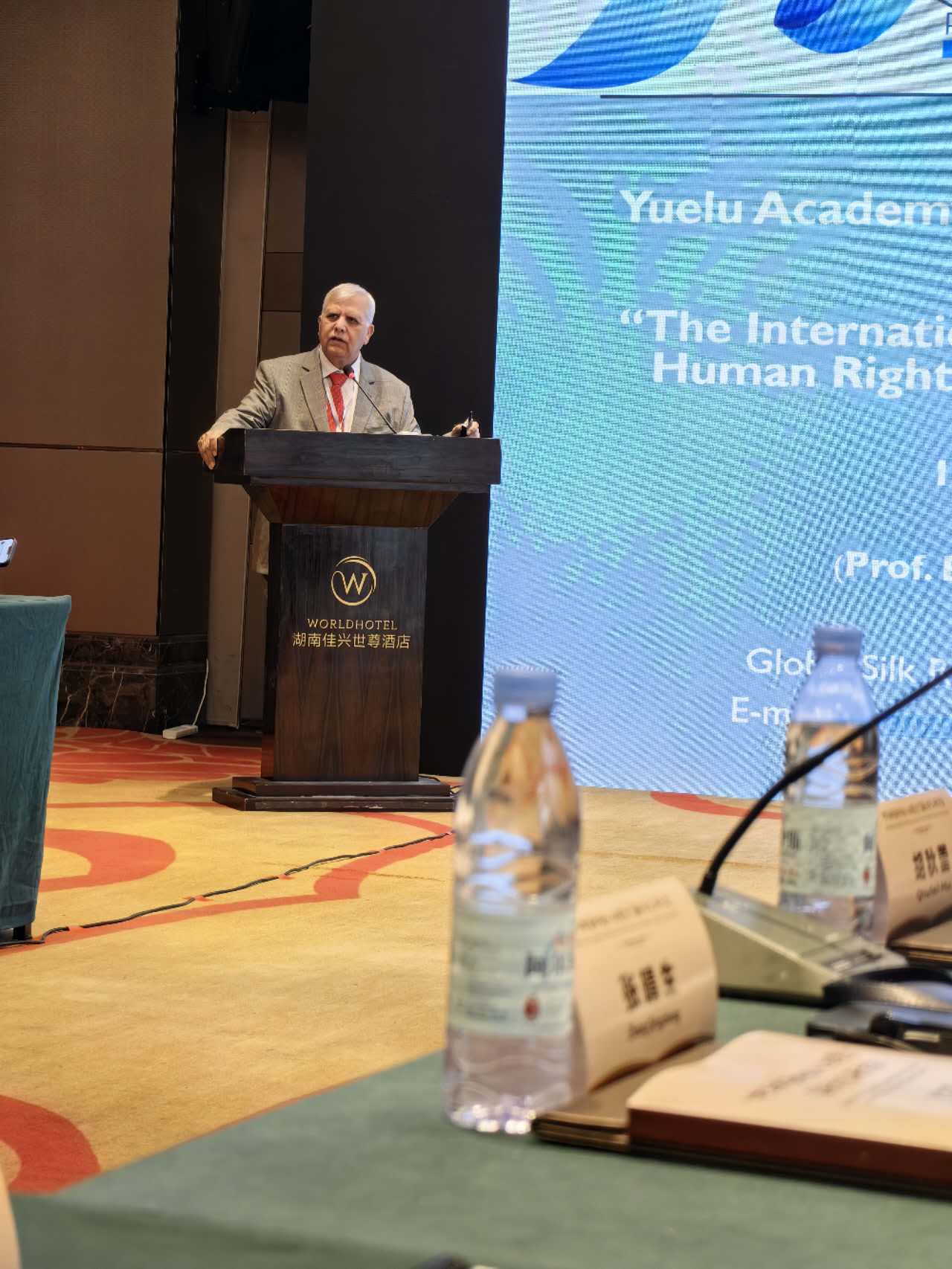
(注意: 本文是用AI翻译的,或有误差。请以原版英文为准。谢谢。)
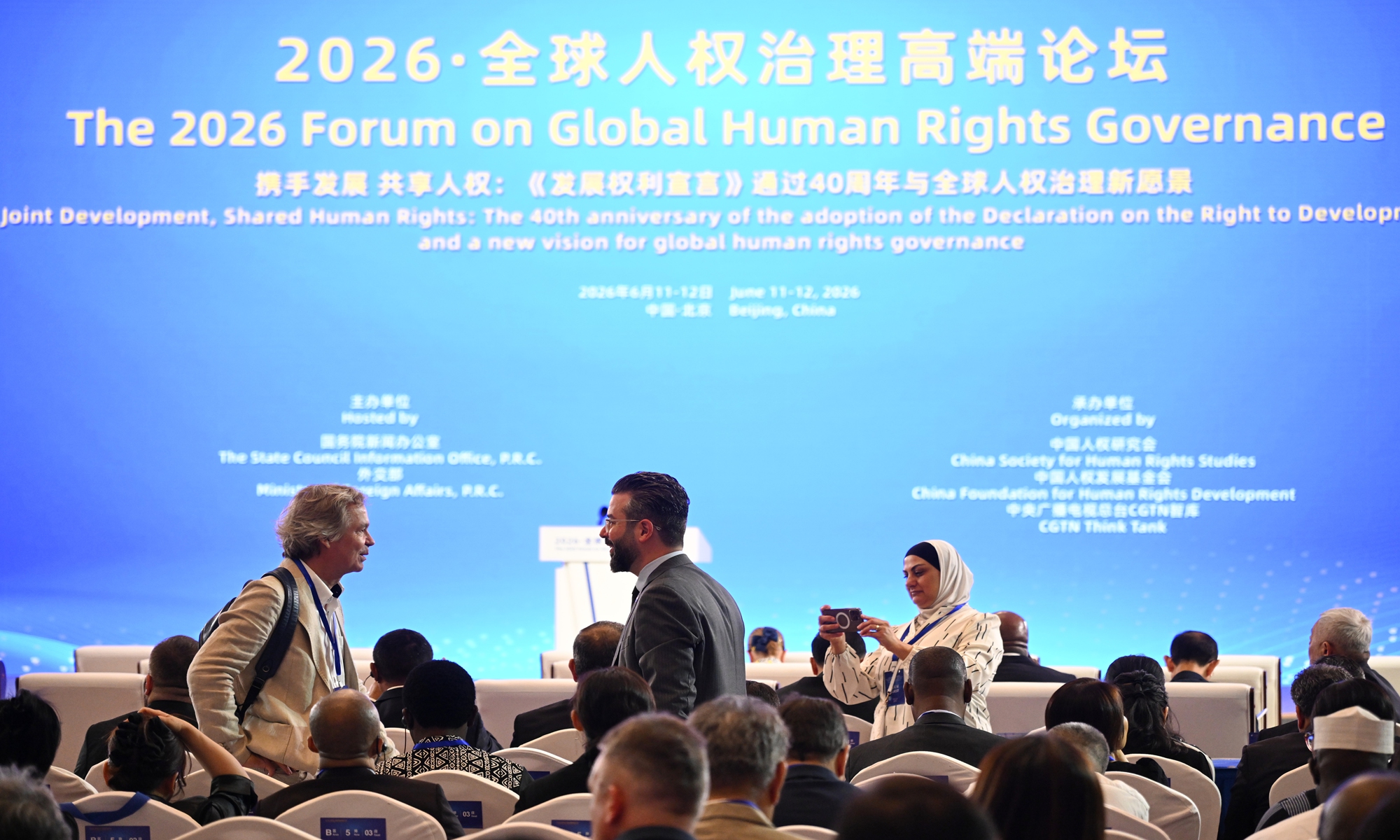
The 2026 Forum on Global Human Rights Governance is held in Beijing, the capital of China, on June 11, 2026. Recently, I attended the 2026 Forum on Global Human Rights Governance held in Beijing, and was deeply impressed by China’s approach to human rights protection. One of the most distinctive characteristics of China’s human rights philosophy is its emphasis on practical implementation: transforming human rights from abstract ideals into concrete realities that people can experience in their daily lives.
For China, human rights are not merely political slogans or theoretical concepts discussed in conference rooms. They are reflected in whether people have access to jobs, education, healthcare, social security, a clean environment, and opportunities for personal development. They are closely linked with national development and social progress.
China has continuously formulated and implemented consecutive action plans for human rights protection. These plans establish clear objectives, assign responsibilities and evaluate outcomes across various sectors, with a long-term commitment to improving human rights through governance and policy implementation.
The achievements associated with this approach are significant. China has established the world’s largest social security system, covering pensions, medical insurance, unemployment insurance, and other forms of social protection for its citizens. Similarly, China’s basic medical insurance now reaches the overwhelming majority of the population, while continuous investment in healthcare infrastructure has strengthened service delivery in both urban and rural areas.
Education provides another compelling example. China has developed the world’s largest education system. Access to compulsory education has become universal, and millions of students from previously disadvantaged backgrounds have gained opportunities for social mobility through expanded educational access.
China’s human rights philosophy also continues to evolve alongside societal transformation. As new technologies reshape economies and daily life, emerging issues such as digital rights have entered policy discussions. Ensuring equitable access to digital infrastructure, protecting personal information, narrowing the digital divide and enabling citizens to benefit from technological advancement are increasingly viewed as important dimensions of human rights protection.
Likewise, ecological civilization has become an essential component of China’s vision for human rights development. The idea that people should enjoy the right to live and work in a healthy environment reflects the country’s growing emphasis on sustainable development. Continuous improvements in air quality, ecological restoration initiatives, renewable energy expansion and environmental governance illustrate efforts to reconcile economic growth with environmental protection.
Naturally, China’s approach differs in important ways from certain Western human rights frameworks. Western discourse has traditionally placed considerable emphasis on civil and political rights, individual autonomy, and procedural safeguards. These dimensions undoubtedly constitute important aspects of human rights. However, China argues that rights to subsistence and development form the foundation upon which other rights can be meaningfully exercised. After all, without adequate food, healthcare, education, employment opportunities and social security, many formal rights may remain inaccessible in practice. China’s experience suggests that development itself can serve as a powerful instrument for advancing human dignity and expanding human freedom. Rather than viewing economic, social, cultural, civil and political rights as mutually exclusive, the Chinese approach advocates their coordinated and balanced advancement in accordance with national conditions.
This perspective resonates strongly across many countries in the Global South. Developing nations often face complex challenges, including poverty, inequality, limited institutional capacity and competing development priorities. For these countries, the central question is not whether human rights matter, but how they can be progressively realized under existing circumstances.
China’s experience does not offer a universal template to be copied mechanically. Instead, it provides practical lessons. These include the importance of strong policy continuity, long-term planning, development-oriented governance, targeted interventions for vulnerable populations and the adaptation of international human rights principles to local realities. Equally important is the recognition that each country has the right to explore a human rights path suited to its own history, culture and stage of development.
Ultimately, the legitimacy of any human rights model should be judged not solely by rhetoric but by outcomes. Are people’s lives improving? Are opportunities becoming more accessible? Are dignity, security and hope expanding across society? China’s practice-oriented approach seeks to answer these questions through concrete action.
Human rights are most meaningful when they move beyond abstract declarations and become realities embedded in everyday life. China’s experience demonstrates that through sustained commitment, institutional innovation and people-centered development, abstract principles can indeed be transformed into tangible and measurable rights. As countries across the Global South continue their own development journeys, this experience offers not a final answer, but a valuable source of inspiration and practical reflection.
中国的实践为全球南方国家提供了启示.
2026年全球人权治理论坛将于2026年6月11日在中国首都北京举行。最近,我参加了在北京市举办的2026年全球人权治理论坛,对中国在人权保护方面的做法深感印象深刻。中国人权理念的一大显著特点是强调实践落实:将人权从抽象的理想转化为人们日常生活中可切实感受的具体现实。
对中国人而言,人权不仅仅是会议室里讨论的政治口号或理论概念。它们体现在人们是否能够获得就业、教育、医疗、社会保障、清洁的环境以及个人发展的机会上。人权与国家的发展和社会进步息息相关。
中国持续制定并实施了一系列人权保护行动计划。这些计划明确了各领域的具体目标,明确责任分工,并对成果进行评估,致力于通过治理和政策落实长期改善人权状况。
这一模式所取得的成就十分显著。中国建立了世界上规模最大的社会保障体系,为公民提供养老金、医疗保险、失业保险以及其他形式的社会保障。同样,中国的全民基本医疗保险现已覆盖绝大多数人口,而持续投入医疗基础设施建设,也进一步提升了城乡地区的医疗服务水平。
教育提供了另一个令人信服的例子。中国发展出了世界上规模最大的教育体系。义务教育的普及已实现全民覆盖,数以百万计原本处于不利地位的学生通过扩大教育机会获得了社会流动的机会。
中国的权利理念也随着社会变革不断发展。随着新技术重塑经济和日常生活,数字权利等新兴议题逐渐进入政策讨论。确保公平获取数字基础设施、保护个人信息、缩小数字鸿沟以及使公民能够受益于技术进步,日益被视为人权保障的重要方面。
同样,生态文明已成为中国人权发展愿景中的重要组成部分。人们享有在健康环境中生活和工作的权利的理念,体现了国家对可持续发展的日益重视。空气质量持续改善、生态修复工程推进、可再生能源扩展以及环境治理的加强,均表明了各方在实现经济增长与环境保护之间寻求平衡的努力。
当然,中国的做法在重要方面与某些西方人权框架存在差异。西方话语传统上高度重视公民和政治权利、个人自主权以及程序性保障,这些维度无疑构成了人权的重要组成部分。然而,中国认为,生存与发展权利是其他权利得以有效行使的基础。毕竟,如果没有充足的食物、医疗、教育、就业机会和社会保障,许多形式上的权利在实践中可能难以实现。中国的经验表明,发展本身可以成为促进人类尊严和扩大人类自由的强大工具。中国的做法并非将经济、社会、文化、公民和政治权利视为相互排斥的范畴,而是主张根据国情,协调并平衡地推进这���权利的发展。
这一观点在许多发展中国家都具有强烈的共鸣。发展中国家常常面临诸多复杂挑战,包括贫困、不平等、有限的制度能力以及相互冲突的发展优先事项。对这些国家而言,核心问题并非人权是否重要,而是如何在现有条件下逐步实现人权。
中国的经验并非可以机械照搬的普适模板,而是提供了切实可行的经验教训。其中包括政策连续性的重要性、长期规划、以发展为导向的治理、针对弱势群体的有针对性干预,以及将国际人权原则与当地实际情况相结合。同样重要的是,各国都有权探索适合自身历史、文化和发展阶段的人权道路。
最终,任何人权模式的正当性不应仅凭言辞来判断,而应以实际成果为准。人们的生活是否在改善?机会是否变得更加可及?尊严、安全和希望是否正在全社会范围内扩大?中国实践导向的方法正是通过具体行动来回应这些问题。
人权只有超越抽象的宣言,融入日常生活,才能真正具有意义。中国的实践表明,通过持续承诺、制度创新和以人为本的发展,抽象的原则确实可以转化为切实可行且可衡量的权利。当全球南方国家继续推进自身发展进程时,这一经验不仅提供了一个最终答案,更成为宝贵的灵感来源和实际反思的依据。
(下边有中文翻译,请继续看到底。 谢谢。)
Reference Link:- https://www.globaltimes.cn/page/202606/1363750.shtml