

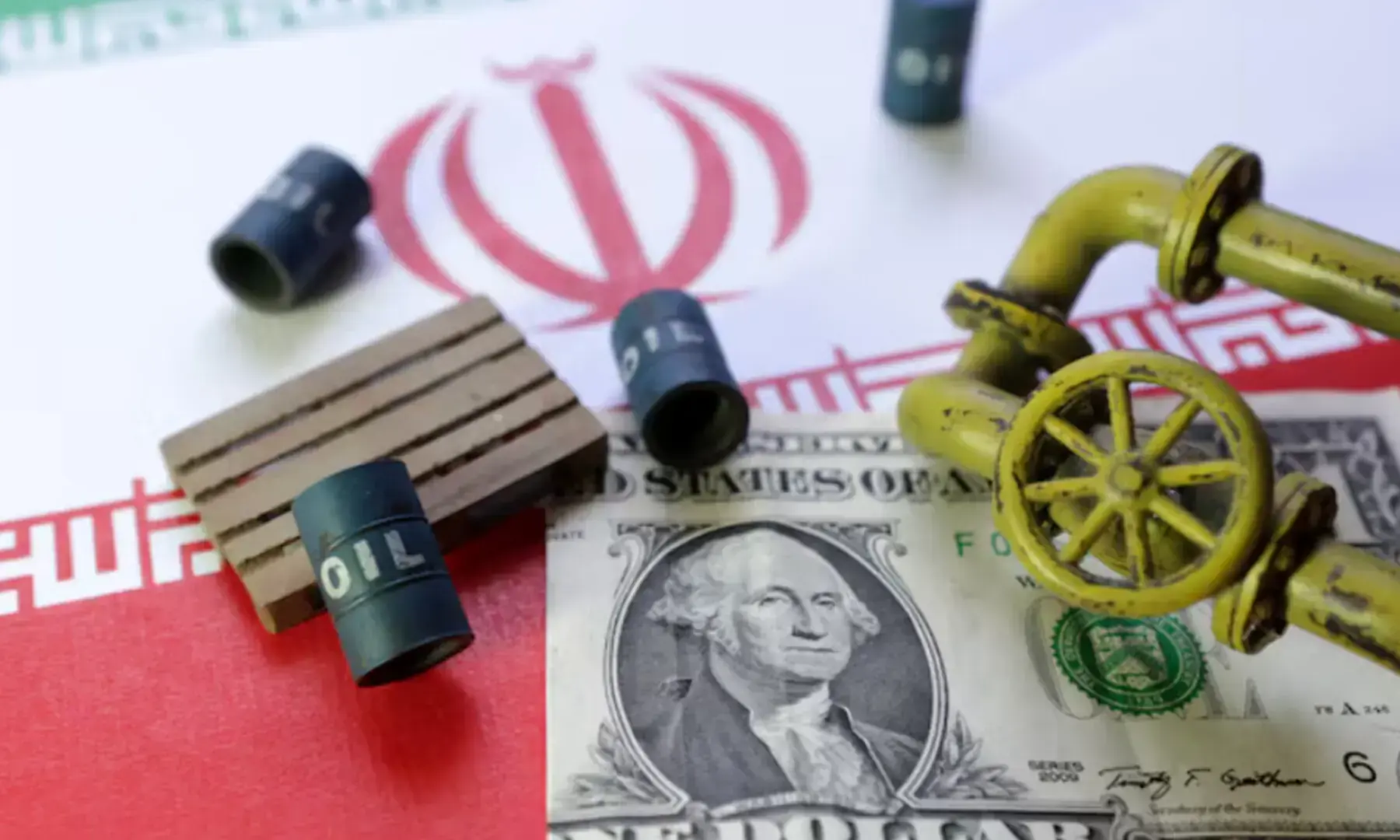
The war, which has entered its 100th day, has upended global financial and energy markets, drawing concerns from world leaders.

Sunday marks 100 days since the United States and Israel launched war on Iran – a conflict that has triggered a global energy crisis and darkened the global economic outlook.
The war, which Iran has called an “unprovoked act of aggression”, has expanded to Gulf nations as well as Lebanon. A fragile ceasefire has been in place since April 8, but Israel has continued its offensive in Lebanon, killing more than 3,000 people.
America’s European allies did not condemn the US-Israeli attacks, but declined to get involved in the war and expressed their opposition to regime change. The Gulf countries also condemned the Iranian attacks on their territories.
Russia and China, the world’s second-largest economy, also pushed back against the war.
Countries around the world affected by rising oil prices and market volatility have called for a diplomatic solution to the conflict, with Pakistan playing a major role in mediating talks.
On Wednesday, Israel and Lebanon renewed the ceasefire agreed on April 16. But that has not stopped Israel from carrying out its attacks on Lebanon, which Tehran has said are a violation of the April 8 ceasefire between Washington and New Delhi.
As diplomacy to negotiate a deal between the warring parties drags on, we break down how the rest of the world initially reacted to the war, how affected countries’ positions have evolved, and where they stand now.

The Gulf region
Gulf states have been caught up in the war since it began on February 28, with Iran launching missile and drone strikes against US military assets hosted on their soil. But Gulf countries have accused Iran of also targeting civilian sites, including airports and energy facilities.
Hundreds of days into the war, sporadic attacks continue. Here’s how some countries have been reacting.
Oman – As the main mediator of the US-Iran nuclear talks, Oman initially expressed dismay when the war was launched while nuclear talks were underway. Foreign Minister Badr Albusaidi said the conflict would not serve US interests, nor the interests of global peace. Unlike other US allies in the Gulf, such as Qatar, Bahrain and the UAE, Oman does not host US forces.
It was nevertheless dragged into the conflict when Iran launched a flurry of retaliatory attacks on US military assets and energy infrastructure across the Gulf region. The Duqm commercial port, located in Al Wusta governorate in central Oman, was struck by two drones on March 1. A fuel tank at the port was also hit in a drone attack two days later. The Salalah port in the country’s west was hit at least twice by drones. Two foreigners were killed in a drone attack in Sohar province on March 13.
Iran, which has friendly ties with Oman, has denied it was behind the attacks.
In a March 18 article for the Economist, Albusaidi said the US has “lost control of its own foreign policy” and accused Israel of persuading US President Donald Trump’s administration to go to war with Iran. He also said the conflict was a “catastrophe” and a “grave miscalculation”. Last month, Trump threatened Oman with military force if it got involved in the dispute over access to the Strait of Hormuz, a vital shipping route that Iran has choked off during the conflict.
Qatar – When the war began, Qatar strongly condemned Iran for firing missiles targeting its territory, which is home to the Al Udeid airbase that hosts US troops. Qatar expelled several Iranian military and diplomatic personnel from the country following an attack on QatarEnergy’s liquefied natural gas (LNG) facility at Ras Laffan.
A long-range US AN/FPS-132 missile early-warning radar in Qatar was also damaged by Iranian missiles.
Qatar has called for de-escalation and dialogue to end the war. In a phone call, Qatar’s Emir Sheikh Tamim bin Hamad Al Thani told Trump of the need to prioritise political and diplomatic solutions and dialogue among all parties to consolidate regional security and stability and spare the region further tension and escalation.
Trump expressed his appreciation for the role played by the State of Qatar in supporting Pakistan’s mediation efforts and strengthening channels of communication among the various parties.
Doha has been in communication with Iranian officials. Iran’s Foreign Minister Abbas Araghchi and its main negotiator, Parliament Speaker Mohammad Bagher Ghalibaf, visited Qatar in May as part of diplomatic efforts to end the conflict.
United Arab Emirates (UAE) – When the war began, the UAE’s Ministry of Defence condemned in the “strongest terms” Iran’s attacks on its territory, several of which it said its air defences intercepted. It called the attack “a dangerous escalation and a cowardly act that threatens the security and safety of civilians”, stressing that the UAE has the “full right” to respond.
According to a May 29 report by the Wall Street Journal, the UAE also carried out dozens of air strikes against Iran during the Israeli-US war on Iran. The strikes were reportedly coordinated with the US and Israel, which provided the UAE with intelligence. The UAE has also cracked down on Iranians and Iranian businesses based in the country.
Iranian authorities have, in turn, increasingly singled out the UAE in their war messaging, and have warned of stronger strikes against the country if the US and Israel resume their attacks. Among Gulf states, the UAE and Kuwait have thus far borne the brunt of Iranian attacks.

Bahrain – When the war began, Bahrain, which hosts the United States Navy’s Fifth Fleet, called attacks on its territory “treacherous”. It has since actively used its United Nations Security Council diplomacy to push resolutions condemning Iran’s action. Bahrain’s efforts to pass a UN resolution to open the Strait of Hormuz failed due to vetoes from China and Russia last month.
Kuwait – The country’s Ministry of Foreign Affairs denounced the Iranian attack on Kuwaiti soil as a “flagrant violation” of international law and said it had the right to respond. As the war drags on, Kuwait has repeatedly come under Iranian drone attacks and warned that any additional escalation would only deepen regional instability. Kuwait has blamed Iran for launching drone and missile attacks last week. Iran said it targeted a US interest in the country.
Saudi Arabia – Since the war began, Saudi Arabia has condemned in the “strongest terms” the Iranian attacks on Gulf Arab states and warned of “dire consequences”.
The country has also condemned Iran’s blockade of the Strait of Hormuz, calling it a flagrant violation of international law. Riyadh has been able to export oil from its Red Sea ports, undercutting the Hormuz blockade.
According to a May 12 article by the Reuters news agency, Saudi Arabia launched numerous, unpublicised strikes on Iran in retaliation for attacks carried out in the kingdom during the war. But the country has kept channels open for discussions with Iran. Foreign ministers from both countries have regularly held phone calls.
Iraq
Iraq, closely allied with Iran since the overthrow of President Saddam Hussein in the 2003 US-led invasion, condemned the US-Israel strikes on Tehran while actively trying to prevent its own territory from being dragged into the conflict.
The country became a battleground between the Iran-aligned Popular Mobilisation Forces (PMF) and the US. Iraqi armed groups targeted regional countries as well as US installations inside Iraq.
Advertisement
The PMF headquarters in Iraq’s capital, Baghdad, was targeted along with other Shia factions by US forces.
In March, Iranian forces also launched an operation targeting Kurdish groups in the semi-autonomous Kurdish region of northern Iraq. Sporadic attacks on the groups have continued since then.
Economic worries are also weighing heavily after Iraq’s Ministry of Oil in March announced a case of force majeure on all oilfields developed by foreign oil companies, citing disruptions to navigation through the Strait of Hormuz, which have halted most of the country’s crude exports.
Iraq has struggled to balance its ties amid rising hostilities between Iran and the US and its regional allies. A US media report last month noted that Israel had clandestinely built two military bases in Iraq.
Turkiye
When the war began, Turkiye’s Ministry of Foreign Affairs called on “all parties” to end the spiral of violence, which it stressed started with US-Israeli strikes on Iran. “The events that began with Israel and the US attacking Iran, and continued with Iran targeting third countries, are of a nature that risks the future of our region and global stability,” said the ministry.
In May, however, a ballistic missile fired from Iran headed into Turkish airspace after passing over Syria and Iraq, the Turkish Ministry of National Defence said, adding that it had been destroyed by NATO air defence systems.
Turkish Minister of Foreign Affairs Hakan Fidan conveyed in a call to his Iranian counterpart Ankara’s protest over the breach of its territory, the Reuters news agency reported.
Fidan visited several Gulf countries as part of Turkiye’s diplomatic efforts to end the war. He joined foreign ministers from Saudi Arabia, Egypt and Pakistan in Islamabad on March 29 to push for diplomacy – and over a week later, Pakistan announced the ceasefire.
Turkiye’s President Recep Tayyip Erdogan has urged an end to the war. In May, he told US President Trump that he welcomes the extension of a US-Iran ceasefire and believes disputed issues between the two sides can be resolved. The country has also called for freedom of navigation in the Strait of Hormuz.
Jordan
Since the start of the war, Iran has launched missiles and drones towards Jordanian territory, which hosts US bases like the Muwaffaq Salti airbase. Iranian strikes targeted US air defence, satellite communication systems and other assets in Jordan. A radar for a US Terminal High Altitude Area Defense (THAAD) missile defence system sustained significant damage in Iranian attacks.
Jordan has repeatedly urged the warring parties to halt hostilities and called on Israel to end its war on Lebanon.
Egypt
Egypt has expressed deep concern regarding the war on Iran, calling for de-escalation and urgently appealing for a diplomatic resolution. “Nobody can stop the war in our region in the Gulf but you,” Egypt’s President Abdel Fattah el-Sisi told US President Trump in March.
Egypt joined other regional countries as part of diplomatic parleys. Egyptian Foreign Minister Badr Abdelatty held calls with his Iranian counterpart on Tuesday, while President el-Sisi spoke to his Iranian counterpart Masoud Pezeshkian just before the war started.
African Union
The African Union has condemned aggression against Gulf states and urged immediate de-escalation to protect international security. As the war drags on, the organisation has also expressed grave concern regarding the conflict’s impact on soaring food and fuel prices across the African continent.
Advertisement
Despite being one of the world’s largest oil-producing regions – accounting for roughly 12 percent of global reserves – Africa still imports more than 70 percent of its refined fuel, according to the Africa Finance Corporation (AFC), a multilateral financial institution created by African states. This has left many nations there, particularly those like Kenya with no or few biocarbon reserves, exposed to market volatility during the US-Israel war on Iran.
In April, the AFC warned that the continent is on course for an 86 million-tonne fuel shortfall by 2040, underscoring the widening gap between domestic production capacity and growing energy demands.

South Asia
India – When the war began, India’s Ministry of External Affairs called on all parties to “exercise restraint” and “avoid escalation”.
But Indian Prime Minister Narendra Modi’s trip to Israel days before the war started has been termed “ill-timed”. New Delhi neither condemned the US-Israeli war on Tehran nor the killing of Ayatollah Ali Khamenei, though the country’s Foreign Secretary Vikram Misri signed a condolence book at the Iranian Embassy in New Delhi.
New Delhi has, however, condemned Iranian attacks on nations in the Gulf, a major source of India’s oil imports and a destination for nearly 10 million Indian expats.
As the war has escalated with the blockade of the Strait of Hormuz, Indian ships in the strait have been attacked by Iran, and New Delhi has since urged Tehran to guarantee the unimpeded transit and safety of India-bound commercial shipping.
Besides attacks, India has also been impacted by the global energy crisis that began after the war. In May, Prime Minister Modi urged Indians to work from home, avoid international trips, and not buy gold to address the situation.
Iran has also opened a major diplomatic opening to India’s arch-foe, Pakistan.

Pakistan – Immediately after the US and Israel launched attacks on Iran, Pakistan’s Foreign Minister Ishaq Dar “strongly condemned the unwarranted attacks against Iran and called for an immediate halt to escalation through urgent resumption of diplomacy to achieve a peaceful, negotiated resolution to the crisis”.
Since then, Pakistan has positioned itself as a key mediator in the US-Iran conflict, urging both sides to uphold ceasefires and utilising high-level diplomatic visits to Tehran to push for a resolution. Pakistan was behind the April 8 ceasefire signed between the US and Iran, and has since helped advance talks to end the conflict. The country also hosted US Vice President JD Vance on April 13 for talks, though no agreement was reached.

Bangladesh and Sri Lanka – Dhaka has expressed concern over the war on Iran and has called for an end to hostilities, while Sri Lanka has tried to remain neutral. The economic impact of the war has, however, severely affected Bangladesh as well as Sri Lanka.
In March, Sri Lanka’s President Anura Kumara Dissanayake said his government turned down a request from the United States to land two US combat aircraft at a civilian airport and emphasised that the government was not going to take sides in the conflict.
In early March, Sri Lanka’s navy also rescued 32 Iranian crew from the frigate IRIS Dena after it was torpedoed by a US submarine off the country’s coast, killing at least 84 people. Days later, Sri Lanka evacuated more than 200 crew members from a second Iranian vessel, IRIS Bushehr, after the ship requested assistance from Colombo.
China
China’s Ministry of Foreign Affairs has urged “an immediate halt to military actions” and appealed for “the resumption of dialogue and negotiations” to maintain regional peace and stability. It stressed that “Iran’s national sovereignty, security and territorial integrity should be respected”.
Since then, China has played a quieter role, shepherding phone calls and meetings with officials of Gulf countries. It has said it will work with Pakistan to “make positive contributions to the early restoration of peace and stability in the Middle East”.
Last month, Iranian Foreign Minister Abbas Araghchi met his Chinese counterpart, Wang Yi, in Beijing.
During the meeting, Araghchi said China is a close friend of Iran and bilateral “cooperation will even become stronger under current circumstances”, the Iranian Students’ News Agency reported.
Wang called for Iran and the US to reopen the Strait of Hormuz “as soon as possible”, according to a Chinese Ministry of Foreign Affairs statement.
“China considers that a complete cessation of fighting must be achieved without delay, that it is even more unacceptable to restart hostilities, and that continuing to negotiate remains essential,” the statement added.
In April, China, alongside Russia, also vetoed a UN Security Council resolution spearheaded by Bahrain, which sought to “coordinate defensive measures to protect commercial shipping in the Strait of Hormuz”.
Russia
When the US and Israel struck Iran on February 28, Dmitry Medvedev, deputy chairman of Russia’s Security Council, accused the US of having used its nuclear talks with Iran as a cover-up before military operations. The country’s Ministry of Foreign Affairs later urged the international community to swiftly deliver an objective assessment of what it called irresponsible actions that risk further destabilising the region.
In April, Iran’s Araghchi visited Russia and met President Vladimir Putin, who pledged that Moscow would remain a staunch ally of Tehran.
“We see how courageously and heroically the Iranian people are fighting for their independence and sovereignty,” Putin told Araghchi, saying he hoped they could get through a “difficult period” and that peace would prevail.
“For our part, we will do everything that serves your interests, the interests of all the people of the region, so that peace can be achieved as soon as possible,” Putin said, according to Russian state media.
In April, Russia said it would take in Iran’s highly enriched uranium stock as part of a peace deal with the US.
“This proposal was made by President Putin in conversations with both the United States and regional states. The offer still stands, but has not been acted upon,” Kremlin spokesman Dmitry Peskov told reporters in the country.
ASEAN
The Association of Southeast Asian Nations (ASEAN) – which includes Brunei, Cambodia, Indonesia, Laos, Malaysia, Myanmar, the Philippines, Singapore, Thailand, Vietnam, and Timor-Leste – has called for an end to hostilities in the war and in May also expressed concerns about the economic impact of the war.
At a summit in the Philippines in May, ASEAN countries agreed on measures aimed at reducing the impact of the Iran war on their economies, but conceded that the initiatives will take considerable time to come into effect.
Leaders also agreed to develop a regional power grid and fuel stockpile, while reducing their dependence on energy imports from the Middle East. ASEAN currently imports more than half of its crude oil and 17 percent of its natural gas from the region, according to the bloc’s Centre for Energy. In late March, the Philippines became the first country in the world to declare a national emergency over dwindling energy stockpiles.
Reference Link:- https://www.aljazeera.com/news/2026/6/7/how-have-countries-around-the-world-responded-to-the-us-israel-war-on-iran