Pakistan: A new policy for the automobile sector
Wire desk byline Sourced from Xinhua, Dawn, Arab News, Anadolu and Minute Mirror. Translated and abridged by the GSRRA Desk.

The government is coming up with the Automobile and Auto Parts Manufacturing Policy 2026–31. The New Energy Vehicles (NEVs) policy is to be merged into it, and the policy is to be aligned with the National Tariff Policy 2025–30, where the bone of contention is the import of used cars. Like any policy, the proposed targets are more of a wish list.
The government wants car production to reach 500,000 units by 2031 from the existing base of 200,000. The aim is to have 30 percent of locally assembled vehicles as NEVs.
These targets are still achievable, though they are not easy. However, other targets, such as 80 percent localization and $1 billion in exports by 2031, are nothing but pipe dreams.
Nevertheless, the policy has some interesting elements. With the sharp increase in petroleum prices, the transition to NEVs has accelerated. Most of the new cars introduced in the last few months are NEVs.
The continuation of this trend would depend on what kind of incentives are given to NEVs in the new policy. Any car that can drive a minimum of 50 kilometres on pure EV mode is likely to qualify for NEV incentives. This would include BEVs, REEVs and PHEVs that meet the above condition. Right now, there is a 1 percent GST on BEVs and REEVs, while it is 8.5 percent for most PHEVs. Then there are some advantages in the duty structure.
The government may offer the same incentives to all NEVs, with GST possibly at either 1 percent or 8.5 percent.
On the other side, GST on most ICE vehicles in a similar category is 25 percent, along with the carbon levy. That has created the price delta needed to bring NEVs, which are expensive, closer to the price of similar ICE vehicles. If the government increases the delta, NEV sales will increase, and vice versa.
The government must maintain the delta, if not increase it, for faster adoption of NEVs, which can reduce the fuel import bill and lower carbon emissions in increasingly polluted cities. The shift from petroleum to electricity is not only environmentally friendly but also better for Pakistan’s economy, as a major chunk of power is produced from local fuels and renewables, including solar.
A more pressing need is to convert two- and three-wheelers into EVs, where the government may have to provide subsidies, as ICE two- and three-wheelers are dirt cheap and highly localized. However, their contribution to fuel consumption is high, and their contribution to carbon emissions is even higher, as age-old technology is still being used.
In this category, given that fuel prices are likely to remain high, a natural transition is very much on the cards — much like what happened with solarisation when power prices skyrocketed.
In the case of cars, a push is required. The government is ready to provide one, but perhaps not by reducing overall prices; rather, by maintaining the delta. Given the growing car imports amid rising import pressure, the government may introduce a 5 to 15 percent environmental levy on ICE cars in addition to the existing carbon levy.
Automobile assemblers are split on this, but the government should support NEVs. However, all automobile assemblers are united against the used car lobby. The IMF wants duty protection on used cars to end.
However, that should not happen without adequate safety and environmental standards. There are already no standards for old cars on the road, and opening up used car imports could make the problem bigger. Plus, it would be detrimental to job creation and economic value addition. All the government should do is reduce the delta to let assemblers become more efficient.
And, they are becoming more efficient. Unlike in 2015, when there were only three assemblers and consumers were deprived of choices, there are now more than a dozen assemblers, with the latest cars being introduced in Pakistan, and competition is bringing prices down.
Let competition spur further, and let there be a similar fight for market share in NEVs. However, nothing will work optimally without correcting the macroeconomic environment. Pakistan’s car sales have yet to cross the critical threshold, as per capita income remains low. Now and then, import curbs are introduced to discourage car imports, even in CKD form.
The SBP (State Bank of Pakistan) limits car financing, and now that is being pushed in the policy, although it should not have been an issue in the first place.
Overall, the policy should increase localization and enhance the share of NEVs, but the key to success lies in correcting economic structural weaknesses that have little to do with the auto policy itself.
Reference Link:-https://www.brecorder.com/news/40422627
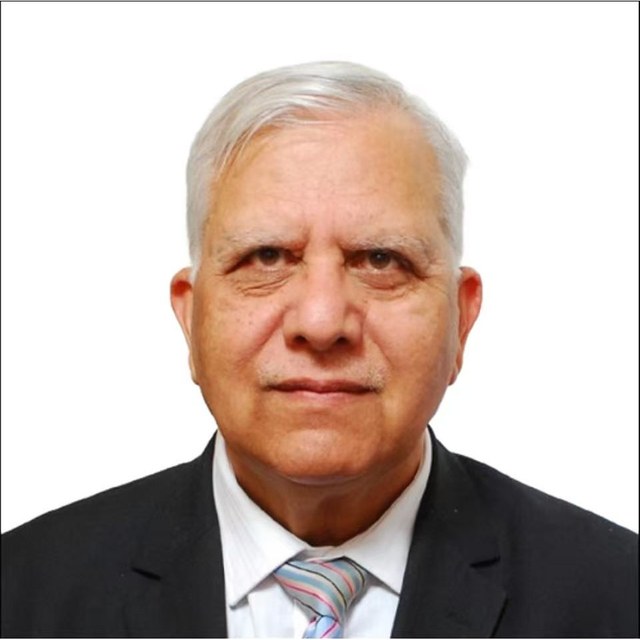
Zamir Ahmed Awan is the founder and Chair of the Global Silk Route Research Alliance, a think tank in Islamabad. He studied engineering at Shanghai University in the 1980s, and years later he went back to China as Pakistan's science counsellor in Beijing, from 2010 until 2016, working on science and higher education cooperation between the two countries.…