
Trump’s Visit to China: A New Opening for Strategic Stability. 特朗普访华:为战略稳定开启新契机.
Wire desk byline Sourced from Xinhua, Dawn, Arab News, Anadolu and Minute Mirror. Translated and abridged by the GSRRA Desk.

(下边有中文翻译,请继续看到底。 谢谢。)

President Donald Trump’s recent visit to China should be seen as more than a bilateral diplomatic event. It was a carefully watched moment in world politics, taking place at a time when the Iran war, energy insecurity, economic fragmentation, and great-power rivalry are reshaping the global order. In such an atmosphere, any serious conversation between Beijing and Washington carries consequences far beyond the two capitals.
The most important message from the visit is straightforward: China and the United States, despite significant differences, still recognize that direct engagement is preferable to confrontation. President Xi Jinping’s emphasis on building a “constructive China-U.S. relationship of strategic stability” gives this meeting its central meaning. The Chinese side described this approach as cooperation being the mainstay, with competition within proper limits, manageable differences, and expected peace. That language matters because it shifts the discussion away from emotional rivalry and toward rules, communication, and crisis management.
For China, the visit offered an opportunity to present itself as a responsible major power: confident, calm, and committed to dialogue. For the United States, it was a recognition that China cannot be bypassed in any serious discussion on trade, technology, energy security, the Middle East, or the future of global governance. The two countries may not agree on everything, but they remain deeply connected. Their economies are interdependent, their militaries operate in overlapping strategic spaces, and their decisions influence every region of the world.

The economic takeaway was also significant. China’s plan to purchase 200 Boeing aircraft, seek reciprocal tariff cuts, expand agricultural market access, and extend the trade truce showed that both sides still have practical incentives to reduce tension. These are not cosmetic outcomes. They signal that economic pragmatism remains alive, even when political mistrust is high. The reported aircraft deal, possible tariff adjustments, and continued talks over rare earths and export controls show that both sides are trying to prevent rivalry from becoming economic decoupling.
From a Chinese perspective, this is precisely the correct direction. Beijing has long argued that trade wars produce no winners and that equal-footed consultation is the only sustainable way to resolve disputes. If Washington accepts that China’s development is not a threat but a reality of the 21st century, the two countries can compete without destroying the global economic system. The visit did not solve all problems, but it reopened space for managed competition.
The Iran war gave the meeting an even heavier geopolitical weight. The conflict has shaken the Middle East, disrupted energy routes, and placed the Strait of Hormuz at the center of global anxiety. Trump said after the Beijing talks that President Xi agreed Iran must reopen the Strait, while China publicly maintained that the war should never have started and has no reason to continue. The important point is that China’s role is not to join military pressure, but to encourage de-escalation, protect shipping lanes, and push diplomacy back to the center.

Here, the Chinese narrative is clear and consistent: wars cannot solve political problems; dialogue remains the only viable path. China does not want the Middle East to become another arena of bloc confrontation. It wants energy routes open, civilian lives protected, sovereignty respected, and the United Nations system strengthened. This position is not only moral language; it is also practical statecraft. China is one of the world’s largest energy importers, and instability in the Gulf directly affects global prices, supply chains, and developing economies.
The China-Pakistan Five-Point Initiative on the Gulf and Middle East is especially relevant. China and Pakistan called for an immediate cessation of hostilities, early peace talks, protection of civilians and nonmilitary targets, security of shipping lanes, including the Strait of Hormuz, and respect for the UN Charter. This initiative demonstrates that China’s diplomacy is not isolated. It works with trusted partners, especially Pakistan, to build a peace-oriented consensus among developing countries.
This is where Trump’s visit to China may indirectly affect China-Pakistan relations. It will not weaken them. On the contrary, it may increase Pakistan’s diplomatic value. If China and the United States explore ways to reduce the Iran crisis, Pakistan becomes a useful bridge because of its geography, Islamic identity, relations with Iran and Gulf states, and close strategic partnership with China. Recent Pakistani statements describe China-Pakistan ties as an “All-Weather Strategic Cooperative Partnership” based on mutual trust, mutual respect, and mutual benefit, while also highlighting shared efforts for peace in the Gulf and Middle East.

Therefore, improved China-U.S. communication does not mean China will move away from Pakistan. China’s global diplomacy is not a zero-sum game. Beijing can stabilize ties with Washington while deepening cooperation with Islamabad. In fact, a more stable China-U.S. relationship may benefit Pakistan by reducing global economic uncertainty, protecting energy markets, and creating a more favorable environment for CPEC, regional connectivity, and South-South cooperation.
The key takeaway from Trump’s visit is that China has become an indispensable center of global diplomacy. The United States came to Beijing not from weakness, but from necessity. Russia’s subsequent high-level engagement with China also reflects the same reality: major powers increasingly understand that no global crisis can be managed without China. This is not about replacing one hegemon with another. The Chinese vision is different. It emphasizes multipolarity, mutual respect, non-interference, development, and shared security.
However, optimism should not become an illusion. The Taiwan question remains the most sensitive issue in China-U.S. relations. President Xi’s message was direct: if Taiwan is handled properly, the relationship can remain stable; if not, clashes and even conflicts could endanger the entire relationship. This is not a threat but a warning about the political foundation of bilateral ties. For Beijing, the One-China principle is non-negotiable. For Washington, the challenge is to prevent domestic politics and military signaling from undermining strategic stability.

Technology will remain another difficult field. Semiconductors, artificial intelligence, rare earths, export controls, cybersecurity, and advanced manufacturing are now central to national power. The visit may reduce immediate pressure, but it will not end structural competition. The realistic hope is not a return to the old era of easy globalization. The realistic hope is a new framework where competition is bounded by communication, trade is protected from total politicization, and both countries avoid actions that force the world into rival camps.
The impact on geopolitics may be gradual but important. First, the visit can lower the temperature in China-U.S. relations and reassure global markets. Second, it can create diplomatic space for discussions on Iran, energy security, and maritime stability. Third, it can show the world that even rival powers must talk when global stability is at risk. Fourth, it can strengthen the argument for a multipolar order in which no single country dictates outcomes alone.
From the Chinese point of view, the future world order should be more balanced, not more divided. It should give developing countries a greater voice. It should respect different political systems. It should make economic development a common objective rather than a weapon of pressure. It should reject the idea that one country’s rise must mean another country’s decline. This is why Beijing repeatedly speaks of win-win cooperation, true multilateralism, and a community with a shared future.

The days ahead will test whether the visit was a turning point or merely a pause in tension. Much will depend on whether both sides follow words with discipline. Washington must avoid treating China as both a partner and a permanent enemy at the same time. Beijing, for its part, will continue defending its core interests while keeping doors open for cooperation. If both countries institutionalize dialogue on trade, military communication, energy security, climate, AI safety, and regional conflicts, the visit may be remembered as the beginning of a more stable phase.
In the Iran war, China is unlikely to act as America’s pressure tool. But China can play a constructive role as a diplomatic stabilizer. It can encourage restraint, coordinate with Pakistan and other partners, protect civilian shipping, and support a peace framework based on international law. That may not deliver instant peace, but it can prevent escalation and keep diplomacy alive.
In the final analysis, Trump’s visit to China reflects a changing world. The United States remains powerful, but it can no longer manage global affairs alone. China has risen not only as an economic power, but also as a diplomatic force whose voice is necessary in every major crisis. The visit’s greatest achievement is not one agreement or one photograph. Its achievement is the recognition that dialogue between China and the United States is essential for world peace.

For China, the path forward is steady confidence: protect sovereignty, expand openness, promote peace, deepen ties with trusted partners such as Pakistan, and engage the United States without fear or hostility. For the world, the best outcome is not a new Cold War, but a new balance—one where major powers compete responsibly, cooperate where possible, and leave space for developing nations to rise.
That is the optimistic lesson of Trump’s China visit. It shows that even in a dangerous moment, diplomacy still has room to work. And when China and the United States choose conversation over collision, the whole world gains a little more stability.

特朗普访华:为战略稳定开启新契机.
美国总统唐纳德·特朗普近期对中国的访问,不应仅被视为一次双边外交活动。它是世界政治中一个备受关注的时刻,发生在伊朗战争、能源不安全、经济碎片化以及大国竞争正在重塑全球秩序的背景下。在这样的国际环境中,北京与华盛顿之间的任何严肃对话,其影响都远远超出两国首都本身。
此次访问最重要的信息很简单:中美两国虽然存在尖锐分歧,但仍然明白,直接接触比对抗更好。习近平主席强调建设“具有战略稳定性的建设性中美关系”,这赋予了此次会晤核心意义。中方所描述的路径是:以合作为主轴、竞争保持在适当范围、分歧可以管控、和平可以预期。这种表述很重要,因为它把讨论从情绪化的竞争,转向规则、沟通和危机管理。
对中国而言,此次访问提供了一个机会,使其能够展示自己作为负责任大国的形象:自信、冷静,并致力于对话。对美国而言,这也是一种承认,即在贸易、技术、能源安全、中东问题以及全球治理未来等重大议题上,中国无法被绕开。两国不可能在所有问题上达成一致,但它们仍然深度相互联系。两国经济相互依存,军事力量在重叠的战略空间中活动,其决策影响世界每一个地区。
经济层面的意义同样重要。中国计划购买200架波音飞机、寻求相互削减关税、扩大农产品市场准入,并延长贸易休战期,这表明双方仍然有现实动力去降低紧张局势。这些并不是表面性的成果。它们说明,即使政治互信不足,经济务实主义仍然存在。有关飞机交易、可能的关税调整,以及围绕稀土和出口管制的持续谈判,都显示出双方正在努力避免竞争演变为经济脱钩。
从中国视角看,这正是正确方向。北京长期主张贸易战没有赢家,平等协商才是解决分歧的唯一可持续方式。如果华盛顿能够接受中国的发展不是威胁,而是21世纪的现实,那么两国就可以在不破坏全球经济体系的情况下进行竞争。此次访问并没有解决所有问题,但它重新打开了可控竞争的空间。
伊朗战争使此次会晤具有更沉重的地缘政治意义。这场冲突震动了中东,扰乱了能源通道,并使霍尔木兹海峡成为全球焦虑的中心。特朗普在北京会谈后表示,习近平主席同意伊朗必须重新开放海峡,而中国公开坚持认为,这场战争本不应开始,也没有理由继续下去。关键在于,中国的作用不是加入军事施压,而是推动局势降温,保护航运通道,并让外交重新回到中心位置。
在这一点上,中国叙事清晰且一贯:战争无法解决政治问题,对话仍然是唯一可行路径。中国不希望中东成为另一个集团对抗的场域。中国希望能源通道保持开放,平民生命得到保护,主权受到尊重,联合国体系得到加强。这不仅是道义语言,也是务实的国家治理。中国是世界最大的能源进口国之一,海湾地区的不稳定会直接影响全球价格、供应链和发展中国家经济。
中巴关于海湾和中东问题的五点倡议尤其重要。中国和巴基斯坦呼吁立即停止敌对行动,尽早开展和平谈判,保护平民和非军事目标,保障包括霍尔木兹海峡在内的航运通道安全,并尊重《联合国宪章》。这一倡议表明,中国外交并不是孤立行动。它与可信赖的伙伴,尤其是巴基斯坦合作,在发展中国家中建立面向和平的共识。
这正是特朗普访华可能间接影响中巴关系的地方。它不会削弱中巴关系。相反,它可能提升巴基斯坦的外交价值。如果中美探索降低伊朗危机的方式,巴基斯坦将成为一个有用的桥梁,因为它具有地理位置、伊斯兰身份、与伊朗和海湾国家的关系,以及与中国的紧密战略伙伴关系。巴基斯坦近期声明将中巴关系描述为建立在相互信任、相互尊重和互利基础上的“全天候战略合作伙伴关系”,同时也强调双方在海湾和中东和平问题上的共同努力。
因此,中美沟通改善并不意味着中国会疏远巴基斯坦。中国的全球外交不是零和游戏。北京可以稳定与华盛顿的关系,同时深化与伊斯兰堡的合作。事实上,更稳定的中美关系可能有利于巴基斯坦,因为它可以减少全球经济不确定性,保护能源市场,并为中巴经济走廊、区域互联互通和南南合作创造更有利的环境。
特朗普访华的关键启示是:中国已经成为全球外交中不可或缺的中心。美国来到北京,并不是出于软弱,而是出于必要。俄罗斯随后与中国进行高层互动,也反映出同样的现实:主要大国越来越清楚,没有中国参与,任何全球危机都无法得到有效管理。这并不是要用一个霸权取代另一个霸权。中国的愿景不同。它强调多极化、相互尊重、不干涉、发展和共同安全。
然而,乐观不应变成幻想。台湾问题仍然是中美关系中最敏感的问题。习近平主席的信息非常直接:如果台湾问题处理得当,两国关系就可以保持稳定;如果处理不当,摩擦甚至冲突可能危及整个关系。这不是威胁,而是关于双边关系政治基础的警示。对北京而言,一个中国原则不可谈判。对华盛顿而言,挑战在于防止国内政治和军事信号破坏战略稳定。
技术仍将是另一个困难领域。半导体、人工智能、稀土、出口管制、网络安全和先进制造,如今都已成为国家实力的核心。此次访问可能会降低短期压力,但不会终结结构性竞争。现实的希望并不是回到旧有的轻松全球化时代。现实的希望是建立一种新框架,使竞争受到沟通约束,使贸易避免被完全政治化,并使两国避免采取迫使世界分裂成对立阵营的行动。
此次访问对地缘政治的影响可能是渐进但重要的。第一,它可以降低中美关系的温度,并稳定全球市场信心。第二,它可以为伊朗、能源安全和海上稳定问题的讨论创造外交空间。第三,它可以向世界表明,即使是竞争对手,在全球稳定受到威胁时也必须进行对话。第四,它可以强化多极秩序的主张,即没有任何单一国家能够独自决定所有结果。
从中国视角看,未来世界秩序应当更加平衡,而不是更加分裂。它应给予发展中国家更大的发言权。它应尊重不同的政治制度。它应把经济发展作为共同目标,而不是把经济作为施压工具。它应拒绝这样一种观念:一个国家的崛起必然意味着另一个国家的衰落。这就是为什么北京反复强调合作共赢、真正的多边主义以及人类命运共同体。
未来的日子将检验此次访问究竟是一个转折点,还是紧张局势中的一次短暂停顿。很大程度上,这取决于双方是否能够以纪律性行动落实言辞。华盛顿必须避免同时把中国视为伙伴和永久敌人。北京方面,则将继续维护核心利益,同时保持合作的大门敞开。如果两国能够在贸易、军事沟通、能源安全、气候、人工智能安全和地区冲突等领域建立制度化对话,那么此次访问可能会被记住为一个更加稳定阶段的开端。
在伊朗战争问题上,中国不太可能充当美国的施压工具。但中国可以作为外交稳定力量发挥建设性作用。它可以鼓励克制,与巴基斯坦及其他伙伴协调,保护民用航运,并支持以国际法为基础的和平框架。这未必能立即带来和平,但可以防止局势升级,并让外交继续存在。
归根结底,特朗普访华反映了一个正在变化的世界。美国仍然强大,但它已经无法单独管理全球事务。中国不仅已经崛起为经济大国,也成为外交力量,其声音在每一场重大危机中都是必要的。此次访问最大的成果不是某一项协议,也不是某一张照片。它的成果在于承认:中美之间的对话对世界和平至关重要。
对中国而言,未来道路是稳健自信:维护主权,扩大开放,促进和平,深化与巴基斯坦等可信赖伙伴的关系,并以不恐惧、不敌视的态度同美国接触。对世界而言,最好的结果不是新冷战,而是一种新的平衡——在这种平衡中,主要大国负责任地竞争,在可能的地方合作,并为发展中国家的崛起留下空间。
这就是特朗普访华带来的乐观启示。它表明,即使在危险时刻,外交仍然有发挥作用的空间。而当中国和美国选择对话而不是碰撞时,整个世界都会获得更多一点稳定。
(注意: 本文是用AI翻译的,或有误差。请以原版英文为准。谢谢。)
Reference Link:- https://thinktank.pk/2026/05/21/trumps-visit-to-china-a-new-opening-for-strategic-stability/
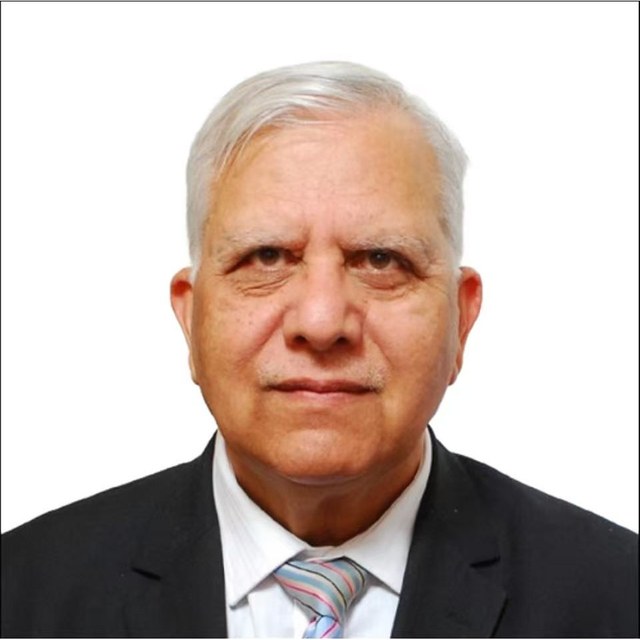
Zamir Ahmed Awan is the founder and Chair of the Global Silk Route Research Alliance, a think tank in Islamabad. He studied engineering at Shanghai University in the 1980s, and years later he went back to China as Pakistan's science counsellor in Beijing, from 2010 until 2016, working on science and higher education cooperation between the two countries.…