

(下边有中文翻译,请继续看到底。 谢谢。)
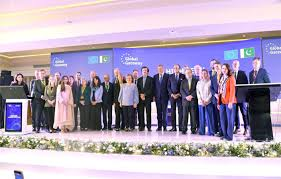
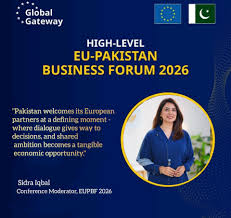
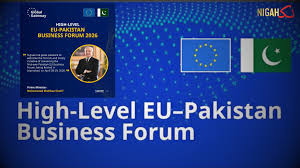
As Islamabad hosts the high-level EU–Pakistan Business Forum this week, the moment carries more weight than a routine diplomatic gathering. It reflects a strategic convergence between the European Union and Pakistan at a time when global economic alignments are shifting, supply chains are being reconfigured, and emerging markets are gaining renewed importance. More importantly, it signals a transition—from engagement based largely on trade preferences to a broader, deeper partnership anchored in investment, technology, and sustainable growth.
Prime Minister Shehbaz Sharif captured this shift aptly when he described the forum as a platform to move “from dialogue to deal-making.” That phrase may well define the future trajectory of EU–Pakistan relations.
A Relationship Built on Trade, Ready for Transformation
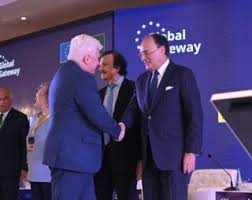
The EU–Pakistan relationship has evolved steadily over the past decades, with economic cooperation forming its backbone. The turning point came in 2014, when Pakistan was granted access to the EU’s GSP+ scheme. This preferential trade arrangement allowed Pakistani exports—especially textiles—to enter European markets at reduced or zero tariffs, in exchange for commitments to governance, labor rights, and human rights reforms.
Since then, the EU has emerged as Pakistan’s largest export destination and second-largest trading partner after China. Trade volumes have shown a generally upward trend over the last five years:
2019–20: Approx. €11–12 billion in bilateral trade
2020–21: Slight dip due to COVID-19 disruptions
2021–22: Recovery to around €14 billion
2022–23: Continued growth to nearly €15 billion
2023–24/25 (est.): Crossing €16 billion
Pakistan’s exports—dominated by textiles, garments, leather goods, and surgical instruments—constitute the bulk of this trade, while imports from the EU include machinery, chemicals, pharmaceuticals, and transport equipment.
This asymmetrical trade structure highlights both strengths and limitations: while Pakistan has successfully leveraged market access, it remains heavily reliant on low-value-added exports. The next phase must therefore focus on diversification and value addition.
Investment: A Strong Base with Room to Grow
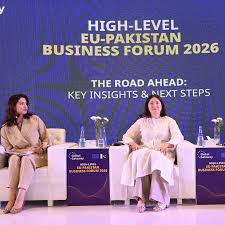
Beyond trade, European investment in Pakistan has quietly built a solid presence. Today, over 300 European companies operate across Pakistan in sectors such as energy, banking, pharmaceuticals, consumer goods, and manufacturing. Major firms from countries like Germany, France, the Netherlands, and Italy have established long-term footprints.
However, compared to the scale of potential, investment remains underutilized. European investors often cite concerns such as regulatory uncertainty, policy inconsistency, and ease of doing business. Yet, recent reforms in Pakistan—ranging from digitalization of services to investment facilitation mechanisms—are gradually addressing these gaps.
The EU’s Global Gateway initiative, which aims to mobilize billions of euros for sustainable infrastructure worldwide, offers a new avenue for investment flows into Pakistan, particularly in renewable energy, transport, and digital connectivity.
Technology Transfer: The Missing Link
One of the most promising yet underdeveloped aspects of EU–Pakistan relations is technology transfer. The EU is a global leader in green technologies, advanced manufacturing, digital innovation, and research and development. Pakistan, on the other hand, is a young, dynamic economy eager to modernize its industrial base.
Bridging this gap can yield transformative outcomes. For instance:
- Renewable Energy: European expertise can help Pakistan accelerate its transition to solar, wind, and hydropower.
- Agri-tech: Precision farming and food processing technologies can boost productivity and exports.
- Digital Economy: Collaboration in AI, fintech, and e-governance can enhance efficiency and competitiveness.
- Manufacturing: Adoption of Industry 4.0 practices can upgrade Pakistan’s industrial output.
The Business Forum’s focus on sectors such as green logistics, advanced manufacturing, and IT signals a recognition of this opportunity.
Human Resource: Pakistan’s Competitive Edge
With a population exceeding 240 million—most of it young—Pakistan offers a significant human resource advantage. Each year, thousands of graduates enter the workforce, many with skills in engineering, IT, finance, and business.
For European companies facing aging populations and labor shortages, this presents a mutually beneficial opportunity. Structured cooperation in education, vocational training, and skill development can:
Enhance the employability of Pakistani youth
- Provide European firms with access to cost-effective talent
- Strengthen people-to-people ties
- Programs such as Erasmus+ and technical partnerships between universities can further deepen this dimension of the relationship.
Why the EU–Pakistan Business Forum 2026 Is Significant
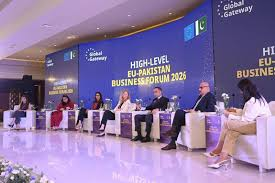
The 2026 Business Forum is not just another conference—it is a strategic platform at a pivotal time. Its importance lies in several key areas:
1. Broadening the Economic Agenda
The forum moves beyond textiles to include agriculture, pharmaceuticals, renewable energy, infrastructure, and the blue economy—areas with high growth potential.
2. High-Level Engagement
By bringing together policymakers, CEOs, investors, and financial institutions, the forum creates a rare convergence of decision-makers capable of translating ideas into actionable projects.
3. Investment Matchmaking
Structured B2B and B2G interactions, along with engagement with international financial institutions, can accelerate deal-making and project financing.
4. Alignment with Global Trends
The emphasis on sustainability, green energy, and digital transformation aligns Pakistan’s economic priorities with European strategic interests.
5. Strengthening Confidence
At a time when global investors are cautious, the forum sends a strong signal of confidence in Pakistan’s economic potential.
Key Expected Outcomes of the 2026 Forum

While formal agreements will unfold over time, several outcomes are anticipated:
- New Investment Commitments: Particularly in renewable energy, infrastructure, and agribusiness
- MoUs and Partnerships: Between European firms and Pakistani companies
- Policy Dialogue: On improving regulatory frameworks and ease of doing business
- Technology Collaboration: Initial steps toward joint ventures in high-tech sectors
- Enhanced Market Access: Discussions on sustaining and expanding GSP+ benefits
Most importantly, the forum is expected to shift the narrative—from potential to performance.
Future Trends: A Partnership in a Changing World
The global economic landscape is undergoing rapid transformation. Geopolitical tensions, supply chain disruptions, and the push for sustainability are reshaping trade and investment patterns. In this context, EU–Pakistan relations hold significant promise.
1. Diversification of Supply Chains
European companies are seeking to reduce dependence on single markets. Pakistan, with its strategic location and industrial base, can emerge as an alternative manufacturing hub.
2. Green Transition
The EU’s Green Deal will drive demand for sustainable products and technologies. Pakistan can align its exports and industries accordingly.
3. Digital Integration
Cross-border digital services, e-commerce, and IT outsourcing will become key drivers of economic engagement.
4. Regional Connectivity
Pakistan’s role as a gateway to Central Asia and the Middle East enhances its attractiveness for European investors.
5. Resilient Partnerships
In an uncertain world, partnerships based on shared economic interests and mutual benefit will gain importance.
A Roadmap for Strengthening EU–Pakistan Business Relations
To fully realize the potential of this partnership, a clear and practical strategy is essential.
1. Policy Stability and Reform
Pakistan must ensure consistent, transparent, and investor-friendly policies. Streamlining regulations and reducing bureaucratic hurdles will be critical.
2. Export Diversification
Moving beyond textiles to high-value sectors such as IT services, pharmaceuticals, and engineering goods will enhance resilience.
3. Investment Facilitation
Establishing one-window operations, improving dispute resolution mechanisms, and offering targeted incentives can attract European investors.
4. Technology Partnerships
Encouraging joint ventures, research collaborations, and knowledge-sharing platforms will accelerate technological advancement.
5. Skill Development
Aligning education and training with industry needs—especially in digital and technical fields—will strengthen human capital.
6. Leveraging GSP+
Pakistan must continue to meet GSP+ requirements while advocating for its continuation and expansion.
7. Promoting SMEs
Small and medium enterprises should be integrated into global value chains through capacity-building and access to finance.
8. Sustainability Focus
Adopting environmentally sustainable practices will not only meet EU standards but also enhance competitiveness.
A Partnership Ready to Evolve
The EU–Pakistan Business Forum 2026 arrives at a defining moment. It reflects a shared recognition that the relationship must evolve—from trade preferences to strategic partnership, from potential to performance, and from dialogue to deal-making.
With nearly 700 million people across both regions, complementary strengths, and a shared interest in sustainable growth, the possibilities are immense. The challenge now lies in translating vision into action.
If approached with commitment, clarity, and cooperation, this forum could mark the beginning of a new chapter—one where EU–Pakistan relations are not just strong, but truly transformative.
从对话到交易:为何 2026 年欧盟 – 巴基斯坦商业论坛意义重大。
随着伊斯兰堡本周主办欧盟-巴基斯坦商业论坛,这一时刻不仅仅是一次例行的外交聚会。它反映了欧盟和巴基斯坦之间的战略契合,正值全球经济格局发生变化、供应链重构、新兴市场重新获得重要地位之时。更重要的是,这标志着一种转变——从主要基于贸易优惠的合作到一个更加广泛、深入的伙伴关系,着眼于投资、技术和可持续增长。
巴基斯坦总理谢赫巴兹·谢里夫准确地捕捉到了这一转变,他在论坛上将其描述为“从对话到交易”的平台。这句话可能会定义欧盟与巴基斯坦关系的未来轨迹。
以贸易为基础,准备转型的关系
欧盟与巴基斯坦的关系在过去几十年里稳步发展,经济合作形成了其支柱。转折点出现在2014年,当时巴基斯坦获得了进入欧盟GSP+优惠贸易计划的资格。这个优惠贸易安排允许巴基斯坦出口商品,特别是纺织品,以减免或零关税进入欧洲市场,作为对治理、劳工权利和人权改革的承诺的交换。
自那时以来,欧盟已成为巴基斯坦最大的出口目的地和第二大贸易伙伴,仅次于中国。在过去五年里,贸易量总体呈上升趋势:
- 2019-2020:约110-120亿欧元的双边贸易
- 2020-2021:由于COVID-19疫情影响有所下降
- 2021-2022:恢复至约140亿欧元
- 2022-2023:继续增长至近150亿欧元
- 2023-2024/2025(预计):突破160亿欧元
巴基斯坦的出口主要包括纺织品、服装、皮革制品和外科器械,而从欧盟的进口则包括机械、化学品、药品和运输设备。
这种不对称的贸易结构既反映了强项,也暴露了局限性:虽然巴基斯坦成功地利用了市场准入,但其出口仍然严重依赖低附加值商品。因此,下一阶段必须聚焦于多样化和价值增值。
投资:有坚实基础,但仍有成长空间
除了贸易,欧盟对巴基斯坦的投资也在悄然建立起坚实的存在。目前,超过300家欧洲公司在巴基斯坦各地运营,涉及能源、银行、制药、消费品和制造业等领域。来自德国、法国、荷兰和意大利等国的大型企业已在巴基斯坦建立了长期的经营足迹。
然而,相较于潜力,投资仍未得到充分利用。欧洲投资者常常提到的顾虑包括监管不确定性、政策不一致性和营商环境难题。然而,巴基斯坦近期的改革——从服务数字化到投资促进机制——正逐步解决这些问题。
欧盟的全球门户倡议旨在动员数十亿欧元资金用于全球可持续基础设施建设,特别是在可再生能源、交通和数字连接领域,为巴基斯坦吸引投资提供了新途径。
技术转移:缺失的环节
欧盟-巴基斯坦关系中最有前景但仍未充分发展的方面之一是技术转移。欧盟在绿色技术、先进制造、数字创新以及研发方面处于全球领先地位,而巴基斯坦则是一个充满活力、渴望现代化的年轻经济体。
弥合这一差距可以带来变革性的成果。例如:
- 可再生能源:欧洲的专业技术可以帮助巴基斯坦加速向太阳能、风能和水电的过渡。
- 农业科技:精准农业和食品加工技术可以提高生产力并增加出口。
- 数字经济:在人工智能、金融科技和电子政务方面的合作可以提高效率和竞争力。
- 制造业:采纳工业4.0实践可以提升巴基斯坦的工业产值。
商业论坛对绿色物流、先进制造和信息技术等领域的关注,正是对这一机会的认可。
人力资源:巴基斯坦的竞争优势
巴基斯坦拥有超过2.4亿人口,大多数是年轻人,这为该国提供了显著的人力资源优势。每年,成千上万的毕业生进入劳动力市场,许多人具备工程、信息技术、金融和商业等领域的技能。
对于面临人口老龄化和劳动力短缺的欧洲公司来说,这是一个互惠互利的机会。教育、职业培训和技能发展方面的结构化合作可以:
- 提高巴基斯坦年轻人的就业能力
- 为欧洲公司提供具有成本效益的人才
- 加强人民与人民之间的联系
像Erasmus+这样的项目和大学之间的技术合作伙伴关系可以进一步深化这一关系的维度。
为什么2026年欧盟-巴基斯坦商业论坛具有重要意义
2026年商业论坛不仅仅是另一个会议,它是一个在关键时刻的战略平台,其重要性体现在几个关键领域:
- 拓宽经济议程
论坛超越了纺织品,涵盖了农业、制药、可再生能源、基础设施和蓝色经济等高增长潜力领域。 - 高层互动
通过汇聚政策制定者、CEO、投资者和金融机构,论坛创造了一个罕见的决策者汇聚点,能够将理念转化为可执行的项目。 - 投资对接
结构化的B2B和B2G互动,以及与国际金融机构的互动,能够加速交易和项目融资。 - 与全球趋势对接
论坛强调可持续性、绿色能源和数字转型,将巴基斯坦的经济优先事项与欧洲的战略利益对接。 - 增强信心
在全球投资者谨慎的时期,论坛传递了对巴基斯坦经济潜力的强烈信号。
2026年论坛的关键预期成果
虽然正式协议将随着时间展开,但预计会有以下几项成果:
- 新的投资承诺:特别是在可再生能源、基础设施和农业领域。
- 欧盟公司与巴基斯坦公司之间的备忘录和合作伙伴关系。
- 政策对话:改善监管框架和营商环境。
- 技术合作:在高科技领域开展初步的合资企业。
- 增强市场准入:讨论保持和扩大GSP+优惠的措施。
最重要的是,论坛预计会将叙事从“潜力”转向“成果”。
未来趋势:在变化的世界中建立伙伴关系
全球经济格局正在快速变化。地缘政治紧张局势、供应链中断和可持续性推动正在重塑贸易和投资模式。在这种背景下,欧盟-巴基斯坦关系充满了重要前景。
- 供应链多样化
欧洲公司正寻求减少对单一市场的依赖。巴基斯坦凭借其战略位置和工业基础,可以成为替代的制造中心。 - 绿色转型
欧盟的绿色协议将推动对可持续产品和技术的需求。巴基斯坦可以相应调整其出口和产业结构。 - 数字整合
跨境数字服务、电子商务和IT外包将成为经济互动的主要驱动力。 - 区域连接性
巴基斯坦作为通向中亚和中东的门户,增加了其对欧洲投资者的吸引力。 - 弹性伙伴关系
在不确定的世界中,基于共同经济利益和互惠互利的伙伴关系将变得更加重要。
加强欧盟-巴基斯坦商业关系的路线图
为了充分实现这一伙伴关系的潜力,需要一个清晰且务实的战略。
- 政策稳定与改革
巴基斯坦必须确保政策的一致性、透明性和对投资者友好。简化监管和减少官僚主义将至关重要。 - 出口多样化
需要超越纺织品,向IT服务、制药和工程产品等高附加值领域发展,以增强经济韧性。 - 投资促进
建立一站式服务,改善争议解决机制,并提供有针对性的激励措施,可以吸引欧洲投资者。 - 技术伙伴关系
鼓励合资企业、研究合作和知识共享平台,将加速技术进步。 - 技能发展
将教育和培训与行业需求对接,特别是在数字和技术领域,将增强人力资源。 - 利用GSP+
巴基斯坦必须继续满足GSP+的要求,同时倡导其延续和扩大。 - 促进中小企业
通过能力建设和融资
( 注意: 本文是用AI翻译的,或有误差。请以原版英文为准。谢谢。)
Reference Link:- https://theopiniondesk.com/from-dialogue-to-deal-making-why-the-eu-pakistan-business-forum-2026-matters/
That’s a really interesting observation about the shifting economic alignments. It makes sense that Pakistan’s strategic location is becoming increasingly significant.
Thank you. 感谢感谢