
Pakistan in the 2026 Iran war

Pakistan has adopted a policy of official neutrality in response to the 2026 Iran war, which began in February of that year after joint airstrikes on Iran by the United States of America and the State of Israel
Pakistan, which shares a 900-kilometer border with Iran and has close ties with both Iran and Saudi Arabia, has condemned attacks by all sides while engaging in shuttle diplomacy and facing domestic protests and an energy crisis linked to the conflict, and while simultaneously fighting Afghanistan.
Background
The war began on 28 February 2026, with joint US-Israeli strikes that killed Iran’s Supreme Leader Ayatollah Ali Khamenei and other officials. Iran responded with missile and drone attacks on Israel and several Gulf states, including Saudi Arabia.[1][2]
Pakistan signed a Strategic Mutual Defence Agreement with Saudi Arabia on September 17, 2025. The agreement views aggression against one party as aggression against both, although it does not mandate automatic military intervention.[1]
Diplomatic position
Pakistan condemned the US-Israeli attacks on Iran and the subsequent Iranian attacks on Gulf countries. Prime Minister Shahbaz Sharif‘s government called Khamenei’s assassination a clear violation of international law.[3]
Deputy Prime Minister and Foreign Minister Ishaq Dar engaged in shuttle diplomacy. During the Organization of Islamic Cooperation meeting in Riyadh, Dar reminded Iranian leaders of Pakistan’s defense obligations to Saudi Arabia and assured them that Saudi soil would not be used to attack Iran. This resulted in no Iranian attack on Saudi Arabia or Oman.[1]
Sharif met with Saudi Crown Prince Mohammed bin Salman in Jeddah around 12 March 2026 and expressed “full solidarity and support” for Saudi Arabia, while continuing to engage with Iranian officials. Analysts described this approach as “limited alignment without military entanglements”, with Pakistan signaling diplomatic sympathy for Iran while avoiding direct war.[2]
Pakistan offered to host mediation talks and presented itself as a potential bridge between the parties. Defense Minister Khawaja Asif had previously stressed the importance of the US relationship but ruled out military participation in any campaign against Iran.[3]
Sharif has repeatedly called for an immediate reduction in hostilities in Iran and the Gulf region. In a telephone conversation with Azerbaijani President Ilham Aliyev on March 20, as well as with Malaysia, Uzbekistan called for restraint, a diplomatic easing. Sharif and his counterpart stressed the need for “dialogue and diplomacy” to resolve tensions, while reiterating Pakistan’s commitment to regional peace and stability.[4][5]
On 23 March, the Pakistani Foreign Office offered Islamabad as a venue for US-Iran talks to end the war.[6] On March 31, 2026, Pakistan along with China announced a five-point proposal that includes calling for ceasefire and resumption of normal navigation in Strait of Hormuz.[7][8][9] African Union expressed support for the proposal, saying : “The initiative constitutes a timely and constructive contribution to ongoing international efforts to de-escalate tensions.” [10]
A 45-day two-phased truce plan by Pakistan is reported on April 6 that has been shared with Iran and the United States. Under the proposal, a ceasefire would take effect immediately; reopening the Strait of Hormuz is expected within about 15 to 20 days to finalise a broader settlement. [11]
With Trump’s previous threat of deadline of 8 p.m ET on April 7 looming, the prime minister of Pakistan urged Trump extend his Tuesday night deadline by another two weeks “to allow diplomacy to run its course.” His two-week ceasefire deal was accepted by Trump before the deadline. [12]
Domestic reaction
Main article: 2026 attack on the United States consulate in Karachi
Following Khamenei’s death, protests erupted across Pakistan, particularly among the Shia community (estimated at 15-20% of the population). Protesters condemned the United States and Israel, with some accusing the Pakistani government of being too close to Washington D.C..[13][14]
In Karachi, protesters attempted to storm the U.S. Consulate on 1 March 2026. At least 10 people were killed and more than 60 were injured when U.S. Marine security guards opened fire. At least 23 protesters were killed in clashes across the country by early March, with a three-day curfew in Gilgit-Baltistan. Protesters burned portraits of U.S. President Donald Trump and Israeli Prime Minister Benjamin Netanyahu, while also holding pictures of Ali Khamenei.[15][1]
Public sentiment strongly supported Iran, complicating the government’s position. Sharif had previously praised Trump and nominated him for the Nobel Peace Prize. Videos of those remarks have resurfaced and drawn criticism.[15]
On 20 March 2026, Chief of Defence Forces Field Marshal Asim Munir met Shia clerics in Rawalpindi. He apprised them of Pakistan’s diplomatic efforts to defuse regional tensions and warned that “violence in Pakistan, based on incidents taking place in another country, will not be tolerated”, stressing the role of clerics in maintaining social harmony and countering sectarian narratives.[16][17]
Economic and security implications
Economic
Main article: Operation Muhafiz-ul-Bahr
The dispute triggered an energy crisis in Pakistan by disrupting oil flows in the Gulf. Remittances from millions of Pakistani workers in Saudi Arabia and other Gulf states were also at risk.[1]
In response to the partial closure of the Strait of Hormuz and threats to Gulf shipping lanes following Iran’s retaliatory actions, the Pakistan Navy launched Operation Muhafiz-ul-Bahr on 9 March 2026. The operation deploys naval assets to protect Pakistani merchant ships, ensure communication systems, disrupt energy flows, and ensure the smooth flow of the sea. On which the country relies for about 90 percent of its oil imports from the Gulf region. It works in conjunction with the Pakistan National Shipping Corporation, with initial escorts including oil tankers safely reaching Karachi.[18][19][20]
On the same day of the operation, the Pakistani government announced emergency austerity measures. These included a four-day workweek for federal and provincial employees, a two-week closure of educational institutions, and restrictions on non-essential energy use to conserve fuel reserves until mid-April.[21][22]
Security
Analysts warned of potential spillover along the Iran-Pakistan border, an influx of refugees, sectarian violence (including threats from groups such as the Zainabiyoun Brigade), and instability in Balochistan. The defense agreement with Saudi Arabia raised questions about whether Pakistan could provide defense assistance, such as air defense support, if Riyadh requested it, although no such deployment had taken place as of mid-March 2026.[2][1]
In the 2026 Annual Threat Assessment, which was presented to the US Senate Intelligence Committee in anticipation of a 2026 Iran war, Director of National Intelligence Tulsi Gabbard identified Pakistan among the countries whose missile programs pose a significant threat to the US. She said that “Pakistan’s development of long-range ballistic missiles could potentially include ICBMs with the range to strike the homeland.”[23][24]
Reference Link:- https://en.wikipedia.org/wiki/Pakistan_in_the_2026_Iran_war
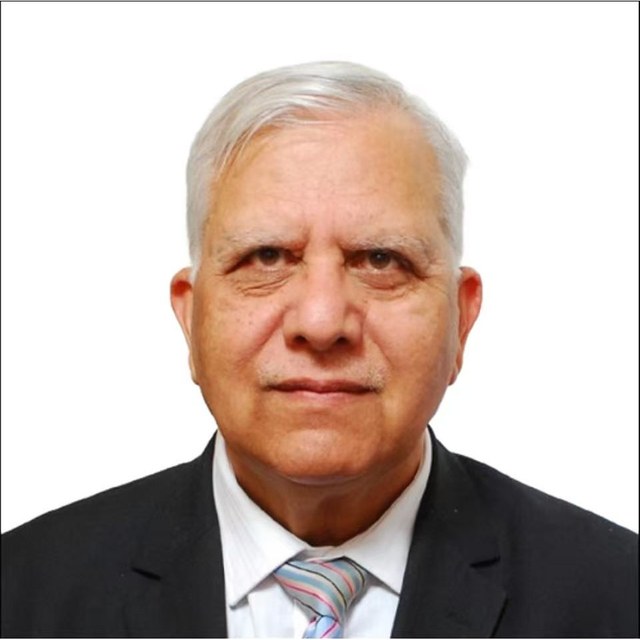
Zamir Ahmed Awan is the founder and Chair of the Global Silk Route Research Alliance, a think tank in Islamabad. He studied engineering at Shanghai University in the 1980s, and years later he went back to China as Pakistan's science counsellor in Beijing, from 2010 until 2016, working on science and higher education cooperation between the two countries.…