The American Script of Regime Change: From Caracas to Islamabad
Wire desk byline Sourced from Xinhua, Dawn, Arab News, Anadolu and Minute Mirror. Translated and abridged by the GSRRA Desk.

In January 2026, U.S. special forces stormed Caracas in a daring night raid, capturing Venezuelan President Nicolás Maduro. The operation unfolded with military precision: Maduro was abducted, installations destroyed, and the armed forces incapacitated—all without American casualties. President Donald Trump declared that Venezuela’s oil resources, nationalized under Hugo Chávez and Maduro, would be “repossessed” and rebuilt under U.S. oversight.
An interim administration led by Trump’s allies Marco Rubio and Pete Hegseth signalled Washington’s intent not merely to remove a hostile leader but to reshape Venezuela’s political and economic order. Yet beneath the triumphal rhetoric lay deep uncertainty. Maduro’s allies, including Defence Minister Vladimir Padrino López and Vice President Delcy Rodríguez, vowed resistance. The Venezuelan diaspora, long supportive of opposition leader María Corina Machado, expressed outrage at Trump’s dismissal of her as a viable leader. Analysts warned that while toppling a regime may be militarily straightforward, rebuilding a fractured state plagued by corruption and cartels is a generational challenge.
Adding to the drama, Trump later quipped at Fort Bragg that once he retires from his current post, he might even “consider being the President of Venezuela”—a remark that captured both his bravado and the ambiguity surrounding America’s long-term role in Caracas.
Tehran, February 2026: The Assassination
Barely a month later, on February 28, 2026, another shock reverberated across the Middle East. Iranian Supreme Leader Ali Khamenei was assassinated in Tehran during a series of Israeli airstrikes coordinated with U.S. intelligence. Satellite imagery confirmed that his residence was severely damaged. The Iranian government announced his death on March 1, declaring forty days of mourning. Several of Khamenei’s family members were also killed in the strikes.
The aftermath was chaotic. Mojtaba Khamenei, his son, was swiftly appointed as successor by the Assembly of Experts. International protests erupted across Asia, Europe, and the United States, condemning the strikes as violations of sovereignty.
Trump and his allies hailed the operation as a strategic success, likening it to the removal of Saddam Hussein. Yet legal experts in the West argued that Trump and Israeli Prime Minister Benjamin Netanyahu had committed a war crime. The Omani Foreign Minister, who had been mediating talks between Washington and Tehran, revealed that both sides were on the verge of signing a deal: Iran had agreed to abide by IAEA restrictions, limit uranium enrichment well below weapons grade, renounce nuclear weapons development, and even permit U.S. inspectors at its nuclear sites. The strike abruptly ended this diplomatic breakthrough and exposed the false premise that Iran was on the verge of developing nuclear weapons.
The miscalculation backfired. Khamenei’s death transformed him into a martyr, strengthening hardline elements. Framed within Shia concepts of martyrdom, his assassination reinforced the regime rather than weakened it, while also narrowing the Shia-Sunni divide and galvanizing unity. Iran retaliated with fury: thousands of lives were lost, including civilians and schoolchildren, while targeted killings of Iranian leaders continued. Israeli casualties mounted under Iranian strikes, and U.S. servicemen in Gulf bases were successfully targeted. Iran shut down the Strait of Hormuz to U.S., Israeli, and allied shipping, triggering global panic with energy shortages, food insecurity, and economic turmoil.
The reckless action brought the world to the brink of World War III. Mediation efforts led by Pakistan, supported by Egypt, Turkey, Saudi Arabia, and backed by China, emerged as the only viable path to de-escalation. But before examining Pakistan’s peace initiative, one must recall Washington’s earlier involvement in Pakistan itself.
Islamabad, April 2022: The Parliamentary Coup
The Venezuelan episode resonates strongly in Pakistan, where Prime Minister Imran Khan was removed in April 2022 through a parliamentary no-confidence vote. Khan alleged that his ouster was engineered by Washington, citing a diplomatic cipher in which U.S. officials expressed dissatisfaction with his independent foreign policy, particularly his outreach to Russia.
While the official narrative framed Khan’s removal as a constitutional process, his supporters saw it as a textbook case of external interference facilitated by domestic power brokers. The aftermath was turbulent: Khan’s party, Pakistan Tehreek-e-Insaf (PTI), launched mass protests branding the new government a “foreign-imposed” regime. The controversy deepened political polarization and strained civil-military relations.
Unlike Venezuela, where U.S. troops physically occupied the capital, Pakistan’s regime change was subtler—a blend of diplomatic pressure, elite manoeuvring, and constitutional procedure. Yet the underlying theme was similar: Washington’s discomfort with leaders who challenge its geopolitical priorities.
Historical Continuum
The Venezuelan and Pakistani cases are part of a broader historical pattern. Since the 19th century, the United States has repeatedly intervened to replace governments abroad. Notable examples include:
- Iran, 1953: CIA orchestrated the overthrow of Prime Minister Mohammad Mossadegh after he nationalized oil.
- Guatemala, 1954: President Jacobo Árbenz was ousted after land reforms threatened U.S. corporate interests.
- Chile, 1973: U.S. support for General Augusto Pinochet facilitated the coup against socialist President Salvador Allende.
- Afghanistan, 2001: The Taliban regime was removed following 9/11, leading to a two-decade occupation.
- Iraq, 2003: Saddam Hussein was toppled under the pretext of weapons of mass destruction, plunging the country into chaos.
These interventions—whether overt military actions or covert political manipulations—share common threads: strategic resources, ideological battles, and the projection of U.S. influence. They also share consequences: instability, resentment, and the rise of anti-American sentiment.
Comparing Venezuela and Pakistan
| Aspect | Venezuela (2026) | Pakistan (2022) |
| Method | Direct military intervention; capture of president | Parliamentary no-confidence vote, alleged U.S. pressure |
| Trigger | Oil nationalization, anti-U.S. stance | Khan’s independent foreign policy, Russia outreach |
| Outcome | U.S. occupation, uncertain transition | New coalition government under Shehbaz Sharif |
| Resistance | Maduro allies, cartels, diaspora opposition | PTI protests, mass mobilization |
| U.S. Role | Explicit, overt, military-led | Alleged, covert, diplomatic pressure |
The comparison highlights two faces of regime change: the overt force of arms in Venezuela versus the subtler manipulation of political processes in Pakistan. Both underscore Washington’s intolerance for leaders who defy its strategic agenda.
Lessons and Legacies
History suggests that regime change rarely delivers stability. In Venezuela, the risk of prolonged occupation and cartel insurgency looms large. In Pakistan, Khan’s removal deepened political divisions and eroded trust in democratic institutions. In Iran, Khamenei’s assassination ignited a cycle of martyrdom and retaliation, destabilizing the region further and bringing the world to the brink of disaster.
For Washington, the temptation to reshape foreign governments remains strong, especially when resources like oil or strategic alliances are at stake. But the legacy of interventions—from Mossadegh to Maduro—shows that short-term victories often breed long-term instability.
From Latin America to South Asia, America’s history of regime change underscores a paradox: while intended to secure U.S. interests, it often destabilizes nations and fuels anti-American sentiment. The Venezuelan experiment may yet prove Trump’s boldest gamble, but history warns that such gambles rarely end well. Even if Armageddon is averted, both Netanyahu and Trump may themselves face political reckoning for the havoc they unleashed on their own nations.
Note: The author, Mr. S. M. Hali, is a well-known commentator on international affairs.
The views expressed in this article are those of the author and do not necessarily reflect the positions of GSRRA, and not liable for any consequences.
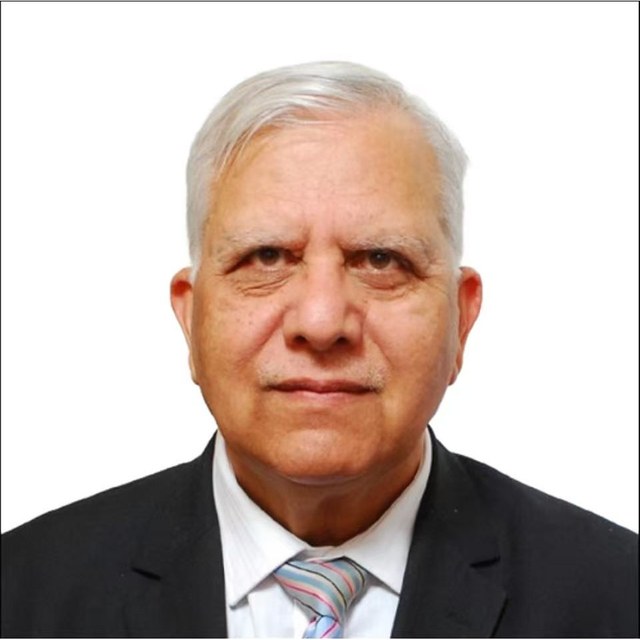
Zamir Ahmed Awan is the founder and Chair of the Global Silk Route Research Alliance, a think tank in Islamabad. He studied engineering at Shanghai University in the 1980s, and years later he went back to China as Pakistan's science counsellor in Beijing, from 2010 until 2016, working on science and higher education cooperation between the two countries.…