Pakistan-Azerbaijan Brotherhood:Commemorating the ‘Day of Mourning’ and the Martyrs of Black January

| MUSLIM Institute, in collaboration of Embassy of Azerbaijan, Islamabad, organized a Round Table Discussion on “Pakistan-Azerbaijan Brotherhood: Commemorating the ‘Day of Mourning’ and the Martyrs of Black January,” at the National Library of Pakistan, Islamabad. H.E. Khazar Farhadov, Ambassador of the Republic of Azerbaijan to the Islamic Republic of Pakistan, delivered the Keynote Speech, whereas Dr. Aalia Sohail Khan, Country Director for the American Institute of Pakistan Studies (AIPS), delivered the opening remarks and vote of thanks. Prof. Zameer Awan, Diplomat and Analyst, Dr. Amna Mahmood (The Dean of the Faculty of Social Sciences and Humanities ) at Shifa Tameer-e-Millat University (STMU), and Dr. Samina Yasmeen Amin, Chairperson Department of Pakistan Studies (AIOU) were guest speakers on the occasion. Ms. Aynur Salmanova (Head of Azerbaijan Language and Culture Center) moderated the proceedings of the event. The event was attended by researchers, students, academicians, representatives of think tanks, journalists, political leaders, and individuals from diverse walks of life. |
| Expert Panellists»H.E. Khazar Farhadov Ambassador of the Republic of Azerbaijan to the Islamic Republic of Pakistan, Dr. Aalia Sohail Khan Country Director for the American Institute of Pakistan Studies (AIPS), Dr. Samina Yasmeen Amin Chairperson Department of Pakistan Studies (AIOU), Prof. Zameer Awan Diplomat and Analyst »Dr. Amna Mahmood The Dean of the Faculty of Social Sciences and Humanities at Shifa Tameer-e-Millat University (STMU), Ms. Aynur Salmanova Head of the Azerbaijan Language and Culture Center Stage view during the RTD. Summary of the remarks shared by panellists is observed as follows: Today’s gathering is a moment of reflection on sacrifice, resilience, and the enduring struggle of the Azerbaijani nation to uphold dignity, sovereignty, and the right to self-determination. It invites us to revisit a defining historical experience that shaped Azerbaijan’s national consciousness and political trajectory. Thirty-five years ago, in January 1990, the city of Baku and several other regions of Azerbaijan witnessed one of the darkest chapters in modern history. For more than seventy years before these events, Azerbaijan was occupied by the former Soviet Union. During this prolonged period of domination, the culture, the religion of the people, and their customs, traditions, and habits were not respected. People were forcefully displaced to other parts of the Soviet Union, communities were dislocated, and every aspect of social, political, and economic life was affected. The intention was not merely political control but cultural and ideological mutation. |
| Following the Bolshevik Revolution of 1917, the Soviet regime sought to assimilate diverse nations into a singular Soviet and Communist identity. In contrast to other colonial experiences, Soviet colonialism questioned and challenged every dimension of identity, including religion, language, and historical memory. The five Central Asian states, along with Azerbaijan, were deliberately kept underdeveloped, their resources exploited solely for Soviet industrial and military advancement. Industry remained centralized, and regional economies were made dependent on supply chains controlled from Moscow, ensuring continued dependence even after formal independence. By the late 1980s, public discontent had reached a point of saturation. The people of Azerbaijan could no longer remain silent in the face of political repression, economic marginalization, and cultural suppression. As a result, a broad-based national independence movement emerged, driven by demands for sovereignty, dignity, and self-determination. Under the pretext of maintaining law and order, a military operation was launched by Soviet authorities to suppress the growing independence movement. On the night between the 19th and 20th of January 1990, Soviet troops entered the city of Baku, followed by operations in other regions, including Sumgait, Lankaran, and Neftchala. Tanks, armored vehicles, and all types of weapons were deployed against unarmed civilians. There was no distinction between the elderly, young children, men, or women. Innocent citizens were killed randomly in an attempt to suppress the protest and silence the freedom movement. As a result of this military aggression, more than 157 civilians were killed, 744 were seriously wounded, and four went missing. This violent crackdown is remembered as Black January. Rather than extinguishing the independence movement, the crackdown strengthened public resolve and intensified national unity. Immediately after the tragedy, bringing this brutal massacre to the attention of the international community became closely associated with the national leader, Heydar Aliyev. His actions ensured that the events of Black January were not erased from historical memory. The people of Azerbaijan paid a heavy price for independence, but this sacrifice was not in vain. The movement gained greater momentum, and in 1991, Azerbaijan achieved independence and sovereignty. The martyrs of January 1990 became symbols of national resistance and sacrifice. Mourning Day, commemorated annually on 20th January, stands as both a moment of profound sadness and great pride in Azerbaijan’s contemporary history. Following the restoration of independence and the return of the national leader to power at the demand of the people, several crimes committed against Azerbaijanis—including the 20th January tragedy—were given political and legal assessment. In March 1994, the Milli Majlis adopted a formal decision regarding the tragic events committed in Baku on 20th January 1990. This legal recognition reaffirmed the state’s commitment to historical truth and justice. |
| The discriminatory policies of the former Soviet authorities against Azerbaijan and its people also included fabricated provocations such as the Sumgait events. These actions were orchestrated in the 1980s to justify the continuation of unfounded territorial claims by Armenia against Azerbaijan. In addition, the mass deportation of Azerbaijanis from the territories of present-day Armenia contributed directly to the rise of the national liberation movement and further destabilized the region. Between 1989 and 1992, all Soviet republics experienced struggles for independence. Azerbaijan was one of the states that faced extreme violence during this transition. Similar brutalities were witnessed in Kazakhstan and Uzbekistan, where civilians were run over by tanks and lethal weapons were used against populations. In contrast, when three Balkan states declared independence, the Soviet Union refrained from violent intervention due to warnings from NATO and the United States. Their transition was relatively smooth and swift. These contrasting experiences demonstrate that international politics is fundamentally power politics, driven by interests rather than universal principles. When Muslims suffer, there is substantial evidence—supported by comprehensive reports prepared by institutions—that genocide and systematic violence are being committed across Muslim lands. Comparable cases involving non-Muslim states are difficult to identify, highlighting the selective application of international norms. This pattern echoes historical precedents, where imperial campaigns targeted Muslim societies under various justifications. Pakistan was among the first countries to recognize Azerbaijan’s independence in 1991. Since then, bilateral relations have evolved into a partnership marked by trust, mutual respect, and unwavering support. This brotherhood is not merely symbolic; it is expressed through diplomatic cooperation, defense collaboration, educational exchanges, energy partnerships, and people-to-people contacts. It is anchored in shared values, resilience, honor, and respect for sacrifice. Azerbaijan has consistently supported Pakistan on the Kashmir issue, particularly during periods of heightened tension. Likewise, Pakistan has openly and fully supported Azerbaijan on its most challenging issue, Karabakh. Pakistan’s vast human capital offers valuable opportunities for collaboration, while Azerbaijan’s energy resources are particularly significant for Pakistan, which continues to face energy shortages. Cooperation in this sector holds strategic importance for both countries. Reciprocity remains essential in international relations. There is a need to think in terms of economic and scientific interdependence among nations as well, with shared culture and history. Sustainable cooperation among developing and like-minded states offers a more balanced and autonomous path forward. While Mourning Day is rooted in grief, it must also be oriented toward hope—hope grounded in justice, sustained through dialogue, and strengthened through international cooperation. The story of Black January demonstrates that freedom is rarely gifted. It is earned, protected, and preserved through vigilance and sacrifice. |
| Interactive Session: |
| MUSLIM Institute, in collaboration with the Embassy of Azerbaijan, Islamabad, organized a Round Table Discussion on “Pakistan-Azerbaijan Brotherhood: Commemorating the ‘Day of Mourning’ and the Martyrs of Black January,” at the National Library of Pakistan, Islamabad. H.E. Khazar Farhadov, Ambassador of the Republic of Azerbaijan to the Islamic Republic of Pakistan, delivered the Keynote Speech, whereas Dr. Aalia Sohail Khan, Country Director for the American Institute of Pakistan Studies (AIPS), delivered the opening remarks and vote of thanks. Prof. Zameer Awan, Diplomat and Analyst, Dr. Amna Mahmood (The Dean of the Faculty of Social Sciences and Humanities ) at Shifa Tameer-e-Millat University (STMU), and Dr. Samina Yasmeen Amin, Chairperson Department of Pakistan Studies (AIOU) were guest speakers on the occasion. Ms. Aynur Salmanova (Head of Azerbaijan Language and Culture Center) moderated the proceedings of the event. The event was attended by researchers, students, academicians, representatives of think tanks, journalists, political leaders, and individuals from diverse walks of life. |
Reference: MUSLIM Institute & Embassy of Azerbaijan, January 19, 2026
Filed under News
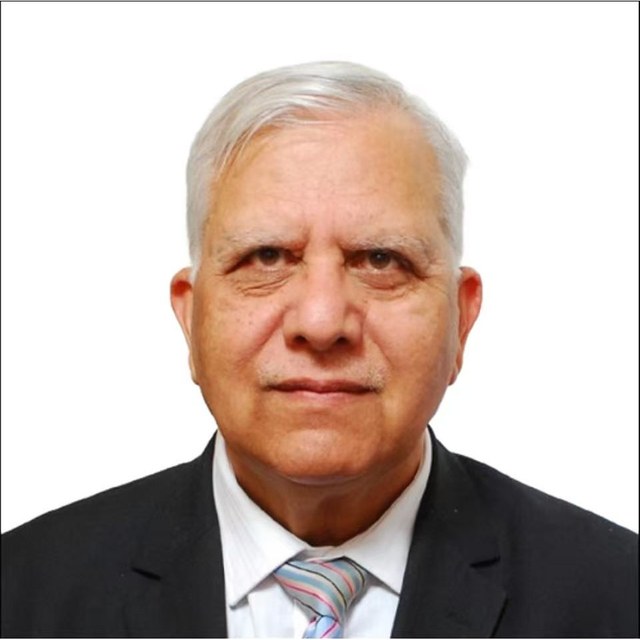
Prof. Engr. Zamir Ahmed Awan Founder & Chair, Global Silk Route Research Alliance
Zamir Ahmed Awan is the founder and Chair of the Global Silk Route Research Alliance, a think tank in Islamabad. He studied engineering at Shanghai University in the 1980s, and years later he went back to China as Pakistan's science counsellor in Beijing, from 2010 until 2016, working on science and higher education cooperation between the two countries.…