Pakistan’s mineral paradox

How Pakistan’s largest mineral discovery could either anchor a new industrial economy — or repeat a familiar extract-and-export cycle
Pakistan’s renewed optimism around the Reko Diq copper-gold project is understandable. Global demand for copper is accelerating due to the electrification of transportation, the growth of electric vehicles, and the expansion of renewable energy. At the same time, international interest in Balochistan’s mineral potential is expanding beyond Reko Diq, with several strategic minerals now attracting global attention.
Publicly available estimates suggest that by the early 2030s, Balochistan’s 25 percent equity stake in Reko Diq could generate revenues comparable to the province’s current annual budget. These are large numbers — but numbers alone do not define economic transformation. The deeper question is whether Reko Diq will integrate Pakistan into global industrial supply chains or remain primarily a source of raw material exports.
A long-term asset, not a short-term rescue
Reko Diq is unquestionably a world-class copper-gold deposit. However, large-scale commercial production is not expected until around 2030–2032. This means that for the rest of this decade, it will not meaningfully contribute to foreign-exchange earnings or fiscal stability.
Its importance lies in what it can anchor over the next 30 to 40 years — not in what it will deliver next year.
What Reko Diq will actually export
A critical point often missed in public discussion is the nature of the product. Reko Diq is expected to export copper concentrate — a semi-processed material containing roughly 25–30 percent copper, with the remainder being waste rock and other minerals. Concentrate is sold at a significant discount to refined copper metal.
The high-value stages of the copper chain occur after mining: concentrate is smelted, refined into cathodes, and converted into wire, cables, machinery and industrial components. This is where employment, industrial capability and export resilience are created.
Mining generates revenue. Processing generates economies.
What public revenue can — and cannot — achieve
Equity shares, royalties and taxes from Reko Diq will provide the government with important fiscal resources for development, infrastructure and social services. These flows are valuable and necessary.
However, such revenues do not automatically produce manufacturing clusters, skilled industrial labour, technology transfer, metallurgical ecosystems or export-oriented downstream industries. Those only emerge when minerals are processed domestically and embedded into industrial supply chains.
Ownership and partnership structure
Reko Diq is often described in terms of its size, reserves and projected revenues. Less attention is paid to its ownership and partnership structure, even though this has important long-term economic implications. Under the current arrangement, the project is led by an international mining major, with equity shared between the federal government and the Government of Balochistan. Pakistan has also explored the possibility of bringing in strategic partners, including sovereign investors from friendly countries.
These arrangements can help de-risk financing and deepen diplomatic and trade linkages, but they do not change the core economic equation: where does the value get created? If Reko Diq exports concentrate for processing abroad, most of the industrial, employment and technology benefits will still accrue outside Pakistan, regardless of who holds the shares.
Equity participation provides income. Industrial participation creates development.
Commercial reality
International mining companies operate on clear commercial logic: they mine, concentrate, export and process where it is most cost-effective. This is not a criticism — it is how the global mining industry functions.
The policy challenge for Pakistan is therefore not about who owns the mine, but about whether the country builds the industrial infrastructure needed to retain value within its borders.
Saindak as a benchmark
Pakistan already has a working example. The Saindak Copper-Gold Project in Balochistan includes on-site smelting. With a copper grade of around 0.6 percent, it produces blister copper along with gold and silver, and in recent years its exports have approached $800 million annually.
Saindak demonstrates a crucial principle: processing multiplies export value.
Why concentrate exports lock countries into low-value trade
Copper concentrate is not a finished product. It is an intermediate input traded between mines and smelters. Countries that specialise only in concentrate exports remain dependent on global refiners and traders.
By contrast, countries that smelt and refine their own copper gain pricing power, industrial linkages, domestic engineering capacity, more stable export revenues and higher employment per tonne mined.
Almost every successful mineral economy — from Chile to Indonesia — eventually moved from exporting concentrate to exporting refined metal and manufactured copper products. Pakistan’s mineral strategy must be evaluated against this global experience.
Why industrial mineral zones matter
A modern mineral-based development model is not built around a single pit, but around an integrated industrial ecosystem: multi-metal processing, smelting and refining, reliable hybrid energy systems, export-oriented production, environmental management and community development.
This is why Export Processing Zones (EPZs), and mineral industrial zones matter.
Why is one mine not enough
Chagai is the heart of Pakistan’s mineral endowment. No single project, however large, can unlock its full potential on its own. Pakistan needs multiple mines, multiple processors, domestic and international investors, and competitive operating frameworks. This builds resilience, competition, and regional development rather than dependence on one asset.
The strategic choice
Reko Diq can become either a royalty-generating mine or the foundation of a copper-based industrial economy. The difference lies in whether Pakistan commits to domestic processing, smelting and value-addition. The real question is not how much material is exported — but how much value is retained. If Pakistan builds downstream capacity, Reko Diq can anchor a new industrial future.
If not, it risks remaining primarily a supplier of raw material in a world that rewards those who manufacture.
Reference Link:- https://www.brecorder.com/news/40400088/opinion-pakistans-mineral-paradox
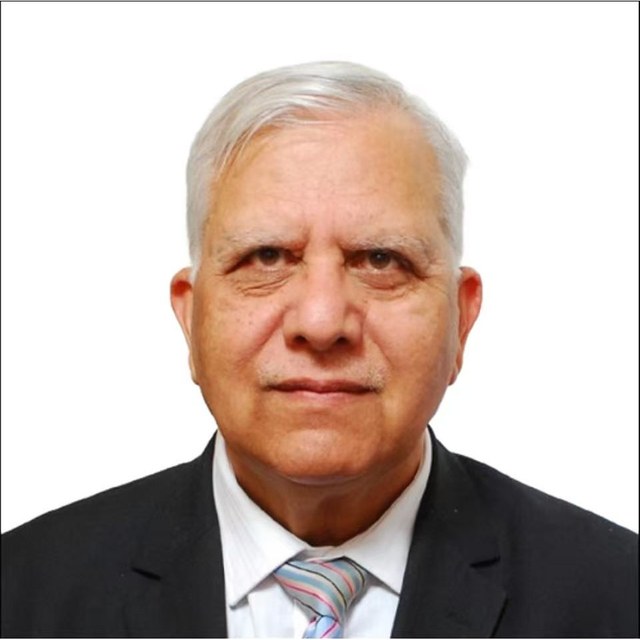
Zamir Ahmed Awan is the founder and Chair of the Global Silk Route Research Alliance, a think tank in Islamabad. He studied engineering at Shanghai University in the 1980s, and years later he went back to China as Pakistan's science counsellor in Beijing, from 2010 until 2016, working on science and higher education cooperation between the two countries.…