Pakistan Steel Mills revival: Pakistan-Russia commission signs second protocol
Wire desk byline Sourced from Xinhua, Dawn, Arab News, Anadolu and Minute Mirror. Translated and abridged by the GSRRA Desk.

The joint Pakistan-Russia Inter-Government Commission (IGC) has signed the second protocol for the revival of the Pakistan Steel Mills (PSM) and agreed to draft a bankable Engineering, Procurement, and Construction (EPC) contract to proceed further.
Official sources privy to the developments told Business Recorder here on Monday that the 10th meeting of the IGC held late in November 2025, which was attended by senior officials from the Ministry of Industries and Production as well as Russian officials, decided to prepare a bankable feasibility on the revival of the ailing PSM.
The officials stated that the government has firmly decided to privatize the PSM as it has no intention to run the affairs of the PSM.
Russia floats two options for PSM’s revival
However, it will fully facilitate local and international steel companies to purchase the Mills. Within the next few weeks, the Ministry of Industry and Production will officially issue an expression of interest for the privatization of the entity after it has prepared a bankable feasibility.
The officials further stated that,at Pakistan’s request, Russia worked out two options for the revival of the PSM, one based on blast furnace model with an estimated cost of USD 1.91 billion, and the other based on Electric Arc Furnace (EAF) technology costing USD 1.05 billion. They said the first option in monetary terms is expensive, while after the completion worldwide, it has proven more economical, as compared to the EAF model.
According to the official, Russian authorities have forwarded the proposals to the Ministry of Industries and Production on the subject, saying that revival of the current mill on blast furnace model will be a one-time cost USD 1.91 billion, while constructing a new mill based on Electric arc furnace (EAF) technology will cost USD 1 billion, for which scrap will be imported.
As per the officials cost of constructing a new mill based on EAF technology is almost half lower than that of the revival of the mill based on the blast furnace model, but in the long run, the first method will prove to be cost-effective as compared with the EAF model, which is totally based on imported scrap. In the blast furnace model, Pakistan can use locally available iron ore for steel production, while the alternative model is totally dependent on imported steel scraps. The PSM management has reduced PSM expenditures by Rs4.62 billion so far this year.
As per a senior official, Pakistan, despite being blessed with considerable reserves of iron ore with an estimated reserve of 1.887 billion tons, is forced to import around USD 6 billion of iron, steel, and scrap annually. There is a perpetual gap between domestic production and demand for iron and steel. For the last year, the gap is estimated at 3.1 million tons, the official added.
Pakistan’s per capita steel consumption level is below even that of developing countries, indicating significant growth potential over the medium and long term. The official said that the efficiency of Pakistan’s steel industry is limited as it is segmented (600 small units) and based on old and inefficient technology.
The Ministry of Industries and Production is also working with the Ministry of Maritime Affairs on a plan to revive the dormant PSM through advanced technology and a new maritime-industrial partnership.
The plan was unveiled by Federal Minister for Maritime Affairs Junaid Anwar Chaudhary to the Special Assistant to the Prime Minister on Industries and Production Haroon Akhtar Khan during a meeting held a month earlier, “Sea to Steel Green Maritime Industrial Corridor” at Port Qasim. Pakistan currently imports around USD 6 billion worth of steel annually, with demand expected to grow by nearly 6 percent each year through 2035, according to a World Bank report.
The officials noted that the proposed project could reduce steel imports by up to 20 percent, potentially saving the country over USD 13 billion in the next decade. At the heart of the proposal is the revival of the long-idle Iron Ore and Coal Berth (IOCB) at Port Qasim, which has been inactive since 2015. The plan envisions converting the facility into a modern ship recycling and repair complex featuring a large floating dock capable of servicing Aframax-class vessels.
Chaudhry explained that steel recovered from dismantled ships would either be supplied to Pakistan Steel Mills or reprocessed at a new facility near Port Qasim into high-grade industrial steel. “This approach, he said, “would reduce dependence on imported raw materials, conserve foreign exchange, and support the country’s domestic steel and shipbuilding industries.
Reference Link:- https://www.brecorder.com/news/40397678
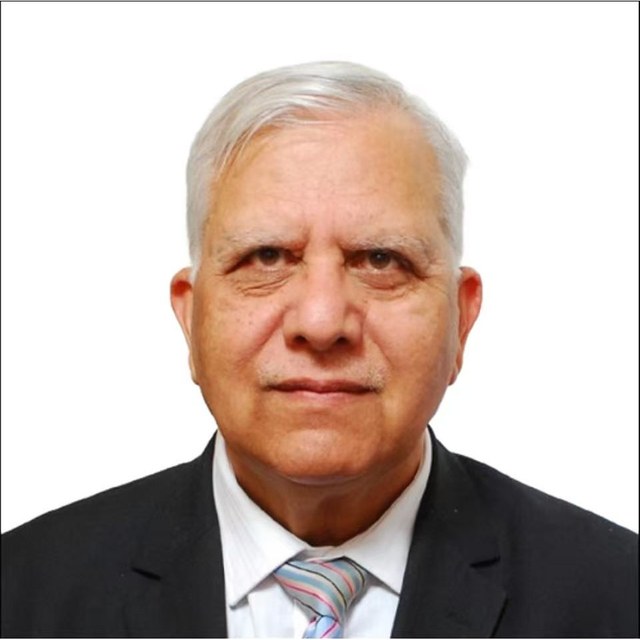
Zamir Ahmed Awan is the founder and Chair of the Global Silk Route Research Alliance, a think tank in Islamabad. He studied engineering at Shanghai University in the 1980s, and years later he went back to China as Pakistan's science counsellor in Beijing, from 2010 until 2016, working on science and higher education cooperation between the two countries.…