‘Saudi is now logical second market for Pakistani founders,’ says Sarmayacar chief

- Saudi Arabia, propelled by Vision 2030, is the gravitational centre of the region, says Rabeel Warraich
Sarmayacar’s expansion into Saudi Arabia marks a natural next step for Pakistan’s first institutional venture capital (VC), backed by a ‘core thesis’ proven at home and a regional landscape that has shifted significantly.
After investing in 24 companies, reviewing over 2,000 deals, securing exits to Middle Eastern buyers, and registering returns, Rabeel Warraich, founder and CEO of Sarmayacar, believes that Pakistan has validated the company’s ability to produce real companies with real returns.
Pakistani venture Sarmayacar says Green Climate Fund pledges $15 million
At the same time, Saudi Arabia, propelled by Vision 2030, has moved from being interesting to becoming the gravitational centre of the region, pulling capital, regulation, talent and industrial policy toward technology.
“For Sarmayacar, the move isn’t a pivot but a response to market gravity,” Warraich told Business Recorder, who believes that “formalising this corridor is now the logical next step”.
Citing examples of startups like ABHI, which have scaled up their operations in the Kingdom, “Saudi is now the logical second market” for founders seeking large businesses, says Warriach.
Earned wage access services: Saudi TRAY partners with Pakistan’s ABHI
“Our expansion simply formalises a corridor that our best startups are already running.”
Recently, Pakistan and Saudi Arabia’s bilateral ties have shifted from mere financial support to a more integrated strategic economic partnership, marked by the launch of a new Economic Cooperation Framework in late 2025 to boost investment, trade and development.
Sarmayacar wants to act as a bridge between the two countries, taking Pakistani products “that are already validated and help them localise, get regulated and sell in Saudi Arabia”.
“That means going beyond capital and actually doing the permission-ing and relationship work that matters in the Kingdom,” he said.
On the other side, the VC also backs budding Saudi startups by plugging them into Pakistan as a cost-efficient testing ground.
“Pakistan lets you iterate fast, hire the right talent, generate traction and pressure test unit economics before you deploy heavy capital inside Saudi.”
KSA, Singapore, Germany, Japan: who should Pakistan’s freelancers and IT firms target?
Warraich believes Saudi companies become more regionally competitive when they use Pakistan as the efficiency layer and Saudi Arabia as the value capture layer. “That is a real corridor. That is how regional champions are built.”
However, the corridor only works if you understand how both ecosystems think, operate, and regulate. This is where Sarmayacar comes in.
“We’ve done this for real. We exited a Pakistan logistics player to a Middle Eastern strategic buyer. We helped ABHI scale in the GCC and acquire a bank; we’ve navigated the most sensitive regulatory stakeholders on both sides.
“We are building a local operating presence in Saudi Arabia and taking a collaborative partnership approach with leading Saudi GPs so we bring our relative strengths together,” Warraich said.
Pakistan averted an imminent sovereign default in mid-2023 through a last-minute deal with the International Monetary Fund (IMF) and support from friendly nations, including KSA.
However, Sarmayacar explained that Pakistan’s macroeconomic turbulence and the global VC slowdown are not the drivers behind its shift to Saudi Arabia.
“Pakistan is still where you can build products, iterate quickly and hire talent efficiently. That advantage has not gone away.
“What has changed is that Saudi Arabia is now where value is actually being captured because that’s where purchasing power and pro-tech policy momentum sit today. So connecting those two markets is not a hedge, it’s the logical way to unlock more value for founders,” said Warraich.
Reference Link:- https://www.brecorder.com/news/40396067
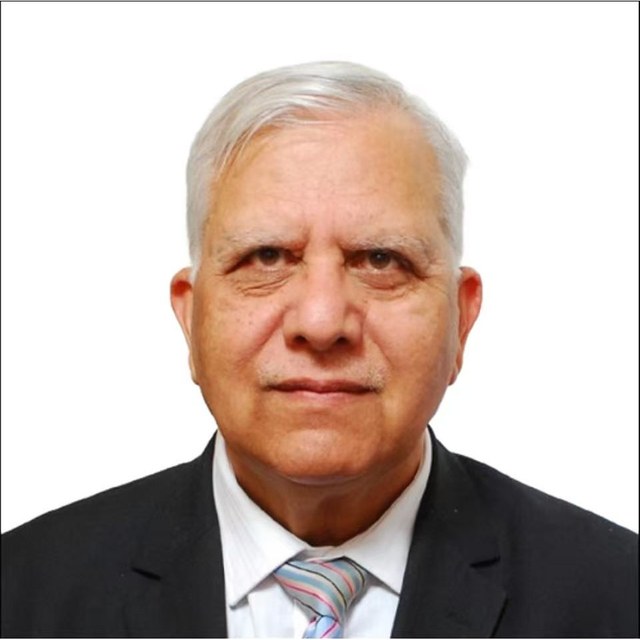
Zamir Ahmed Awan is the founder and Chair of the Global Silk Route Research Alliance, a think tank in Islamabad. He studied engineering at Shanghai University in the 1980s, and years later he went back to China as Pakistan's science counsellor in Beijing, from 2010 until 2016, working on science and higher education cooperation between the two countries.…