
Global Silk Route Research Alliance logo: a flowing cyan-to-blue wave

Global Silk Route Research Alliance

全球丝绸之路研究联盟

Independent Think Tank · Geopolitics · Belt & Road · Eurasia

LATEST

500-year-old palace at Beijing’s central axis opens to public after restoration

By News Desk 2 min read

Source Xinhua, Dawn, Arab News, Anadolu and Minute Mirror

500-year-old palace at Beijing’s central axis opens to public after restoration
(241221) -- BEIJING, Dec. 21, 2024 (Xinhua) -- This photo shows the main hall of the Qingcheng Palace complex in Beijing, capital of China, Dec. 21, 2024. The Qingcheng Palace complex, a royal sacrificial venue along the historic central axis of Beijing, opened to the public after restoration work on Saturday. Built in the Ming Dynasty (1368-1644), the palace is located inside the Altar of the God of Agriculture, also referred to as the Xiannongtan Temple. The palace was formerly known as Zhaigong, which literally translates to the fasting palace. It was a place where the emperors abstained from heavy meals and meditated before worship. It was renamed as Qingcheng Palace in the Qing Dynasty (1644-1911), becoming a place where the emperors held celebratory rituals after cultivation ceremonies while praying for a good harvest. Restoration work of the ancient buildings started in June last year, following the principle of "minimal intervention." (Xinhua/Chen Zhonghao)

The Qingcheng Palace complex, a royal sacrificial venue along the historic central axis of Beijing, opened to the public after restoration work on Saturday.

Built in the Ming Dynasty (1368-1644), the palace is located inside the Altar of the God of Agriculture, also referred to as the Xiannongtan Temple. The palace was formerly known as Zhaigong, which literally translates to the fasting palace. It was a place where the emperors abstained from heavy meals and meditated before worship.

It was renamed as Qingcheng Palace in the Qing Dynasty (1644-1911), becoming a place where the emperors held celebratory rituals after cultivation ceremonies while praying for a good harvest.

Restoration work of the ancient buildings started in June last year, following the principle of “minimal intervention.”

500-year-old palace at Beijing’s central axis opens to public after restoration
This photo shows a view in the Qingcheng Palace complex in Beijing, capital of China, Dec. 21, 2024. (Xinhua/Chen Zhonghao)
500-year-old palace at Beijing’s central axis opens to public after restoration
An event marking the opening to the public is held in the main hall of the Qingcheng Palace complex in Beijing, capital of China, Dec. 21, 2024. (Xinhua/Chen Zhonghao)
500-year-old palace at Beijing’s central axis opens to public after restoration
This photo shows a view in the Qingcheng Palace complex in Beijing, capital of China, Dec. 21, 2024. (Xinhua/Chen Zhonghao)
500-year-old palace at Beijing’s central axis opens to public after restoration
This photo shows a view in the Qingcheng Palace complex in Beijing, capital of China, Dec. 21, 2024. (Xinhua/Chen Zhonghao)
500-year-old palace at Beijing’s central axis opens to public after restoration
This photo shows a view in the Qingcheng Palace complex in Beijing, capital of China, Dec. 21, 2024. (Xinhua/Chen Zhonghao)
500-year-old palace at Beijing’s central axis opens to public after restoration
This combo photo taken on Dec. 21, 2024 shows the same area of the Qingcheng Palace complex before (bottom, rephotographed file photo) and after restoration in Beijing, capital of China. (Xinhua/Chen Zhonghao)
500-year-old palace at Beijing’s central axis opens to public after restoration
This photo shows a view in the Qingcheng Palace complex in Beijing, capital of China, Dec. 21, 2024. (Xinhua/Chen Zhonghao)
500-year-old palace at Beijing’s central axis opens to public after restoration
A photo exhibition on Beijing Central Axis is held in the Qingcheng Palace complex in Beijing, capital of China, Dec. 21, 2024.

Reference Link:- https://english.news.cn/20241221/511facff114b4dc888dff149c919d38e/c.html
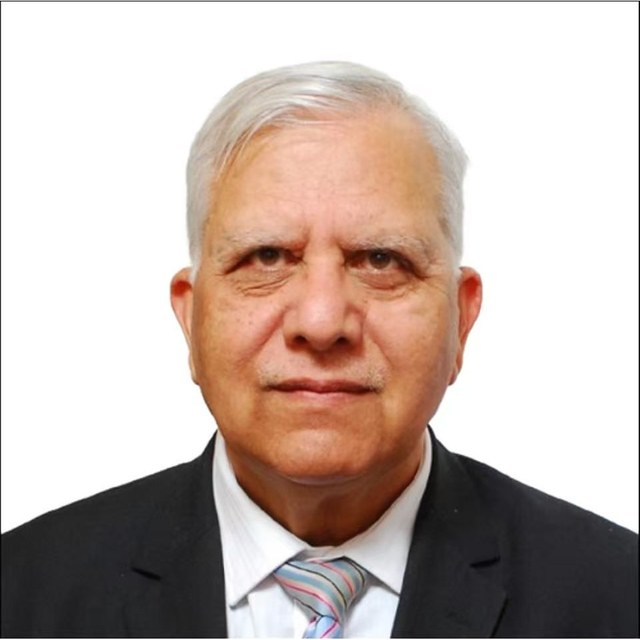
Prof. Engr. Zamir Ahmed Awan
Prof. Engr. Zamir Ahmed Awan Founder & Chair, Global Silk Route Research Alliance

Zamir Ahmed Awan is the founder and Chair of the Global Silk Route Research Alliance, a think tank in Islamabad. He studied engineering at Shanghai University in the 1980s, and years later he went back to China as Pakistan's science counsellor in Beijing, from 2010 until 2016, working on science and higher education cooperation between the two countries.…

Get GSRRA analysis by email

One email a week: the pieces readers returned to most, plus the chairman’s own analysis.

Memberships & Partners · 伙伴联盟