Global Silk Route Research Alliance logo: a flowing cyan-to-blue wave

Global Silk Route Research Alliance

全球丝绸之路研究联盟

Independent Think Tank · Geopolitics · Belt & Road · Eurasia

LATEST

Take a look at world’s first low-energy high-intensity heavy-ion accelerator facility

By News Desk 2 min read

Source Xinhua, Dawn, Arab News, Anadolu and Minute Mirror

Take a look at world’s first low-energy high-intensity heavy-ion accelerator facility
(241211) -- LANZHOU, Dec. 11, 2024 (Xinhua) -- Zhao Hongwei, an academician of the Chinese Academy of Sciences (CAS), poses for a photo in front of the low-energy high-intensity heavy-ion accelerator facility (LEAF) on Dec. 10, 2024. The world's first stand-alone low-energy high-intensity heavy-ion accelerator facility (LEAF), developed by the Institute of Modern Physics of the Chinese Academy of Sciences, recently passed the expert panel acceptance inspection organized by the National Natural Science Foundation of China. The LEAF can provide intense heavy-ion beams and mixed ion beams of various charge states from light to heavy elements, offering advantages such as high beam intensity, high charge state, diverse ion species, and a wide range of energy variations. With the upgrading of ion accelerators and the evolution of accelerator technologies, frontier research in ion beam physics has continuously deepened human understanding of the world, and related application technologies have been widely adopted in various fields. (Xinhua/Jin Liwang)

The world’s first stand-alone low-energy high-intensity heavy-ion accelerator facility (LEAF), developed by the Institute of Modern Physics of the Chinese Academy of Sciences, recently passed the expert panel acceptance inspection organized by the National Natural Science Foundation of China.

The LEAF can provide intense heavy-ion beams and mixed ion beams of various charge states from light to heavy elements, offering advantages such as high beam intensity, high charge state, diverse ion species, and a wide range of energy variations.

With the upgrading of ion accelerators and the evolution of accelerator technologies, frontier research in ion beam physics has continuously deepened human understanding of the world, and related application technologies have been widely adopted in various fields.

Take a look at world’s first low-energy high-intensity heavy-ion accelerator facility
This stitched photo taken on Dec. 10, 2024 shows part of the low-energy high-intensity heavy-ion accelerator facility (LEAF). (Xinhua/Jin Liwang)
Take a look at world’s first low-energy high-intensity heavy-ion accelerator facility
Researchers observe experiment progress at the control room of the low-energy high-intensity heavy-ion accelerator facility (LEAF) on Dec. 10, 2024. (Xinhua/Jin Liwang)
Take a look at world’s first low-energy high-intensity heavy-ion accelerator facility
Researchers analyze experimental data at the control room of the low-energy high-intensity heavy-ion accelerator facility (LEAF) on Dec. 10, 2024. (Xinhua/Jin Liwang)
Take a look at world’s first low-energy high-intensity heavy-ion accelerator facility
This photo taken on Dec. 10, 2024 shows part of the low-energy high-intensity heavy-ion accelerator facility (LEAF). (Xinhua/Jin Liwang)
Take a look at world’s first low-energy high-intensity heavy-ion accelerator facility
Sun Liangting, a researcher with the Institute of Modern Physics of the Chinese Academy of Sciences, checks equipment on Dec. 10, 2024. (Xinhua/Jin Liwang)
Take a look at world’s first low-energy high-intensity heavy-ion accelerator facility
This stitched photo taken on Dec. 10, 2024 shows part of the low-energy high-intensity heavy-ion accelerator facility (LEAF). (Xinhua/Jin Liwang)
Take a look at world’s first low-energy high-intensity heavy-ion accelerator facility
Zhao Hongwei (R), an academician of the Chinese Academy of Sciences (CAS), and Sun Liangting, a researcher with the Institute of Modern Physics of the CAS, discuss on experiment progress in front of the low-energy high-intensity heavy-ion accelerator facility (LEAF) on Dec. 10, 2024.

Reference Link:- https://english.news.cn/20241211/6f661a7e6e174447a53222c51650e30a/c.html
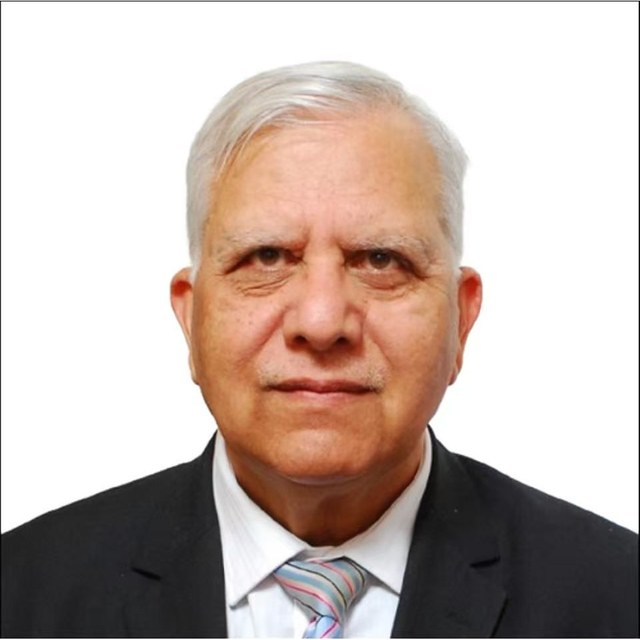
Prof. Engr. Zamir Ahmed Awan
Prof. Engr. Zamir Ahmed Awan Founder & Chair, Global Silk Route Research Alliance

Zamir Ahmed Awan is the founder and Chair of the Global Silk Route Research Alliance, a think tank in Islamabad. He studied engineering at Shanghai University in the 1980s, and years later he went back to China as Pakistan's science counsellor in Beijing, from 2010 until 2016, working on science and higher education cooperation between the two countries.…

Get GSRRA analysis by email

One email a week: the pieces readers returned to most, plus the chairman’s own analysis.

Memberships & Partners · 伙伴联盟