Where the Mango Meets the Orchid: Prospects in Pakistan-Singapore Relations

The recent visit to Pakistan by Singapore’s Foreign Minister offers an opportunity to establish a framework of cooperation connecting South Asia with Southeast Asia.

The visit of Singapore’s Foreign Minister Vivian Balakrishnan to the Pakistani capital, Islamabad, last month was a pivotal moment in Pakistan-Singapore relations – the first by a Singaporean Minister to Pakistan since 2005.
Coinciding with the 60th anniversary of diplomatic relations between the two countries and preceding Singapore’s ASEAN chairmanship in 2027, Balakrishnan’s visit presented an opportunity to rejuvenate a relationship that has remained cordial for six decades but has a great deal of untapped potential.
While Singapore has enjoyed rapid economic growth under strong political leadership, Pakistan’s economic development has often been hindered by its domestic political malaise and regional security challenges. This politico-economic disconnect has caused the ties between the two countries to wax and wane.
Despite Pakistan being among the first countries to recognize Singapore following its independence, with diplomatic ties established between the two countries in August 1966, six decades of bilateral activity have not developed into a strategic partnership capable of delivering benefits to the peoples of both countries.
Tellingly, however, the diplomatic appetite to revive this bilateral relationship by both governments has not dissipated. At a time when geopolitical competition, shifting trade routes, and new economic partnerships are reshaping the international order, Pakistan and Singapore have compelling reasons to elevate their engagement beyond traditional diplomatic exchanges.
Balakrishnan’s visit should thus be viewed as a propitious chance to establish a more ambitious framework of cooperation connecting South Asia with Southeast Asia. Engaging Pakistan would provide Singapore with a useful supplemental pathway to augment its presence in South Asia, and likewise, Singapore for Pakistan to cement its position in Southeast Asia.
Strategically, Pakistan can offer Singapore another gateway to China, via its China-Pakistan Economic Corridor and membership in the Shanghai Cooperation Organization. Pakistan’s mediating role between the United States and Iran had also gone down well with Singapore, a testament to Pakistan’s potential to serve as an active middle power in international affairs.
Foremost in filling the lacuna in Pakistan-Singapore relations were Balakrishnan’s meetings with Pakistani Prime Minister Shehbaz Sharif, Foreign Minister Ishaq Dar, and Army Chief Field Marshal Asim Munir. The closed-door discussions covered trade, investment, technology, education, connectivity, and disaster management, signalling the shared aspiration of both countries to broaden their bilateral relationship beyond its unremarkable diplomatic niceties.
In our opinion, as Pakistan seeks to diversify its economic partnerships, attract foreign investment and boost its regional connectivity, Singapore offers valuable opportunities in logistics, port management, financial services, digital infrastructure, advanced manufacturing, and technological innovation. Singapore’s experience in transforming geographical limitations into economic advantages also holds key lessons for Pakistan as the latter seeks to translate its strategic location into tangible economic dividends.
For Singapore, Pakistan, which is a major agricultural producer, is also an important source of different kinds of fruits and vegetables, and offers potential collaboration in halal food processing and product supply chains. Having such a viable alternative is prudent for Singapore, especially when there is a food crisis due to a pandemic or consequences of geopolitical turbulence, as is the case now with the war in Iran.
Reinstating direct flights between Singapore and Pakistan is therefore the key to boosting connectivity and thereby facilitating bilateral economic exchanges. As it has been more than 16 years since the last direct flight between the two countries in 2010, Balakrishnan’s visit is an opportune moment to resume these direct flights in 2027. Pakistan International Airlines, which has huge potential, could also take a leaf out of Singapore Airlines’ guidebook on how to run a successful air carrier.
Rather than fixating on competing with India in engaging Singapore, Pakistan should cultivate its relations with Singapore distinctly in carving its own niche and charting its own path by leveraging its own strengths. Any countermove against India could be counterproductive for Pakistan.
The next 60 years for Pakistan and Singapore should not simply be a mere continuation of a friendly diplomatic relationship, but rather one that strives to connect the two strategically important regions of South and Southeast Asia through trade, technology, connectivity and culture.
Hence, the acid test for both countries is to ensure the political goodwill generated by Balakrishnan’s visit progressively matures into a comprehensive strategic partnership, which comprises measurable economic gains, consequential cultural showcases, and sustained regional collaboration.
With Singapore being politically sound and stable, it is incumbent on Pakistan to bolster its domestic core through good governance, political stability, and policy continuity, especially in the areas of the economy and on security matters, to lend greater synergy to Pakistan-Singapore relations.
Learning from Singapore’s best practices in technical expertise and public administration could aid Pakistan to reshape its narrative by shedding the country’s perceived “image problem.” How Singapore has devised an effective interfaith model could also provide a template for Pakistan to promote interfaith relations in a Muslim-majority country that is also home to the Buddhist Gandhara civilization.
One strategic advantage is that there is a Pakistani diasporic community in Singapore of around 5,000 people that can play a useful role as a bridge in Pakistan-Singapore relations. Both Singapore and Pakistan have in place an interesting form of bilateral diplomacy underpinning their diplomatic relationship.
Singapore’s “orchid diplomacy,” a soft power tradition of naming orchid hybrids after visiting foreign dignitaries to promote goodwill between Singapore and other countries, led to Pakistani Prime Minister Benazir Bhutto having an orchid named after her during an official visit to Singapore in 1995.
As regards Pakistan, its “mango diplomacy,” a similar form of cultural statecraft rooted in South Asian tradition, has helped foster trade relations in an amiable environment, including with Singapore. A quintessential illustration is Pakistan’s High Commission in Singapore hosting a mango festival in 2026 to celebrate the 60th anniversary of diplomatic relations between Pakistan and Singapore.
In winning Singapore over, it is only a matter of time before Pakistan has a Singapore High Commission in Islamabad, which will be a crowning achievement in Pakistan-Singapore relations, and becomes an ASEAN Dialogue Partner, which will be a strategic game-changer in Pakistan-Southeast Asia relations. A reciprocal visit by a top Pakistani government leader to Singapore would be a good place to start.
Reference Link:- https://thediplomat.com/2026/11/where-the-mango-meets-the-orchid-prospects-in-pakistan-singapore-relations/
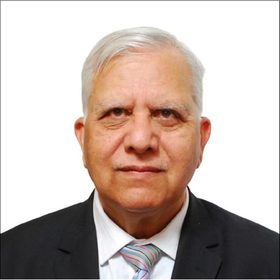
Zamir Ahmed Awan is the founder and Chair of the Global Silk Route Research Alliance, a think tank in Islamabad. He studied engineering at Shanghai University in the 1980s, and years later he went back to China as Pakistan's science counsellor in Beijing, from 2010 until 2016, working on science and higher education cooperation between the two countries.…