
UN Security Council condemns Houthi attacks on Saudi Arabia

Qatari PM, Iranian president discuss de-escalation and dialogue on sidelines of UNGA in New York

The UN Security Council condemns Houthi attacks targeting Saudi Arabia in a meeting on Friday. SCREENGRAB VIA AlArabiya/X
The United Nations Security Council on Friday condemned escalating attacks on Saudi Arabia by Houthis in a rare show of unity from the UN’s top body.
“The members of the Security Council condemned, in the strongest terms, continued Houthi attacks against the Kingdom of Saudi Arabia, including attacks impacting civilian and energy infrastructure, which have resulted in the injury of civilians, including women and children,” said the rotating president of the Council, French UN envoy Jerome Bonnafont, delivering a joint statement.
Meanwhile, Yemeni government forces said that they seized control of the strategic Numan mountain range in the southern province of Lahj following clashes with the Houthis.
The Yemeni army’s media centre said government forces, backed by the Popular Resistance, had taken control of the mountain range overlooking the Al-Wazi’iyah and Al-Mudarabah districts.
Houthi fighters withdrew from the area and suffered heavy losses in personnel and military equipment, it added.
The Nation’s Shield Forces said its units, backed by the Giants Brigades and local tribesmen, seized the summit of Jabal Numan and the nearby Dar al-Kafir position in a rapid military operation.
According to the force, the operation began with an overnight infiltration followed by the encirclement of the position and an assault at dawn, forcing Houthi fighters to flee and leave behind weapons and ammunition.
It described Jabal Numan as a commanding strategic position overlooking supply routes between Al-Wazi’iyah and Al-Mudarabah, saying the Houthis had used it to monitor the area and shell nearby villages and military positions.
The force said control of the summit would help secure villages in Wadi Al-Mudarabah and the outskirts of Al-Wazi’iyah, reduce the threat of Houthi shelling and cut off a key infiltration route.
The Houthis made no immediate comment on the statements.
Fighting has intensified in recent weeks along fronts between Taiz and Lahj provinces
China helping Iran would be ‘totally unacceptable,’ Trump told Xi during visit: US ambassador
US President Donald Trump told visiting Chinese President Xi Jinping this week that Beijing providing any assistance to Iran would be “totally unacceptable,” according to the US ambassador to China.
Speaking to CNBC on Friday, David Perdue said Chinese support for Iran had been a recurring subject in US-China discussions and was raised again during Trump and Xi’s White House talks on Thursday.
“We made it very clear to them weeks ago that any help that they would give Iran, whether it be direct or indirect, whether it be intelligence, or parts, or military equipment, was totally unacceptable,” Perdue said. “President Trump made that very clear again yesterday.”
Perdue said Washington remains concerned about what he described as possible indirect Chinese support for Iran, while acknowledging that the US has no direct evidence of China helping Tehran keep the contested Strait of Hormuz closed.
“There’s been indirect support, we think, but there’s no direct evidence,” he said, adding that Washington has made its concerns clear to Beijing.
Perdue said Trump and Xi had agreed that Iran must never obtain a nuclear weapon and that the Strait of Hormuz should remain open, describing the understandings as significant progress.
He also said Washington had seen indications that Beijing is paying attention to US warnings over Iran. “We’ve seen evidence that they have listened to us; they’ve pulled some things down,” Perdue added.
On Thursday, Trump and Xi held talks and attended a state dinner. Trump said the two countries have “never gotten along better,” while acknowledging that they “represent different systems.”
Xi said the leaders held “sincere and in-depth exchanges” and reached a common understanding on several issues, adding that the discussions provided “new strategic guidance” for China-US relations.
Iran’s Araghchi appreciates Pakistan’s ‘constructive’ mediation efforts in US talks
Iranian Foreign Minister Abbas Araghchi has expressed appreciation for Pakistan’s “constructive efforts as a mediator in the negotiations with the United States”, according to a statement from Iran’s foreign ministry on Friday.
During a meeting with Deputy Prime Minister and Foreign Minister Ishaq Dar, Iran’s top diplomat said breaches of commitments by the United States undermined the position of the mediating institution.
Araghchi specifically referred to the Islamabad Memorandum of Understanding, saying the US violation of the MoU had heightened insecurity and tensions in the region. He held Washington responsible for the continuation of the consequences arising from the situation.
Araghchi also briefed Dar on the latest status of negotiations and an understanding between Iran and Oman on determining an appropriate route for the safe passage of vessels through the Strait of Hormuz.
Dar was also briefed on Iran’s interactions with the United States through Qatar.
Qatari PM, Iranian president discuss de-escalation and dialogue
Qatar’s Foreign Minister and Prime Minister Sheikh Mohammed bin Abdulrahman Al Thani, who has been mediating in the Middle East conflict, spoke with Iranian President Masoud Pezeshkian about de-escalating tensions and creating conditions for dialogue, according to a statement from Qatar’s foreign ministry.
The two met on the sidelines of the United Nations General Assembly in New York, where they “reviewed the latest developments in the region and the efforts being made to de-escalate tensions and create a conducive environment for dialogue”.
Britain warns Iran it will not tolerate hostile activity on UK soil
Britain’s foreign minister met his Iranian counterpart on the sidelines of the UN General Assembly in New York and told him his country would “not tolerate intimidation, threats or hostile activity on UK soil” from groups linked to Iran.
British Foreign Secretary Ed Miliband and Iranian Foreign Minister Abbas Araghchi also discussed the war in the Middle East, the importance of reopening the Strait of Hormuz and Britain’s “unwavering resolve to combat threats from Iranian-linked groups on UK soil,” a Foreign Office statement said.
“The Foreign Secretary reiterated the UK’s unwavering resolve to combat threats from Iranian-linked groups on UK soil,” it said.
In July, Britain banned support for Iran’s Islamic Revolutionary Guard Corps and a linked group following a series of antisemitic attacks, using new legal powers designed to stop the use of state-sponsored proxies.
Iran has previously denied using proxies. The British statement did not say how Araghchi responded to Miliband.
A statement on Araghchi’s Telegram account said he had used the meeting to call for a correction to “the destructive and irresponsible approaches of some European governments towards Iran and regional developments.”
He also said an “insistence on interfering in countries’ internal affairs and the instrumental use of human rights concepts is in no way acceptable.”
Britain’s National Cyber Security Centre said last week Iranian state-linked cyber actors had used a spyware family known as “CHOSEN BRICK” to steal emails, messages and other sensitive information through “spear-phishing” campaigns on messaging platforms including WhatsApp and Telegram.
“The Foreign Secretary made clear that Britain will not tolerate intimidation, threats or hostile activity on UK soil and set out the measures the Government has taken in response,” the Foreign Office statement added.
Iran proposes reopening Hormuz within seven days
Iran submitted a proposal to the United States to end the war and reopen the Strait of Hormuz within seven days, its foreign minister told media outlets in New York, AFP reported.
“If certain conditions are met, the strait will be open within seven days, and talks will start,” Abbas Araghchi, who is in the US for the UN General Assembly, told media outlets including the New York Times and The Guardian.
Japanese news agency Kyodo reported the proposal citing a senior Iranian official. Iranian media, however, denied the Kyodo report, while authorities in Tehran have not clarified their position.
Iran seeks deal with US, not war: Pezeshkian
Iran does not seek war with the US and remains prepared to pursue a negotiated agreement, President Masoud Pezeshkian said late on Thursday as tensions between the two countries continue.
In an exclusive interview with Fox News’ Bret Baier, Pezeshkian was asked if Iran was choosing war or a deal.
“We do not choose war. The war was imposed on us. We do not seek war,” Pezeshkian said.
He said Iran remains willing to move forward with an agreement with Washington, referring to the June memorandum that called for a final peace deal within 60 days but collapsed due to differences over navigation in the Strait of Hormuz.
“We did reach an agreement with your president (Donald Trump),” he said. “Based on that, we are willing and still wish to move forward.”
The Iranian president said it is America that must choose whether it wants to end the war or not.
Asked whether Iran would give up its 60% enriched uranium, Pezeshkian said the country would comply with its obligations under international law and the Nuclear Non-Proliferation Treaty.
“Yes,” he said. “Within the framework of international law, based on the Non-Proliferation Treaty, whatever we are supposed to adhere to, we will.”
Pezeshkian also rejected the suggestion that Iran had closed the Strait of Hormuz, a strategically important waterway through which a fifth of the world’s oil passed before the war.
Baier questioned Pezeshkian about Supreme Leader Ayatollah Mojtaba Khamenei, who has not been seen publicly since replacing his father, Ali Khamenei, who was killed in US-Israeli strikes in late February.
Pezeshkian said he met Khamenei in person almost a month earlier, and spent about seven hours with him.
Asked whether the supreme leader was healthy and able to govern, Pezeshkian responded: “Very much so, completely.”
Three Iraqi airports suspend Iranian flights starting Friday, sources and state media say
Iraq’s Erbil and Sulaimaniya airports suspended Iranian flights starting on Friday, two sources told Reuters, after other Iraqi airports took the same step earlier in the week.
The move means that, according to sources and state media, flights to and from Iran are suspended from all four Iraqi airports at which they were operating — Baghdad, Najaf, Erbil and Sulaimaniya.
Iraq’s state news agency reported the suspension at Najaf International Airport earlier on Friday.
Two separate sources told Reuters earlier in the week that Iraq ordered its civil aviation authority to halt Iranian flights to Baghdad airport from Wednesday. The sources said at the time that the government was discussing diverting Iranian flights from Baghdad to Najaf.
Washington had announced it would impose sanctions on any global companies doing business with Iranian airlines after September 23, to ground Iran’s entire civilian fleet worldwide.
The United Arab Emirates, the Middle East’s biggest travel hub, also said on Thursday it was suspending all flights by Iranian airlines to and from the country until further notice.
Adviser to the Iranian leader Mohammad Mokhber said in response to the flight suspensions that if Iran cannot have flights and receive airport services, then no one in the region can either, according to Nour News.
Crude oil exports via Hormuz at 33.7 million barrels this week, data shows
Crude oil flows out of the Strait of Hormuz reached 33.7 million barrels so far in the week starting September 20, preliminary ship-tracking data from Kpler showed on Friday, putting exports roughly on track with the previous week’s levels.
The traffic comprised 19 tankers, of which 17 are very large crude carriers (VLCCs) that can carry 2 million barrels of oil, the data showed. Most of the tankers are laden with crude from Saudi Arabia, followed by Iraq.
For the full previous week, 49.2 million barrels of crude were shipped out via Hormuz, according to Kpler.
On Wednesday, some 60 commercial vessels of all types transited the Strait of Hormuz carrying the highest daily volume of crude oil since early July, a US official told Reuters, speaking on condition of anonymity.
State-run Saudi Aramco 2222.SE has boosted its exports via Hormuz after attacks on its East-West Pipeline earlier this month halted shipments from the Red Sea port of Yanbu.
On Thursday, the number of commodity vessels transiting the Strait of Hormuz fell to nine from 14 the day before, Kpler data showed, although an unknown number of ships sail through the waterway with their transponders turned off and are not counted.
Of the nine, eight ships exited. The 10-day average of transits is 18, according to Kpler data.
Before the Iran war started on February 28, the strait typically handled about 125 large commercial vessels per day, including tankers, gas carriers, bulk carriers and container vessels, accounting for some 20% of global oil and liquefied natural gas supply.
Top Russian diplomat meets Iranian counterpart, UN chief on sidelines of General Assembly
Russian Foreign Minister Sergey Lavrov held talks with his Iranian counterpart Abbas Araghchi and UN Secretary-General Antonio Guterres on the sidelines of the 81st General Assembly session in New York, according to official statements.
During the meeting between Lavrov and Araghchi late Thursday, the two parties discussed pressing regional and international issues, focusing on the evolving situation surrounding Iran, a statement by the Russian Foreign Ministry said.
“They emphasised that there is no alternative to a diplomatic resolution of the crisis triggered by the unlawful actions of the United States and Israel,” it said.
The statement further said that both sides also paid attention to the implementation of bilateral deals reached following the meeting of the Russian and Iranian presidents in the Kyrgyz capital Bishkek on September 1, held on the sidelines of the summit of the Shanghai Cooperation Organisation.
“The ministers reviewed the schedule of upcoming Russian-Iranian contacts at various levels,” it added.
In a separate statement on Lavrov’s meeting with the UN secretary-general later that evening, it was stated that their discussions focused on current issues regarding the UN’s activities, particularly on the results of Guterres’ tenure as the organization’s chief.
Lavrov highlighted the importance of “carefully considered UN reform” to adapt the organisation to “the realities of a multipolar world order,” the statement said, adding that he stressed the need to broaden representation of nationals from the “global majority” within the secretariat and for UN personnel to perform their duties in an “impartial and even-handed” manner.
“He also stressed the impermissibility of eroding the organization’s intergovernmental character or violating the established division of labour among its principal organs,” it noted.
The Russian foreign minister arrived in New York late Tuesday, where he is scheduled to address the UN General Assembly on Saturday.
Turkiye chief of staff to attend military chiefs meeting in Saudi Arabia under defence pact, ministry says
Turkiye Chief of General Staff General Selcuk Bayraktaroglu will travel to Saudi Arabia to meet his Saudi and Pakistani counterparts as part of the Makkah Joint Defence Agreement, the Defence Ministry said on Friday.
Earlier, the Saudi Foreign Ministry said the chiefs of staff would hold an urgent meeting to discuss ways to support Riyadh under the defence pact following attacks by Yemen’s Iran-backed Houthis. Ankara has said it could help meet Riyadh’s military needs if necessary.
Allies unite behind Saudi Arabia as Houthis step up attacks
Saudi Arabia, Turkiye and Pakistan will hold an urgent, high-level meeting under a joint defence pact to discuss ways to support the kingdom amid attacks by Yemen’s Houthis, while Tehran seeks to distance itself from the rapid advance of its Houthi allies.
The Houthis have launched strikes on the Saudi-backed government in Yemen and repeatedly fired into Saudi Arabia, disrupting oil flows from the world’s largest energy exporter, as part of a wider Middle East war that began with US and Israeli strikes on Iran in February.
The Houthis said they had fired dozens of missiles and drones at Saudi targets on Thursday, while authorities in Saudi Arabia said they had intercepted six ballistic missiles fired by Houthi fighters.
Read: US and Iran discuss phased deal to reopen Hormuz and end US blockade, sources say
Saudi Arabia earlier had issued emergency alerts for areas including the holy city of Makkah, Jeddah and Yanbu, the main Saudi Red Sea oil port.
Saudi Arabia’s top religious authority called on soldiers in the kingdom to be ready to lay down their lives to fight the Houthis until the group is ousted from power, a statement posted on the Saudi state news agency said.
Amid the fighting, the Saudi, Pakistani and Turkish foreign ministers met within the framework of the Makkah Joint Defence Agreement, according to a Saudi foreign ministry statement. They condemned the attacks targeting Makkah and other civilian sites, while affirming Saudi Arabia’s right to defend itself, the statement said.
“The ministers also discussed arrangements for holding an urgent meeting of the chiefs of staff of the three countries to discuss ways to support Saudi Arabia under the Makkah Joint Defence Agreement, which stipulates that an attack against any one of the parties constitutes an attack against all parties,” the statement said.
The meeting was announced shortly after Iranian President Masoud Pezeshkian sought to distance Iran from the Houthis in an American television interview on Thursday.
“The Houthis are responsible for their own actions,” Pezeshkian told the Fox News program “Special Report with Bret Baier” a day after he appeared before the UN General Assembly in New York.
The Pezeshkian interview and speech took place amid a pause in fighting between the US and Iran and a brief attempt at diplomacy in New York, with Qatar serving as an intermediary between the warring parties.
Iran’s Foreign Minister Abbas Araghchi told reporters on Thursday that Tehran had conveyed a proposal to the United States via intermediaries under which the Strait of Hormuz would be reopened if Tehran’s conditions were met.
Under Iran’s proposal, hostilities would end on all fronts, including Lebanon, within seven days. The United States would lift its blockade on Iranian ports, release Iran’s frozen funds and waive its oil sanctions, he said.
“The Strait of Hormuz will be reopened on the last day,” Araghchi said, adding that talks with the United States on other issues, including Iran’s nuclear issue, would then start.
A senior Iranian official told Reuters on Wednesday that Tehran was reviewing Washington’s response to its peace proposals.
The war, which US President Donald Trump launched alongside Israel in February, has killed thousands of civilians in Iran and Lebanon and disrupted global energy supplies, pushing up oil prices.
While the US and Iran have largely stood down from direct combat, Iranian allies are engaged in the region with Hezbollah confronting Israel in Lebanon and the Houthis advancing in Yemen.
Iran and its allies have significantly pressured oil exports from Saudi Arabia, a US ally. The Houthis have disrupted ship traffic at the mouth of the Red Sea while Iran has effectively limited tanker traffic at the Strait of Hormuz, the conduit for 20% of the world’s oil exports before the start of the war. An attack by Iranian-backed militias in Iraq also temporarily knocked Saudi Arabia’s East-West Pipeline out of service.
Security experts have debated exactly how much Iran directly influences the Houthis, a Shi’ite Islamist movement that evolved from a local insurgency into a powerful armed group controlling much of northern Yemen.
However, the Yemeni government, Iranian and regional sources have said the Houthis’ advance down Yemen’s Red Sea coast was carried out with direct guidance from Iran’s Islamic Revolutionary Guard Corps.
Read more: Islamabad MoU remains acceptable to Iran, Pezeshkian tells PM Shehbaz in UNGA meet
With the US-Israeli war against Iran largely stalemated for months on the battlefield, Washington has announced a shift in tactics to extend the reach of its financial sanctions by targeting companies from third countries that do business with Iranian firms, a practice known as “secondary sanctions”.
Iranian airlines were barred from neighbouring countries, including the UAE and Oman, on Thursday in response to new US sanctions, the first big impact of a shift in US policy to target companies in third countries that do business with Iran.
A flight ban, if sustained, could deepen Iran’s isolation and worsen an economic crisis in the country, which is already facing a US blockade of its ports at sea.
“We are living in an open-air prison,” a retired teacher in Tehran told Reuters by text message on condition her name not be used.
Europe must confront US aggression: Araghchi
Araghchi held talks with his counterpart from Spain, placing the US’s war of aggression, the insecurity it has manufactured in West Asia, and the Israeli regime’s ongoing occupation and genocide in Gaza at the centre of his discussions, according to IRNA.
Araghchi met with Spanish Foreign Minister José Manuel Albares Bueno.
Araghchi defended the rights and sovereignty of the Iranian nation after a cowardly war of aggression by the United States and the Zionist regime, and pressed European and regional governments to abandon double standards and act in accordance with international law.
Outlining current developments in West Asia, he stressed the importance of European countries adopting a responsible approach, consistent with international law, toward the aggressive and illegal actions taken by the United States against Iran.
The Iranian foreign minister pointed to the continuing occupation, the genocide of the Palestinian people, and the Zionist regime’s aggressive expansionism in the region, and underscored the responsibility of all governments to halt these acts of aggression and to hold the Zionist perpetrators accountable and punish them.
Europe’s ‘complicity will not go unanswered’: Gharibabadi
Iran’s Deputy Foreign Minister Kazem Gharibabadi said in an X post early on Friday that NATO’s Secretary-General Mark Rutte’s “admission of conducting 5,000 sorties from European bases in support of the U.S. military aggression against Iran revealed that Europe was part of the aggression’s infrastructure”, and that Europe’s “complicity will not go unanswered.”
“Governments that placed their territory at the disposal of the United States cannot evade their responsibility,” he said.
Rutte has repeatedly acknowledged that thousands of US military flights, between 4,000 and 5,000, departed from bases in Europe during the US-Israeli war of aggression against the Islamic Republic, according to IRNA.
He described Europe as a “platform of power projection” without which Washington could not have conducted the operation.
Colombia cuts diplomatic ties with Iran
Colombia said on Thursday that it formally severed diplomatic relations with Iran due to “national and hemispheric security concerns,” alleged links to international terrorist and narcoterrorist groups, and human rights violations.
In a statement, the Foreign Ministry said the decision took effect on September 19 and was based on the government’s foreign policy priorities, including “the fight against transnational crime and the protection of national security.”
The ministry said “Colombia also took into account confirmed human rights violations, verified attacks against countries not involved in the Middle East conflict, the blockade of the Strait of Hormuz, and the authorities’ obstruction of the International Atomic Energy Agency’s (IAEA) efforts to verify the scope of Iran’s nuclear program.”
“These facts deteriorated Colombia’s trust in the government of the Islamic Republic of Iran,” the ministry added.
Colombia’s new president, Abelardo de la Espriella, has redrawn alliances since taking over in August. He fast-tracked efforts to restore the South American nation’s ties with Israel, reversing predecessor Gustavo Petro’s strong stance on the genocide in Gaza.
Hormuz commodity ship transits fall to nine, ship-tracking data shows
Vessel transits at the Strait of Hormuz fell on Thursday to 9, compared with the previous day’s 14, preliminary ship-tracking data showed on Friday.
Of those, eight ships exited, according to the data.
The 10-day average of transits is 18.
Some vessels may be sailing through the waterway with their transponders turned off, so they aren’t counted.
Of the eight exits, one was a ballast very large gas carrier, and one was a laden very large crude carrier (VLCC).
The rest of the exits were made by Panamax, Supramax, short-range and medium-range tankers.
The vessel that entered the strait was a dry bulk handymax carrier.
Before the Iran war started on February 28, the strait typically handled about 125 large, commercial vessels per day, including tankers, gas carriers, bulkers and container vessels, accounting for some 20% of the world’s daily crude oil and liquefied natural gas supply.
At the Bab el-Mandeb strait, ship transits on Thursday were little different from Wednesday, at 26, with 12 ships entering and 14 exiting, Kpler data showed.
Of the ships that entered, one was a laden VLCC carrying Iraqi Basrah crude bound for Egypt with its transponder switched on.
US Senate rejects resolution curbing Trump’s Iran war powers
The US Senate on Thursday narrowly rejected a Democratic-led resolution aiming to stop the Iran war until hostilities are authorized by Congress.
The Senate voted 50 to 49 to reject the resolution, which had passed the House of Representatives in July. The vote was largely along party lines, with most of President Donald Trump’s Republicans rejecting the measure and almost every Democrat voting for it.
France to send ‘military means’ to protect Saudi oil port: Macron
President Emmanuel Macron said France would send “military means” to help shield the key Saudi oil terminal of Yanbu from attacks by Houthis, according to AFP.
“We are going to send military assets, meaning soldiers, radars, and defence systems, to protect this site,” he said during an interview with TF1 and France 2 during the evening news.
Reference Link:- https://tribune.com.pk/story/2631318/iran-seeks-deal-with-us-not-war-pezeshkian
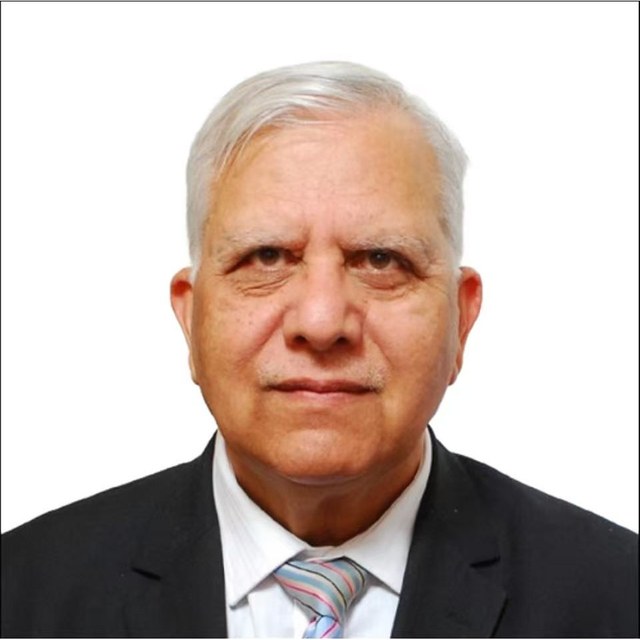
Zamir Ahmed Awan is the founder and Chair of the Global Silk Route Research Alliance, a think tank in Islamabad. He studied engineering at Shanghai University in the 1980s, and years later he went back to China as Pakistan's science counsellor in Beijing, from 2010 until 2016, working on science and higher education cooperation between the two countries.…