
The UN at a Crossroads: Can the 81st General Assembly Restore Trust? 联合国面临十字路口:第81届大会能否重拾信任?
Wire desk byline Sourced from Xinhua, Dawn, Arab News, Anadolu and Minute Mirror. Translated and abridged by the GSRRA Desk.

(下边有中文翻译,请继续看到底。 谢谢。)
The 81st session of the United Nations General Assembly opens its General Debate on September 22 under a particularly relevant theme: “Restoring trust, managing transformation: a United Nations that delivers for all.” Nearly 130 heads of state and government are expected during High-Level Week. The agenda will encompass peace and security, sustainable development, climate change, health, AI governance, nuclear risks and the future of multilateralism.
But behind the formal agenda lies a deeper question: can the UN still deliver justice when geopolitical power repeatedly overrides collective decisions? The organisation was created to uphold sovereign equality, prevent war and provide mechanisms for peaceful dispute settlement. Yet the credibility of that system is increasingly tested when Security Council divisions prevent decisive action.
Kashmir illustrates the problem from Pakistan’s perspective. Security Council Resolution 47 of 1948 established a framework for restoring peace and envisaged a plebiscite in Jammu and Kashmir. Decades later, the dispute remains unresolved. Palestine presents another example. Resolution 2334, adopted in 2016 by 14 votes with the United States abstaining, declared Israeli settlements in occupied Palestinian territory to have no legal validity and demanded an end to settlement activity. UN reporting in 2026, however, recorded continued settlement activity and thousands of housing units being advanced or approved.
Gaza has exposed the limitations of the Security Council even more dramatically. In June 2025, the United States vetoed a permanent-ceasefire resolution despite all 14 other Council members voting in favour. A similar US veto blocked a Gaza ceasefire resolution in September 2025. Washington has consistently argued that its approach reflects Israel’s security concerns and the need to secure hostage releases, while critics argue that repeated diplomatic protection has weakened international pressure for ending the conflict. The debate is therefore not simply about one country’s policy; it is about whether the veto can coexist with effective collective security.
Ukraine demonstrates that the problem is broader than the Middle East. In February 2022, Russia vetoed a Security Council resolution demanding an end to its military offensive against Ukraine; the General Assembly subsequently adopted a resolution demanding Russia end its use of force and withdraw its troops. The continuing conflict demonstrates the gap between international resolutions and their practical enforcement.
The same institutional weakness becomes particularly serious when major powers are directly involved in conflicts. The UN system can condemn, debate, investigate and recommend, but enforcement ultimately depends heavily on political cooperation. This creates an uncomfortable perception that international law is applied differently according to geopolitical influence. That perception, whether fully justified in every case or not, damages confidence in multilateral institutions.
The 81st General Debate should therefore become more than another exchange of national statements. Its central challenge should be implementation. UN members could advance discussions on restricting the circumstances in which the veto is used in situations involving mass atrocities, improving mechanisms for implementing binding Security Council decisions, strengthening international judicial institutions, and making sanctions and accountability mechanisms more consistent and transparent. Such reforms would require broad agreement and cannot realistically eliminate great-power politics overnight.
China has increasingly argued for precisely this return to the UN Charter. Beijing says sovereign equality, non-interference, peaceful settlement of disputes and opposition to unilateral coercion should remain fundamental principles of international relations. In a 2026 Security Council debate, China argued that countries, regardless of their size or strength, should enjoy equal rights and that disputes should be addressed through dialogue rather than force.
China has also attempted to translate this approach into diplomatic initiatives. Its Global Security Initiative (GSI) advocates common, comprehensive, cooperative and sustainable security and emphasizes dialogue and consultation. Beijing facilitated the 2023 Saudi-Iran rapprochement and has promoted political dialogue on Ukraine, Palestine and other conflicts. China also describes the UN as the principal platform for global security governance and has called for strengthening, rather than bypassing, the UN-centered international system.
This approach offers an important alternative to a world in which security is defined primarily through military alliances and coercive power. Its credibility, however, will ultimately depend on consistent implementation and on China’s willingness, like every major power, to accept meaningful multilateral constraints when its own interests are involved.
The expected outcome of the 81st session is unlikely to be an immediate transformation of the international system. More realistically, it may produce renewed political commitments, resolutions and reform proposals. The real test will come afterward.
The UN does not need to become an institution against powerful countries; it needs to become an institution where power is accountable to rules. If the 81st General Assembly can move the debate from declarations toward implementation, it can begin restoring the trust reflected in its theme. A stronger UN would not diminish great powers; it would give small and large nations alike greater confidence that international law means the same thing for everyone.
联合国面临十字路口:第81届大会能否重拾信任?
联合国第81届大会将于9月22日开启一般性辩论,其主题具有特殊的现实意义:“重建信任,应对变革:建设一个为所有人服务的联合国”。预计在高级别周期间,将有近130位国家元首和政府首脑出席。会议议程将涵盖和平与安全、可持续发展、气候变化、卫生健康、人工智能治理、核风险以及多边主义的未来等议题。
然而,在正式议程背后,还有一个更深层的问题:当地缘政治力量一次又一次凌驾于集体决策之上时,联合国还能否真正维护国际正义?联合国成立的初衷,是维护主权平等、防止战争,并为和平解决争端提供机制。然而,当安理会内部的分歧阻碍采取有效行动时,这一体系的公信力正面临越来越严峻的考验。
从巴基斯坦的角度来看,克什米尔问题体现了这一困境。联合国安理会1948年第47号决议建立了恢复和平的框架,并设想通过公民投票解决查谟和克什米尔问题。数十年过去,这一争端仍未得到解决。
巴勒斯坦问题则是另一个例子。2016年,联合国安理会以14票赞成、美国弃权的结果通过第2334号决议,认定被占巴勒斯坦领土上的以色列定居点“不具法律效力”,并要求停止定居点活动。然而,联合国2026年的相关报告显示,定居点活动仍在持续,数千套住房项目正在推进或获得批准。
加沙局势更加突出地暴露了安理会的局限性。2025年6月,美国否决了一项要求实现永久停火的决议,而安理会其他14个成员均投了赞成票。2025年9月,类似的美国否决再次阻止了一项加沙停火决议。华盛顿一贯表示,其政策考虑了以色列的安全关切以及确保被扣押人员获释的需要;批评者则认为,持续的外交保护削弱了国际社会推动结束冲突的压力。因此,这场争论并不仅仅涉及某一个国家的政策,而是涉及一个更根本的问题:否决权是否能够与有效的集体安全体系共存。
乌克兰问题表明,这一制度性问题并不局限于中东。2022年2月,俄罗斯否决了一项要求结束其对乌克兰军事行动的安理会决议;随后,联合国大会通过决议,要求俄罗斯停止使用武力并撤出军队。持续至今的冲突表明,国际决议与其实际执行之间仍存在明显差距。
当大国直接卷入冲突时,这种制度性弱点尤其严重。联合国可以进行谴责、辩论、调查和提出建议,但其执行能力最终在很大程度上取决于政治合作。这造成了一种令人不安的观感,即国际法的适用似乎会受到地缘政治影响。无论这种观感在每一个具体案例中是否完全成立,它都会削弱国际社会对多边机构的信任。
因此,第81届联合国大会的一般性辩论不应只是又一次各国发表立场的外交场合。其核心挑战应当是如何推动落实。联合国成员国可以进一步讨论限制否决权使用的条件,尤其是在涉及大规模暴行的情况下;完善落实具有约束力的安理会决定的机制;加强国际司法机构;并使制裁和问责机制更加一致、透明。当然,这些改革需要广泛共识,不可能在短期内彻底消除大国政治的影响。
中国近年来越来越强调回归《联合国宪章》的核心原则。北京主张,主权平等、不干涉内政、和平解决争端以及反对单边强制措施,应继续成为国际关系的基本原则。在2026年一次联合国安理会辩论中,中方表示,无论国家大小和实力强弱,都应享有平等权利,各国之间的争端应通过对话而非武力加以解决。
中国也试图通过外交倡议将这一理念付诸实践。中国提出的全球安全倡议(GSI)主张共同、综合、合作、可持续的安全,并强调通过对话协商解决问题。2023年,中国促成了沙特阿拉伯与伊朗之间的和解进程,并持续推动乌克兰、巴勒斯坦等问题的政治对话。中国同时将联合国视为全球安全治理的主要平台,并主张加强而不是绕开以联合国为核心的国际体系。
这一理念为一种不同于单纯依赖军事联盟和强制性力量定义安全的国际秩序提供了另一种思路。然而,其可信度最终仍将取决于能否持续、一致地落实相关原则,以及中国和其他所有大国在涉及自身利益时,是否愿意接受有意义的多边约束。
第81届联合国大会不太可能立即推动国际体系发生根本性转变。更现实的结果可能是形成新的政治承诺、决议以及改革建议。真正的考验将在大会结束之后出现。
联合国并不需要成为一个针对强国的机构;它需要成为一个让权力受到规则约束的机构。如果第81届大会能够推动国际社会从“发表声明”走向“落实行动”,就有可能开始重建其主题所强调的信任。一个更强大的联合国并不会削弱大国,反而能够让大小国家都更加相信:国际法应当对所有国家适用同样的标准。
(注意: 本文是用AI翻译的,或有误差。请以原版英文为准。谢谢。)
Reference Link:- https://www2.apdnews.cn/en/item/26/0921/axjgafnn0a10c5db47dd8d.html
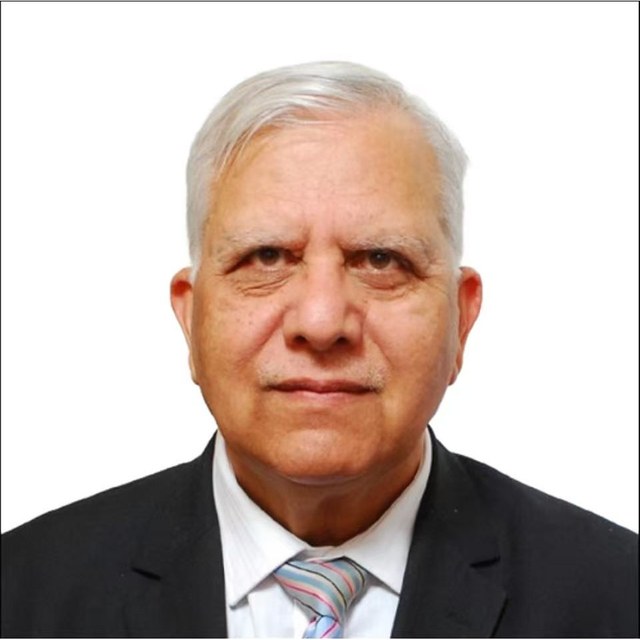
Zamir Ahmed Awan is the founder and Chair of the Global Silk Route Research Alliance, a think tank in Islamabad. He studied engineering at Shanghai University in the 1980s, and years later he went back to China as Pakistan's science counsellor in Beijing, from 2010 until 2016, working on science and higher education cooperation between the two countries.…





The focus on sustainable development often overlooks the immediate security concerns in fragile regions. My experience suggests that political will remains the most significant hurdle for any institutional change.