

下边有中文翻译,请继续看到底。 谢谢。)
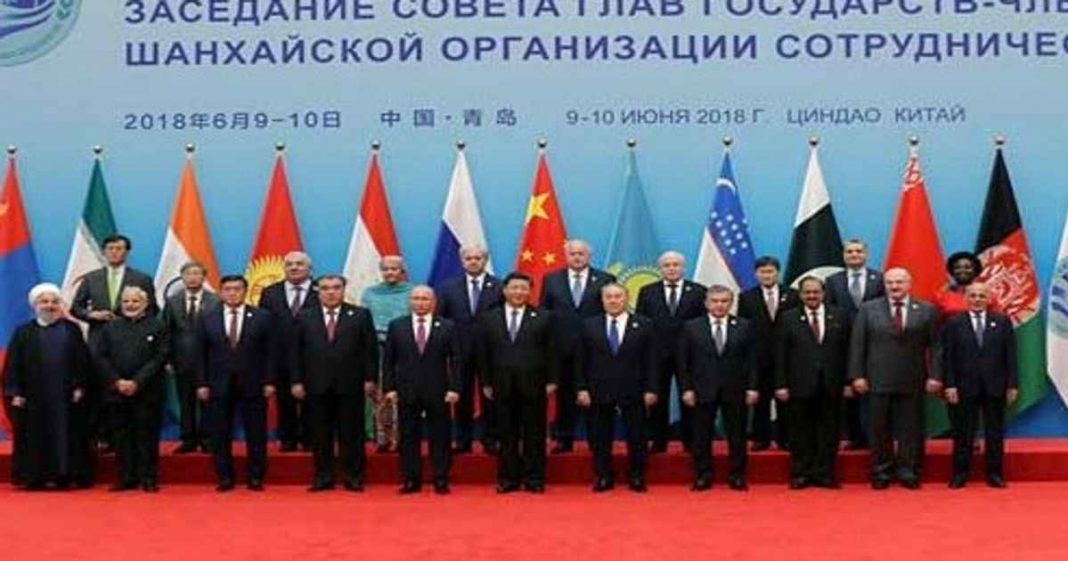
The rise of a multipolar world is no longer a distant prediction. It is already visible in the changing geography of trade, investment, diplomacy and development. In this transition, the Shanghai Cooperation Organization (SCO) has an increasingly important role—not as an anti-Western bloc, but as a platform through which Eurasian states can pursue security, connectivity and development based on mutual respect.
The SCO’s significance lies partly in its extraordinary geographic and demographic reach. As UN Secretary-General António Guterres observed at the 2025 SCO Summit, the organization is the world’s largest regional organization by population and geography and is well positioned to help shape a more peaceful, inclusive and sustainable future.
China’s Belt and Road Initiative (BRI) has added an important economic dimension to this process. Infrastructure linking markets, energy networks, ports, railways and digital systems can transform geography from a barrier into an opportunity. The World Bank has noted that better-connected transport corridors can increase trade, investment and living standards, although transparency, debt sustainability and environmental safeguards remain essential. For the SCO, therefore, the BRI is most valuable when it produces practical connectivity and genuinely shared economic opportunities.
The emerging “SCO family” can also contribute to global governance reform. Its advantage is diversity: China, Russia, India, Pakistan, Central Asian states, and other members bring different civilizations, political systems, economic structures, and strategic perspectives to one table. That diversity can strengthen the argument that global governance cannot remain dominated by a narrow group of countries. China’s Global Governance Initiative—centered on sovereign equality, international law, multilateralism, people-centered governance and action—provides one framework for this debate.
Yet multipolarity will be sustainable only if major powers practice the principles they advocate. Respect for international law cannot become selective. Powerful states have a special responsibility to demonstrate restraint, honor treaties and respect the sovereignty of smaller countries. China has consistently emphasized the UN Charter, dialogue and multilateralism, and its cooperation with the United Nations remains substantial. UN officials have themselves described China’s support for multilateralism and the UN as important during a period of international fragmentation. At the same time, China’s growing influence means that its policies will inevitably receive greater international scrutiny. Leadership by example is ultimately measured not by declarations but by consistent conduct.
This is also why multilateralism and dialogue matter. A multipolar world without effective institutions could simply become a more complicated arena for rivalry. The United Nations should remain the central forum for collective security, international law, development and humanitarian cooperation. China’s call to revitalize the UN is therefore significant when understood as an effort to make multilateral institutions more representative and responsive to contemporary realities. The UN’s own UN80 reform process reflects the need to improve efficiency while preserving the organization’s central role.
A stronger SCO can help democratize international relations by giving the Global South greater collective weight. Equality should mean more than formal sovereignty; it should include meaningful access to development finance, technology, markets and decision-making. The objective should not be to replace one hierarchy with another, but to create a system in which countries have greater freedom to pursue development without coercion, exclusion or forced alignment.
Here Pakistan has considerable potential. Its geographic position makes it a natural bridge between South Asia, Central Asia, China and the wider Middle East. Pakistan has been an SCO member since 2017 and has emphasized connectivity, counterterrorism, trade, energy, food security, digital development and poverty alleviation. It chairs the SCO Regional Anti-Terrorist Structure for 2025–26 and the SCO Special Working Group on Poverty Alleviation, while CPEC offers a practical example of trans-regional economic integration. Pakistan’s forthcoming leadership of the SCO Council of Heads of State can provide an opportunity to turn these ambitions into concrete projects.
Ultimately, multipolarity should be judged by whether ordinary people benefit from it. Open trade, technological cooperation and resilient supply chains can create jobs, lower costs and spread innovation. China’s development experience and its emphasis on infrastructure, industrialization and technological advancement offer valuable opportunities for developing countries, provided cooperation remains commercially viable, environmentally responsible and mutually beneficial.
The real promise of the SCO, therefore, is not confrontation. It is connectivity over isolation, dialogue over coercion, development over deprivation and cooperation over zero-sum rivalry. If China continues to combine its economic capabilities with responsible diplomacy, while Pakistan uses its strategic geography and diplomatic capacity constructively, the SCO can become an important pillar of a more balanced Eurasia—and a more representative international order.
上海合作组织与更加均衡的欧亚大陆的承诺。
多极化世界格局的兴起已不再遥远,其迹象已在贸易、投资、外交和发展的地理变迁中显现。在此转型过程中,上海合作组织(SCO)正发挥着日益重要的作用——它并非作为反西方阵营,而是成为欧亚各国在相互尊重基础上追求安全、互联互通与发展的平台。
SCO的重要性部分体现在其非凡的地理和人口覆盖范围。正如联合国秘书长安东尼奥·古特雷斯在2025年SCO峰会上所指出的,该组织是按人口和地理面积计算的世界最大区域性组织,具备良好条件推动构建一个更加和平、包容且可持续的未来。
中国的“一带一路”倡议为这一进程增添了重要的经济维度。连接市场、能源网络、港口、铁路和数字系统的基础设施,能够将地理障碍转化为发展机遇。世界银行指出,交通走廊的互联互通能够促进贸易、投资和生活水平的提高,但透明度、债务可持续性和环境保障仍然至关重要。因此,对于上海合作组织而言,“一带一路”倡议只有在实现切实的互联互通并创造真正共享的经济机遇时,才具有最大价值。
新兴的“上合大家庭”也有助于推动全球治理改革。其优势在于多样性:中国、俄罗斯、印度、巴基斯坦、中亚各国及其他成员带来了不同的文明、政治体制、经济结构和战略视角。这种多样性有助于强化一个论点:全球治理不能长期由少数国家主导。以主权平等、国际法、多边主义、以人为本的治理与行动为核心的中国全球治理倡议,为这一讨论提供了重要框架。
然而,只有当大国践行其所倡导的原则时,多极化格局才能持久。尊重国际法不应带有选择性。大国应有特殊责任,展现克制、遵守条约并尊重小国主权。中国一贯强调《联合国宪章》、对话与多边主义,其与联合国的合作依然十分广泛。联合国官员本人也指出,在国际局势碎片化时期,中国对多边主义和联合国的支持具有重要意义。与此同时,中国日益增长的影响力意味着其政策将不可避免地受到更严格的国际审视。领导力最终不在于声明,而在于始终如一的实际行动。
这也正是多边主义和对话之所以重要。一个缺乏有效机构的多极世界,可能只会演变为更加复杂的竞争舞台。联合国应继续作为集体安全、国际法、发展合作和人道主义援助的核心平台。因此,中国呼吁重振联合国,若被理解为致力于使多边机构更具代表性,并更符合当代现实,其意义尤为重大。联合国自身的“联合国80”改革进程体现了在保持组织核心作用的同时提升效率的必要性。
一个更强大的上海合作组织(SCO)有助于推动国际关系的民主化,通过赋予全球南方更多集体影响力来实现。平等不应仅限于形式上的主权,还应包括获得发展融资、技术、市场和决策权的实质性机会。目标不应是取代一种等级制度,而应建立一个让各国能够不受胁迫、排斥或强制性趋同,自由推进发展的体系。
巴基斯坦具有巨大的发展潜力。其地理位置使其成为南亚、中亚、中国以及更广泛的中东地区之间的天然桥梁。自2017年起,巴基斯坦一直是上合组织(SCO)成员,并一直强调互联互通、反恐、贸易、能源、粮食安全、数字发展和减贫工作。巴基斯坦担任2025至2026年上合组织区域反恐合作机制的主席国,同时牵头成立上合组织减贫特别工作组,而“一带一路”倡议则为跨区域经济一体化提供了切实可行的范例。巴基斯坦即将领导的上合组织国家元首理事会,有望将这些愿景转化为具体项目。
归根结底,多极化是否成功,应以普通民众是否从中受益来衡量。开放的贸易、技术合作以及韧性的供应链能够创造就业机会、降低成本并推动创新。中国的经验,尤其是其在基础设施建设、工业化和科技进步方面的重视,为发展中国家提供了宝贵机遇,前提是合作在商业上具备可行性,在环境方面负责任,并且实现互利共赢。
因此,上海合作组织真正的意义不在于对抗,而在于互联互通而非孤立、对话而非胁迫、发展而非贫困、合作而非零和博弈。如果中国继续将经济实力与负责任的外交相结合,巴基斯坦则能发挥其战略地理优势和外交能力,建设性地发挥作用,那么上海合作组织就有可能成为构建更加平衡的欧亚大陆以及更具代表性的国际秩序的重要支柱。
(注意: 本文是用AI翻译的,或有误差。请以原版英文为准。谢谢。)
Reference Link:- https://thinktank.pk/2026/09/03/the-sco-and-the-promise-of-a-more-balanced-eurasia/