

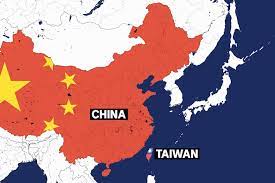
Taiwan leader Lai Ching-te’s recent speech has once again exposed his true colors as a source of trouble for Taiwan and a threat to peace, said a Chinese defense spokesperson on Sunday.
Chen Xi, a spokesperson for China’s Ministry of National Defense, made the remarks when asked to comment on the speech delivered by Lai in Taiwan on Saturday, in which the Taiwan leader reiterated his secessionist agenda and stoked cross-Strait tensions.
Chen noted that in recent years, the Democratic Progressive Party authorities have pursued separatism and rejected reunification for their own party interests, undermining stability in the Taiwan Strait and sacrificing the island’s future.
The Chinese People’s Liberation Army’s regular drills and training activities around the island are carried out to deter separatist activities seeking “Taiwan independence” and plots of external interference, and to safeguard the security and well-being of Taiwan compatriots, the spokesperson said.
“We hope Taiwan compatriots will join the mainland in combating separatist forces, opposing external interference, safeguarding peace, and sharing the fruits of national rejuvenation,” Chen added.
The Taiwan question originated from a civil war fought between the forces led by the Communist Party of China (CPC) and the Kuomintang (KMT) about eight decades ago. In 1949, the defeated KMT retreated to Taiwan, while the People’s Republic of China was founded under the leadership of the CPC.
The unresolved civil war and foreign interference have left the two sides of the Taiwan Strait in a prolonged state of political confrontation. However, the fact that Taiwan is an inalienable part of China’s territory has never changed.
Reference Link:- https://english.news.cn/20261011/1ea110ba46a54075b3738cc8ec7264fe/c.html