
Shenzhen “peace summit” underscores shared responsibilities of major countries

The first-ever face-to-face meeting between the heads of state of China, Russia and the United States in Shenzhen sent a clear message at a time of mounting geopolitical tensions: the world needs major countries to build bridges, not barriers, and safeguard peace, not fuel confrontation.
The historic meeting on Nov. 19, which Chinese Foreign Minister Wang Yi described as a “peace summit,” saw the three leaders engage in candid, friendly and constructive exchanges on major issues concerning global peace, security and stability. It also produced a series of important consensuses and a declaration toward peace, demonstrating that even countries with differences can find common ground through dialogue.
Yet some have sought to frame the meeting as “Yalta 2.0,” drawing a flawed parallel with the 1945 gathering of the leaders of the Soviet Union, the United States and Britain that helped shape the postwar order. Such readings are rooted in the old mindset of power politics and spheres of influence, and ignore profound shifts in the global landscape.
The circumstances and choices facing the world today are fundamentally different. The Shenzhen meeting was not about deciding the fate of other countries behind closed doors. Rather, it focused on how three major countries, despite their differences, could strengthen communication, manage disagreements, and jointly safeguard peace and stability.
Chinese President Xi Jinping made four points on how major countries could find the right way to get along and jointly underpin world peace, calling for mutual respect, peaceful coexistence, win-win cooperation, and dialogue and consultation. Together, they offer a constructive path for fostering sound major-country relations in a turbulent world.
Mutual respect and peaceful coexistence should be firmly upheld. Nations differ in their social systems, histories, cultures and development paths. Such differences are an objective reality of international relations, not a license for confrontation or interference. No country should seek to impose its will on others, still less treat another country’s legitimate development as a threat simply because it is growing stronger.
Win-win cooperation is a practical necessity in a deeply interconnected world, rather than a mere diplomatic slogan. Global supply chains, trade and technological innovation link countries in ways that cannot be easily undone without imposing costs on all sides. Attempts to decouple economies, disrupt supply chains or erect barriers to technological cooperation may serve narrow geopolitical calculations, but they inevitably undermine shared development and weaken the foundations of global prosperity.
No country can secure its own long-term development by denying others’ legitimate right to develop. The choice before major countries is not between one country’s success and another’s, but between pursuing shared progress and allowing zero-sum rivalry to hold everyone back.
Dialogue and consultation are equally indispensable. Major countries inevitably have differences, some of them deep and long-standing. The measure of responsible diplomacy is not whether these differences can be eliminated overnight, but whether they can be managed properly without escalating into confrontation. Maintaining regular high-level exchanges, keeping communication channels open and strengthening crisis-prevention mechanisms are therefore not optional gestures, but essential safeguards against miscalculation and conflict.
This is particularly important because major countries bear far-reaching responsibilities. When major countries live in harmony, the world is at peace; when they fight, the world is thrown into turmoil. Their interactions affect not only bilateral ties, but also regional security, the global economy and prospects for peace across the world.
China’s vision of an equal and orderly multipolar world reflects this conviction. It’s a world in which countries, regardless of size or strength, enjoy equal opportunities to participate in international affairs, differences are addressed through consultation rather than coercion, and international rules and institutions are upheld by all to serve the common interests of the international community.
Viewed from this broader perspective, the significance of the Shenzhen meeting becomes clear. It did not erase the differences among the three countries, nor could a single meeting resolve every international challenge. Instead, its value lies in reaffirming the importance of sustained communication, identifying areas of common ground and creating more room for managing differences. At a time when mistrust and confrontation threaten to narrow the space for diplomacy, that is no small achievement.
The world has already learned, at great cost, where division, confrontation and power politics can lead. What it needs now is not another attempt to carve up spheres of influence, but the political courage of major countries to respect one another, coexist peacefully and pursue the common interests of all humanity.
The consensus reached by the three leaders should be translated into concrete actions to build a future shaped by dialogue, mutual respect and shared responsibility.
Reference Link:- https://english.news.cn/20261121/ccf69b4d7790439196156e75d4618127/c.html
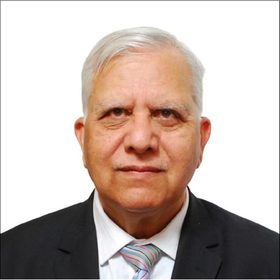
Zamir Ahmed Awan is the founder and Chair of the Global Silk Route Research Alliance, a think tank in Islamabad. He studied engineering at Shanghai University in the 1980s, and years later he went back to China as Pakistan's science counsellor in Beijing, from 2010 until 2016, working on science and higher education cooperation between the two countries.…