
Religion should be removed from terrorism definition under Australian law as it gives ‘false credibility’, watchdog says

Independent National Security Legislation Monitor says reference to religion has ‘contributed to discrimination and violence against religious minorities’
Religion should be removed from Australia’s terrorism definition and making bomb threats should not result in life imprisonment, the country’s national security laws watchdog has said.
The highly anticipated report from the Independent National Security Legislation Monitor (INSLM), released Thursday, reviewed how terrorism has been defined in Australia over the past 25 years after a suite of laws were introduced following the September 11 attacks in the United States.
It comes as the Australian Federal Police (AFP) and the Australian Security Intelligence Organisation (ASIO) warn the rise of extremist, violent nationalism has changed the threat landscape and the motivations behind some terrorist attacks cannot be categorised into single ideologies.
Among the recommendations are suggested changes to the definition of terrorism to remove religion, which the INSLM head, Jake Blight, said gives accused terrorists “false credibility” and has a detrimental impact on religious minorities.
“Having a law that requires proof that terrorists were advancing a ‘religious’ cause gives these terrorists false credibility and reinforces their narrative that they are doing holy work,” the report said. “The same individuals will still be able to be prosecuted, but should be described as violent ideologues.
“Reference to religion in the definition of terrorism has also, in practice, contributed to discrimination and violence against religious minorities, especially Muslim Australians. This has a negative impact on social cohesion.”
The current definition of terrorism under the federal criminal code requires agencies to prove an act intends to cause serious harm to people or property in order to advance a political, religious or ideological cause.
A change in terrorism laws to remove religion as a primary motivation and place it as an example of a broader “ideology” category is in line with international best practice, Blight’s report said.
The INSLM noted the UN special rapporteur’s report earlier this year recommended defining terrorism acts by political and ideological causes and omitting religious motives, as references to religion have “discriminatory and stigmatizing effects that outweigh the benefits of criminally denouncing them”.
In his submission to the INSLM, Australia’s special envoy to combat Islamophobia, Aftab Malik, said keeping religion in as a terrorism motivation created a “climate of suspicion” around Muslims and “provided ammunition for far-right extremist narratives”.
Eleven Muslim advocacy and community groups, including the Australian Muslim Advocacy Network, welcomed the report’s recommendations and urged the Australian government to amend the laws.
“Every time someone in authority says that a motivation is ‘religious’, it uplifts ISIS, far-right and harmful media narratives all at once, by officially perpetuating the false premise that Islam encourages terrorism,” their joint statement said.
“This makes all Muslims feel under siege.”
The Executive Council of Australian Jewry, Australia’s peak Jewish body, described the report as “high-quality” but said removing religion as a motivating factor made “little sense when so many notorious terrorist acts have featured motifs, words and images that unmistakably refer to religious doctrines and beliefs”.
Reference Link:- https://www.theguardian.com/law/2026/nov/20/religion-should-removed-from-terrorism-definition-australian-law-gives-false-credibility-watchdog-ntwnfb
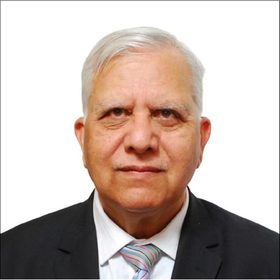
Zamir Ahmed Awan is the founder and Chair of the Global Silk Route Research Alliance, a think tank in Islamabad. He studied engineering at Shanghai University in the 1980s, and years later he went back to China as Pakistan's science counsellor in Beijing, from 2010 until 2016, working on science and higher education cooperation between the two countries.…