
Pakistan: World Bank-funded Punjab land reform project achieves 90pc progress
Source Xinhua, Dawn, Arab News, Anadolu and Minute Mirror

Under a World Bank-funded project, Punjab has digitised and notified 5,805 of 6,014 revenue villages, registered nearly 69.9 million land rights, and converted more than 31 million person-based land records into parcel-based records, achieving 90 percent physical progress ahead of its June 2027 completion deadline.
The World Bank’s official document noted that the Punjab Urban Land Systems Enhancement Project had exceeded several key development targets, prompting an upgrade in its ratings for progress toward development objectives and overall implementation, from “Satisfactory” to “Highly Satisfactory”.
The project, being implemented by the Punjab Board of Revenue and Punjab Land Records Authority (PLRA), aims to improve land records and identify public land for development, including housing programmes.
According to the report, approximately 69.92 million land rights have been registered or linked with the Land Records Management Information System (LRMIS), against the closing target of 50.68 million. Women account for 31 percent of the registered land rights, compared with the target of 32 percent.
Digital cadastral maps have been updated to cover 86 percent of Punjab, exceeding the closing target of 61.8 percent. Similarly, 31.18 million person-based land records have been converted into parcel-based records, surpassing the target of 28 million.
The digitisation exercise covers more than 24.4 million landowners, with 7.57 million newly registered or updated land records jointly or individually filed by women, exceeding the project’s target of six million.
Of the province’s 6,014 revenue villages (mauzas), 5,805 have been digitised and notified, while 27 have been submitted for notification and work on the remaining 182 is still pending.
The report also highlighted progress in addressing jointly owned land, with 495,163 of the 1.747 million eligible jointly owned landholdings partitioned, representing 28 percent of the total. The exercise has created approximately 1.18 million new parcels, including 94,833 registered in women’s names.
Under the Green Property Certificate initiative, 46,626 applications have been received, 37,272 field assessments completed and 23,280 cases approved, while 54,694 certificates have been issued, according to the report.
On the identification of public land for development, the project has screened 933.5 hectares for housing against a target of 1,000 hectares and identified 200 public land sites for development programmes, achieving the relevant target.
The World Bank said the project had reached 90 percent physical progress by October 2026 and remained on track to complete all activities by its scheduled closing date of June 30, 2027.
However, financial disbursement remains comparatively slower than physical implementation. Against the revised credit allocation of USD 145.76 million, approximately USD 90.08 million had been disbursed by October 2026, representing 61.8 percent of the total credit, leaving USD 55.68 million undisbursed.
The project was approved on March 10, 2022, with an original financing allocation of USD 150 million, subsequently revised to USD 145.76 million.
The World Bank maintained the project’s overall risk rating at “Moderate”, while upgrading both its development objective and implementation progress assessments to “Highly Satisfactory”.
Reference Link:- https://www.brecorder.com/news/40450020
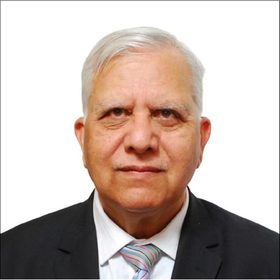
Zamir Ahmed Awan is the founder and Chair of the Global Silk Route Research Alliance, a think tank in Islamabad. He studied engineering at Shanghai University in the 1980s, and years later he went back to China as Pakistan's science counsellor in Beijing, from 2010 until 2016, working on science and higher education cooperation between the two countries.…