
Pakistan: Islamabad Needs One Accountable Government, Not Many Overlapping Authorities. 巴基斯坦:伊斯兰堡需要一个问责政府,而非多个重叠的权力机构。
Source Xinhua, Dawn, Arab News, Anadolu and Minute Mirror

(下边有中文翻译,请继续看到底。 谢谢。)
Islamabad is one of Pakistan’s greatest national assets. Conceived as a modern, planned capital and admired for its natural beauty, green spaces and orderly layout, it was designed to represent the aspirations of a young nation. Yet, as the city has expanded in population, geography and economic activity, its governance structure has failed to evolve at the same pace.
The proposed establishment of an elected Islamabad Capital Territory government, with a 27-member assembly and its own chief executive, therefore deserves serious consideration. If designed carefully, it could address one of the capital’s most persistent problems: too many institutions exercising overlapping authority, with no single body fully accountable for the overall condition of the city.
Since Islamabad’s inception, the Capital Development Authority has played the central role in planning and developing the federal capital. Over time, however, the scale and complexity of the city have grown far beyond the requirements of its early years. The responsibilities of the CDA now intersect with those of the Metropolitan Corporation Islamabad, the district administration, the Islamabad Police, and several federal ministries and agencies.
This fragmentation has created confusion over mandates and accountability.
Different institutions may be responsible for roads, sanitation, water, land management, building regulations, public spaces and municipal services. In some cases, responsibilities overlap; in others, important gaps emerge. When a serious problem occurs, citizens often find themselves moving from one office to another, while institutions debate where responsibility actually lies.
The greatest weakness of such a system is not merely administrative inefficiency. It is the absence of clear accountability.
A modern capital cannot be governed effectively through a structure in which several organizations share authority, but none can be held fully responsible for the outcome.
The proposal reportedly submitted to the prime minister offers an opportunity to reconsider this structure. Under the proposed framework, Islamabad would have a 27-member elected assembly, including directly elected representatives as well as reserved seats for women and minorities. The assembly would elect a chief executive, potentially designated as a chief minister or mayor, who would be accountable to the elected legislature.
This would give Islamabad’s residents a stronger voice in decisions affecting their daily lives.
Health, education, environmental management and municipal services could be placed under a unified territorial government, while elected representatives would provide a direct channel between citizens and the administration.
Public participation is essential. A city cannot be governed successfully without listening to the people who live in it. Islamabad’s residents understand their neighborhoods, transport problems, environmental concerns, and municipal needs better than any distant administrative structure.
However, elections alone will not solve Islamabad’s governance problems.
The real objective should be to establish one clearly defined, professionally managed and fully accountable authority for the capital’s civic affairs. This authority must have clearly identified powers, adequate financial resources and the administrative capacity to deliver results.
The proposed transfer of most CDA functions to the new Islamabad government could be an important step toward eliminating duplication. But the transition must be carefully managed. Pakistan should avoid replacing one complicated structure with another.
A comprehensive review of the responsibilities of the CDA, MCI, district administration, and other relevant bodies should be conducted before the new system becomes operational. Every function must have a clearly identified institution responsible for it.
Equally important is the need to establish a single chain of accountability.
When roads are damaged, water systems fail, garbage accumulates, or a public emergency occurs, citizens should know exactly which authority is responsible. That authority, in turn, must have both the power to act and the obligation to explain its performance.
The issue becomes even more important during disasters and major emergencies. Fragmented governance often produces fragmented responses. Different agencies may work independently, wait for instructions, or shift responsibility to one another. Islamabad needs an integrated emergency-management mechanism under a clearly defined command structure.
As Pakistan’s federal capital, Islamabad will naturally remain politically important. Federal interests, national security requirements and the presence of foreign diplomatic missions must be protected. The federal government therefore has legitimate responsibilities, particularly in areas such as national security and strategic planning.
But this should not mean unnecessary political interference in routine civic administration.
The government responsible for Islamabad’s day-to-day affairs should be empowered to make professional decisions based on law, public interest, and technical expertise. Its performance should be judged by measurable outcomes, not political loyalty.
Other federal capitals around the world offer an important lesson: national interests and local democratic governance can coexist. Islamabad does not have to choose between being Pakistan’s federal capital and having an accountable system of local representation. It can successfully be both.
The proposed Islamabad Capital Territory Government Act 2026 could provide a historic opportunity to modernize the governance of Pakistan’s capital. But legislation must be followed by institutional clarity, professional management, financial autonomy, and transparent accountability.
Islamabad deserves more than multiple offices with overlapping mandates. It needs a coherent governance structure in which authority is matched by responsibility.
Most importantly, the people of Islamabad must be placed at the center of the system. Their elected representatives should have a meaningful role, their concerns should be heard, and the administration should be answerable for its performance.
A beautiful capital requires more than beautiful roads and green landscapes. It requires effective institutions.
The future of Islamabad should therefore be built around a simple principle: one coherent civic administration, clearly defined responsibilities, adequate resources, and full accountability to the people.
That is not merely administrative reform. It is the foundation of a modern capital worthy of Pakistan’s future.
巴基斯坦:伊斯兰堡需要一个问责政府,而非多个重叠的权力机构。
伊斯兰堡是巴基斯坦最重要的国家资产之一。作为一座现代化、规划良好的首都,它以其自然美景、绿地和井然有序的布局而备受赞誉,旨在体现年轻民族的抱负。然而,随着城市人口、地理范围和经济活动的不断扩张,其治理结构却未能同步发展。
因此,提议设立一个由选举产生的伊斯兰堡首都辖区政府,配备27名议员组成的议会以及独立的首席执行官,值得认真考虑。如果设计得当,这一举措有望解决该首都长期存在的一个难题:过多机构行使重叠的权力,且没有单一机构对城市的整体状况承担全面责任。
自伊斯兰堡成立以来,首都发展局一直承担着联邦首都规划与发展的核心角色。但随着时间推移,城市的规模和复杂性已远超早期阶段的需求。CDA的职责现在与伊斯兰堡大都会公司、区行政机构、伊斯兰堡警察以及多个联邦部门和机构的职责相互交叉。
这种分散化导致了职责范围和问责制方面的混乱。不同机构可能分别负责道路、卫生、供水、土地管理、建筑规范、公共空间和市政服务。在某些情况下,职责重叠;而在其他情况下,则出现重要空白。当发生严重问题时,市民往往不得不从一个机构转到另一个机构,而各机构之间则争论责任究竟应由谁承担。
这种体制最大的弱点不仅在于行政效率低下,更在于缺乏明确的问责机制。
一个现代首都无法通过多个组织共享权力,但又无人能对结果完全负责的架构进行有效治理。
据报道提交给总理的提案,为重新审视这一结构提供了机会。在拟议的框架下,伊斯兰堡将设立一个由27名成员组成的民选议会,其中包括直接选举产生的代表,以及为女性和少数群体保留的席位。该议会将选举产生一名首席执行官,可能被任命为首席部长或市长,其职责需向民选立法机构负责。
这将使伊斯兰堡居民在影响日常生活的重要决策中拥有更强的话语权。
卫生、教育、环境管理和市政服务可由统一的地区政府统筹管理,而民选代表则能作为公民与行政机构之间的直接沟通渠道。
公众参与至关重要。一个城市若不倾听居住其中的民众的意见,就无法成功治理。伊斯兰堡居民比任何遥远的行政机构都更清楚地了解自己的社区、交通问题、环境关切以及市政需求。
然而,仅靠选举并不能解决伊斯兰堡的治理问题。
真正的目标应是建立一个明确界定、专业管理且完全问责的首都公共事务管理机构。该机构必须明确界定职权,拥有充足的财政资源和行政能力以实现成果。
将大部分CDA职能移交至新成立的伊斯兰堡政府,可能是消除重复工作的关键一步。但这一过渡必须谨慎管理,巴基斯坦应避免用另一种复杂的结构取代原有体系。
在新系统投入运行前,必须对CDA、MCI、区级行政机构及其他相关机构的职责进行全面审查。每个职能都必须由一个明确指定的机构负责。
同样重要的是,必须建立一条统一的问责链条。
当道路损坏、供水系统中断、垃圾堆积或发生公共紧急情况时,公民应清楚知道具体由哪个部门负责。而该部门也必须具备行动权,并有义务说明其工作成效。
在灾害和重大突发事件期间,这一问题变得更加重要。碎片化的治理往往导致分散的应对措施。不同的机构可能独立运作、等待指令,或相互转移责任。伊斯兰堡需要一个在明确指挥结构下的综合应急管理机制。
最重要的是,伊斯兰堡的人民必须处于制度的核心位置。他们的当选代表应发挥实质性作用,他们的关切应被倾听,政府的绩效也应接受问责。
一座美丽的首都,需要的不仅仅是漂亮的道路和绿色景观,更需要高效的机构。
因此,伊斯兰堡的未来应围绕一个简单的原则来构建:一套连贯的市政管理体系、明确的职责划分、充足的资源,并对人民保持全面的问责。
这不仅仅是一次行政改革,更是建设一个巴基斯坦值得未来的现代首都的基石。
(注意: 本文是用AI翻译的,或有误差。请以原版英文为准。谢谢。)
Reference Link:- https://thinktank.pk/2026/09/07/islamabad-needs-one-accountable-government-not-many-overlapping-authorities/
Discover more from GSRRA
Subscribe to get the latest posts sent to your email.
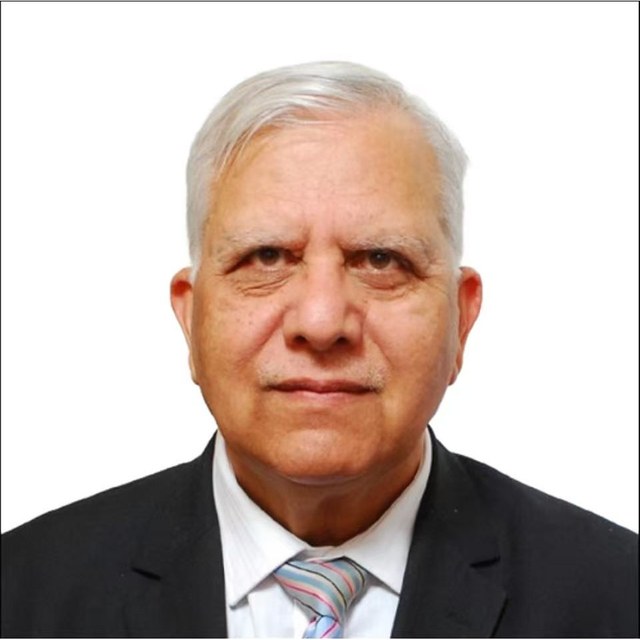
Zamir Ahmed Awan is the founder and Chair of the Global Silk Route Research Alliance, a think tank in Islamabad. He studied engineering at Shanghai University in the 1980s, and years later he went back to China as Pakistan's science counsellor in Beijing, from 2010 until 2016, working on science and higher education cooperation between the two countries.…