
China’s longest undersea highway tunnel completes shield tunneling


China’s longest undersea highway tunnel completed all shield-driven excavation work on Friday as a shield machine reached its designated position at a depth of 105 meters beneath the sea surface in Jiaozhou Bay, eastern China’s Shandong Province, according to China Railway Construction Corporation Limited.
The Qingdao Jiaozhou Bay Second Tunnel will connect Qingdao’s main urban area with the Qingdao West Coast New Area. The latter is a national-level new area. The 17.48-km project includes a 14.37-km main tunnel section, featuring two main tunnels and a middle service tunnel, with three lanes in each direction and a design speed of 80 km per hour.
According to Wang Junping of China Railway 14th Bureau Group Corporation Limited, the project used a combination of drill-and-blast and shield tunneling methods, advancing from both the east and west shores of Jiaozhou Bay and meeting under the sea.
The main shield section has a maximum depth of 95 meters below the sea surface, and the service tunnel reaches 105 meters, creating high water pressure and requiring stringent sealing and waterproofing.
The team, for the first time, adopted a new muck discharge system, integrating a screw conveyor, rock crusher box and rock crusher, to improve efficiency and reduce blockage risks, Wang said, adding that innovative anti-vibration technology was developed for the shield body to improve stability.
Once completed, the new tunnel will help Qingdao form a multi-level cross-bay transport network together with the existing Jiaozhou Bay Tunnel, Jiaozhou Bay Bridge and Jiaozhou Bay Highway.
China has issued a plan to comprehensively advance the high-quality development of integrated transport services during the 15th Five-Year Plan period (2026-2030), the Ministry of Transport announced in July this year. The plan aims to largely establish a modern integrated transport service system by 2030.
Under the plan, China will improve connections among different modes of transport, make passenger transfers more convenient, and enhance freight logistics services. It will also promote the integration of transport and tourism, improve services at transport hubs, and strengthen rural passenger transport, freight, and delivery services.
Reference link:-https://english.news.cn/20261002/ecb02ace4ce4495db6ea32342e4d6db1/c.html
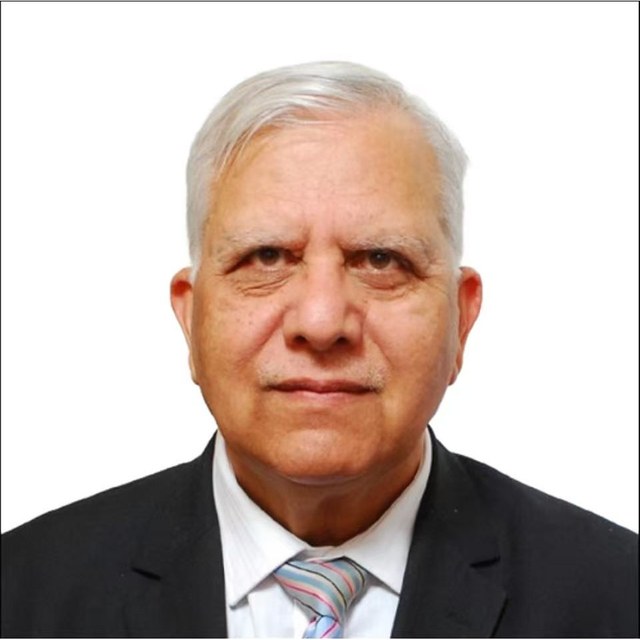
Zamir Ahmed Awan is the founder and Chair of the Global Silk Route Research Alliance, a think tank in Islamabad. He studied engineering at Shanghai University in the 1980s, and years later he went back to China as Pakistan's science counsellor in Beijing, from 2010 until 2016, working on science and higher education cooperation between the two countries.…