

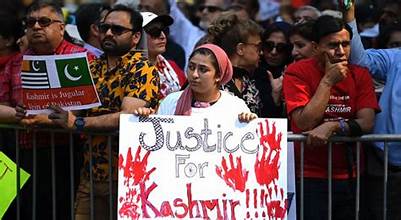
A meeting of the OIC Contact Group on Jammu and Kashmir was held on the sidelines of the 50th Session of the OIC Council of Foreign Ministers in Yaoundé, Cameroon. Chaired by OIC Secretary General, Hissein Brahim Taha, the meeting was attended by representatives from Saudi Arabia, Turkiye, Niger, Azerbaijan, OIC’s Independent Permanent Human Rights Commission (IPHRC), and True Representatives of the Kashmiri People. The Pakistan delegation to the meeting was led by Foreign Secretary Muhammad Syrus Sajjad Qazi.
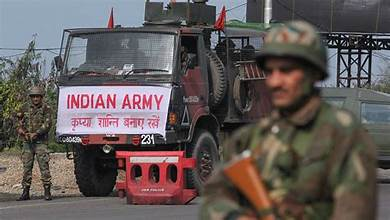
The Foreign Secretary briefed the Contact Group on the evolving situation in Indian Illegally Occupied Jammu and Kashmir (IIOJK). He outlined India’s attempt to consolidate its occupation of IIOJK in violation of the relevant Security Council resolutions including by creating an environment of intimidation and fear. He urged India to release all political prisoners in IIOJK; lift the curbs on the outlawed political parties; revoke the illegal and unilateral actions of 5 August 2019; and implement the relevant UN Security Council resolutions.
The Contact Group reaffirmed support for the Kashmiri people’s struggle for the realization of their right to self-determination. It called for an early and peaceful resolution of the Jammu and Kashmir dispute under the relevant UN Security Council resolutions and as per the aspirations of the Kashmiri people.
The Contact Group also adopted a joint communique unanimously underlining that durable peace and stability in South Asia remain contingent upon the final settlement of the Jammu and Kashmir dispute under UN Security Council resolutions and aspirations of the Kashmiri people.
The Kashmir dispute remains one of the most pressing and unresolved conflicts in South Asia, involving Pakistan, India, and, to a lesser extent, China. The root of the conflict lies in the partition of British India in 1947 when the princely state of Jammu and Kashmir became a contested territory between India and Pakistan. Pakistan’s official stance is clear: Kashmir is a disputed territory whose final status should be determined by the will of the Kashmiri people, as outlined in United Nations Security Council (UNSC) resolutions.
The UNSC, through its resolutions, particularly Resolution 47 adopted in 1948, called for a plebiscite in Kashmir to allow the people to decide their future—whether they wish to join Pakistan or India. However, India has consistently avoided fulfilling this obligation, maintaining an aggressive and illegitimate occupation of the region.
On 5 August 2019, India unilaterally revoked the special status of Jammu and Kashmir by abrogating Articles 370 and 35A of its constitution, further escalating tensions. This move was widely condemned by Pakistan, the Kashmiri people, and the international community as a blatant violation of international law and the rights of the Kashmiri people. The revocation has led to increased militarization, a severe crackdown on civil liberties, and the imposition of prolonged curfews, making the lives of ordinary Kashmiris even more unbearable.
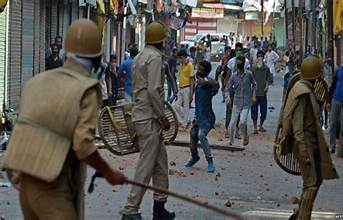
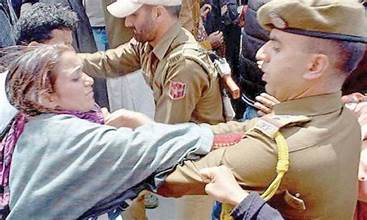
Indian forces in Kashmir have been accused of committing gross human rights violations, including extrajudicial killings, enforced disappearances, mass detentions, and the use of pellet guns against civilians, which have caused severe injuries and blinded many. These actions have been widely condemned by human rights organizations and have drawn criticism from various international bodies, including the United Nations.
The Organization of Islamic Cooperation (OIC), representing 57 Muslim-majority countries, has consistently supported Pakistan’s position on Kashmir. The OIC has condemned India’s actions in the region and called for a peaceful resolution of the dispute by the relevant UNSC resolutions.
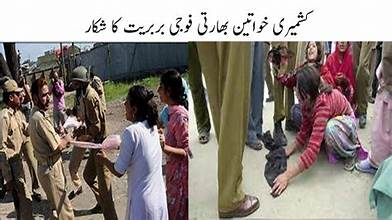
The Kashmir dispute is a matter of justice and the right to self-determination for the Kashmiri people. The international community, including the UN and OIC, has a moral and legal responsibility to pressure India to cease its human rights abuses and to resolve the conflict through dialogue and under international law. Pakistan remains committed to a peaceful resolution of the Kashmir issue, in line with the wishes of the Kashmiri people and the principles enshrined in UNSC resolutions.
Reference Link:- https://mofa.gov.pk/press-releases/meeting-of-the-oic-contact-group-on-jammu-and-kashmir