

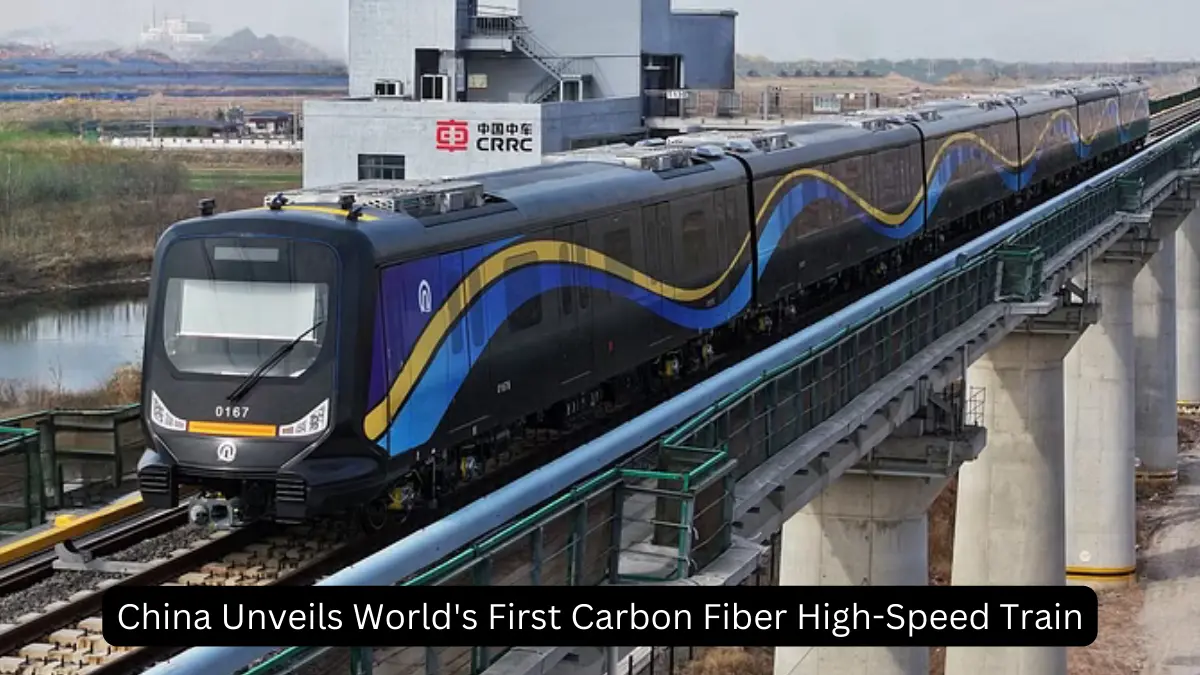
China has heavily invested in education and generously funded research and development. By providing an enabling environment for researchers to innovate and develop, China has positioned itself as a global leader in several key technologies. One of the most notable areas where China has excelled is in the development and deployment of high-speed trains. Through substantial financial support and a strong emphasis on cutting-edge research, China has not only advanced its technological capabilities but also set new standards in transportation infrastructure. The country’s high-speed rail network, one of the most extensive and advanced in the world, is a testament to the success of its strategic investments in education and R&D. This progress underscores China’s commitment to becoming a leader in global innovation and technological development.
China has built the world’s first passenger train made from carbon fiber, a material that makes it much lighter and more energy-efficient than conventional trains.
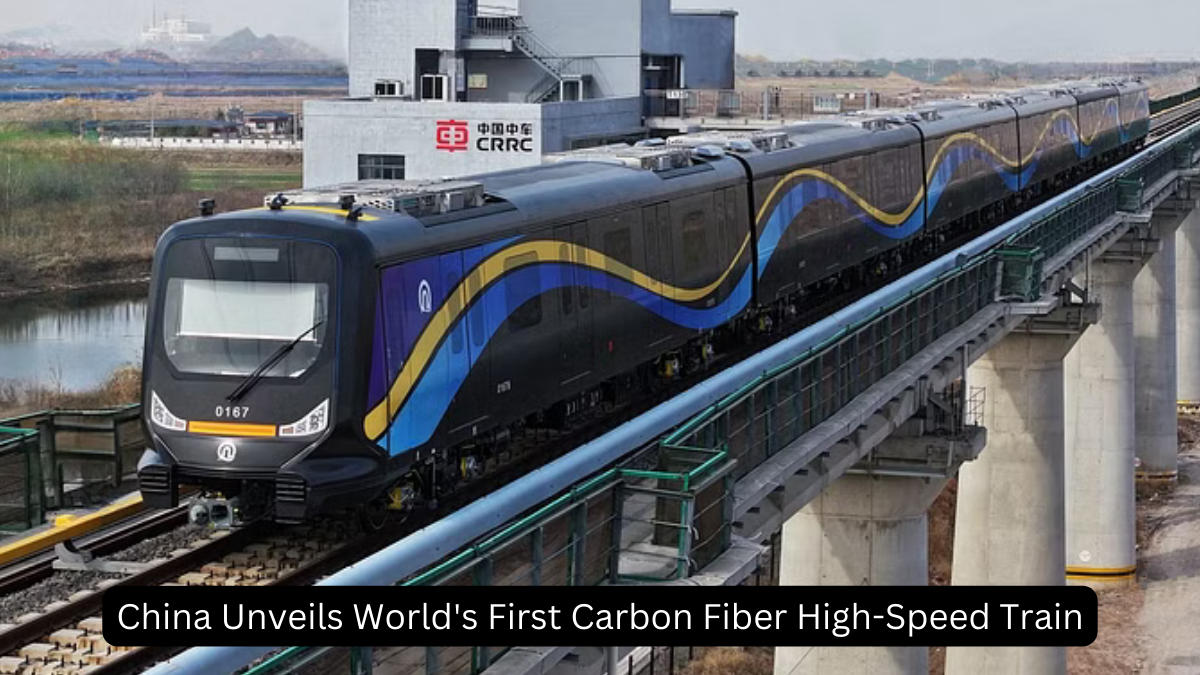
China has built the world’s first passenger train made from carbon fibre, a material that makes it much lighter and more energy-efficient than conventional trains. The metro train – known as Cetrovo 1.0 or the Carbon Star Rapid Transit – was unveiled in Qingdao, in the eastern province of Shandong, on July 17.
Ready to go into operation
It has completed in-factory testing and is ready to go into operation in the coastal city later this year, according to its developer Qingdao Sifang Rolling Stock Co, a subsidiary of China Railway Construction Corporation.
Train’s main load-bearing structures
The train’s main load-bearing structures – including the car body and bogie frame – are built with carbon fiber composite materials, the company said. That makes its body and frame 25 percent and 50 percent lighter, respectively than those of a conventional train. Overall, it is 11 percent lighter than a traditional train, and the company said energy consumption would be reduced by 7 percent. That would mean a reduction in carbon dioxide emissions of about 130 tonnes a year – equivalent to planting more than 40 hectares (100 acres) of trees.
Design of Cetrovo trains
“In the field of rail transit, a key technology is to reduce the vehicle’s body weight and its energy consumption while ensuring vehicle performance towards a greener, low-carbon future,” Qingdao Sifang said on WeChat. Cetrovo trains are designed with a top speed of 140km (87 miles) per hour.
Fully automated and driverless train
It is much faster than the current average speed of 80km per hour, the state tabloid Global Times reported in 2019 when a trial run was completed in Qingdao. It said the train, which is fully automated and driverless, can maneuver around curved or steep tracks and can operate in harsh environments such as high temperatures and altitudes. Traditional metro trains are made of steel, aluminum alloy, and other metal materials, and reducing their weight has been a major challenge.
Five times stronger than steel
The lightweight yet super-strong material is made from thin strands of carbon atoms that are tightly woven together. It is five times stronger than steel but with less than a quarter of the weight, making it ideal for use in planes, sports equipment and now trains. The company said the reduced weight would mean significantly less wear on the wheels and tracks, making it cheaper to maintain, and it would also be a quieter journey for passengers.
An intelligent anti-collision
It said the train had an intelligent anti-collision early warning system and an obstacle detection system, which could automatically send alerts and bring the train to a stop in an emergency. The price of carbon fiber has steadily come down in the past few decades and it has gone from being a luxury material used mainly in aerospace to a more common material used in products such as cars and bicycles.
Carbon fiber remains more expensive than steel or aluminum
In the 1980s it cost about US$200 per pound (454 grams), and by the end of the 2000s, it was down to US$30 to US$50 per pound. Today, prices for industrial-grade carbon fiber range from US$7 to US$15 per pound. However, carbon fiber remains relatively expensive compared to traditional materials like steel or aluminum, largely due to its complex manufacturing process and the cost of raw materials.
About China Railway Construction Corporation (CRCC)
China Railway Construction Corporation is the world’s biggest rolling stock manufacturer. It won its first US contract in 2014 to supply metro trains to Boston. Founded in 1900 during the German occupation, Qingdao Sifang is one of the oldest rolling stock manufacturers in China.
Source:- https://currentaffairs.adda247.com/china-unveils-worlds-first-carbon-fiber-high-speed-train/