Pakistan’s Constructive Role in the SCO: Building Bridges Between Civilizations. 巴基斯坦在上合组织中的建设性作用:文明间的桥梁。

(下边有中文翻译,请继续看到底。 谢谢。)
The Shanghai Cooperation Organization (SCO) is gradually emerging as an important platform for regional cooperation, mutual understanding and a more inclusive international order. At a time when geopolitical rivalries, conflicts, climate change and cultural misunderstandings are creating divisions across the world, the organization has an increasingly important responsibility: bringing nations together through dialogue, cooperation and respect for civilizational diversity.
Pakistan’s participation in the inaugural SCO Civilizational Dialogue Forum in New Delhi represents a positive contribution to this broader vision. Climate Change Minister Dr Musadik Malik’s address was particularly significant because it went beyond conventional diplomatic statements and presented a compelling argument: the greatest threat to human civilization is not another civilization, but the environmental crisis confronting humanity.
His message deserves attention not only within South Asia but across the entire SCO community.
Climate change: A common enemy of humanity
Dr Malik’s observation that climate change is an enemy of civilization was both timely and profound. Recalling Pakistan’s catastrophic 2022 floods and the devastating floods in Nepal, he demonstrated how natural disasters threaten not only human lives, economies and infrastructure but also the historical heritage that connects generations.
His reference to Mohenjo-Daro was especially powerful. The ancient Indus Valley Civilization site, which had survived for approximately 4,500 years, suffered damage from just four days of intense rainfall. The irony is striking: structures that had survived centuries of human conflict and historical change were endangered by climate-induced disasters.
Pakistan has experienced these consequences first-hand. The 2022 floods killed approximately 1,700 people, affected millions, and submerged nearly one-third of the country. Nepal has also suffered devastating losses from floods. These experiences demonstrate that climate change respects neither national borders nor political differences.
By connecting climate action with the protection of cultural heritage, Pakistan introduced an important dimension to the SCO’s civilizational dialogue. Protecting humanity’s historical legacy should be considered a shared responsibility rather than an exclusively national concern.
Three practical proposals for regional cooperation
Perhaps the most valuable aspect of Pakistan’s contribution was its presentation of three practical proposals.
First, establishing an SCO network of cultural institutions would connect museums, universities, research centers, libraries and heritage organizations across member states. Such institutional cooperation could facilitate joint research, academic exchanges, exhibitions and cultural programs.
Second, creating a digital repository of regional heritage would allow countries to document and share their historical, archaeological, cultural and natural treasures. Modern digital technologies and artificial intelligence could make this information accessible to researchers, students and ordinary citizens worldwide.
Third, developing a climate-resilient heritage framework would encourage collective efforts to protect archaeological sites, historical monuments and cultural landscapes from floods, extreme weather, earthquakes and other environmental threats.
These proposals are particularly relevant because the final Indraprastha Communiqué of the New Delhi forum also recognized the importance of institutional collaboration, digital preservation of cultural heritage and regional cooperation to protect historical assets against climate-related disasters. This provides a constructive foundation for taking the discussion forward.
Pakistan: A bridge between civilizations
Pakistan’s contribution was also significant in highlighting the country’s unique geographical and historical position.
Pakistan is not merely a South Asian country. Its civilization has been shaped by centuries of interaction among the Indus Valley, Gandhara, Central Asia, Persia, China and the wider Middle East. Its archaeological sites, languages, literature, architecture, spiritual traditions and historical trade routes reflect this rich diversity.
The ancient Silk Roads connected these regions through commerce, scholarship, religion and cultural exchanges. Pakistan’s geographical position makes it a natural bridge between South Asia, Central Asia, West Asia and China.
Dr Malik rightly emphasized that civilizations do not develop in isolation. They evolve through interaction, exchange and mutual learning. His observation that diversity creates the conditions for genuine dialogue was particularly meaningful. As he explained, dialogue requires different voices; otherwise, it becomes merely a monologue.
This philosophy is important for the SCO, whose member states possess different political systems, religions, languages, cultural traditions, and historical experiences. Their diversity should be viewed as a collective strength rather than an obstacle to cooperation.
His decision to address the gathering in Urdu, inspired by the cultural and literary environment of New Delhi, also conveyed an appreciation of shared cultural heritage beyond contemporary political boundaries.
Pakistan’s growing leadership within the SCO
Pakistan’s participation in New Delhi should also be understood in the context of its expanding responsibilities within the organization.
Pakistan formally assumed the rotating chairmanship of the SCO Council of Heads of State for 2026–27 at the Bishkek summit in September 2026. It has adopted the theme, “Turning Vision into Action: Connectivity, Innovation and Shared Prosperity,” and will host the next summit in Islamabad in August 2027.
Pakistan has already demonstrated its commitment through practical contributions. It has played an important role in regional counterterrorism cooperation, chaired the SCO Regional Anti-Terrorist Structure for 2025–26 and promoted poverty alleviation as a permanent area of cooperation within the organization. It has also hosted meetings on transport connectivity, economic cooperation and digital technologies.
The September 2026 meeting of the SCO Council of National Coordinators in Islamabad marked an important beginning to Pakistan’s current chairmanship, providing an opportunity to coordinate activities and advance its priorities.
Its active participation in the New Delhi Civilizational Dialogue Forum further demonstrates that Pakistan intends to contribute across the full spectrum of SCO cooperation, including culture, education, environmental protection and people-to-people relations.
From dialogue to a shared future
The SCO must not remain limited to government meetings, diplomatic declarations and economic agreements. Its real strength will depend on its ability to improve the lives of ordinary people, promote mutual understanding and build confidence among societies.
Pakistan’s proposals offer an opportunity to translate civilizational dialogue into practical cooperation. The forthcoming Islamabad summit in 2027 could provide an appropriate platform to advance these initiatives, encourage their institutional adoption and develop mechanisms for their implementation.
Pakistan should continue promoting educational exchanges, joint research, cultural tourism, youth interaction, scientific collaboration and climate cooperation among member states. It should also encourage greater engagement between universities, think tanks and civil society organizations.
Importantly, Pakistan’s constructive participation in a forum hosted by India demonstrates the value of multilateral platforms in keeping channels of communication open, even when bilateral relations face difficulties.
The ultimate objective should be a region where differences are respected, historical connections are rediscovered, and common challenges are addressed collectively.
Pakistan has an opportunity, through its SCO chairmanship, to demonstrate that diplomacy is not simply about protecting national interests; it is also about contributing to regional stability, human development and global harmony.
Civilizations do not survive through confrontation. They survive through cooperation, knowledge, compassion and mutual respect. Pakistan’s message in New Delhi captured this essential truth. Its challenge now is to transform these positive ideas into lasting regional achievements.
巴基斯坦在上合组织中的建设性作用:文明间的桥梁。
上海合作组织(SCO)正逐渐成为区域合作、相互理解以及构建更具包容性的国际秩序的重要平台。在地缘政治竞争、冲突、气候变化和文化误解不断加剧全球分裂的当下,该组织肩负着日益重要的责任:通过对话、合作与尊重文明多样性,推动各国团结。
巴基斯坦参加在新德里举行的首届上海合作组织文明对话论坛,为实现这一更广泛愿景作出了积极贡献。气候变化部长穆萨迪克·马利克博士的讲话尤为意义重大,他超越了传统的外交表态,提出了一个令人信服的观点:人类文明面临的最大威胁并非其他文明,而是人类所面临的环境危机。
他的这一信息不仅值得南亚地区关注,也应引起整个上海合作组织大家庭的重视。
气候变化:人类共同的敌人
马利克博士指出气候变化是文明的敌人,这一观点既切中时宜,又发人深省。他回顾了2022年巴基斯坦发生的严重洪灾以及尼泊尔遭受的毁灭性洪水,指出自然灾害不仅威胁人类生命、经济和基础设施,也危及连接世代的历史遗产。
他对摩亨佐-达罗遗址的提及尤为引人深思。这座古老的印度河谷文明遗址已存续约4500年,却在短短四天的暴雨中遭到严重破坏。讽刺的是,那些历经数个世纪的人类冲突与历史变迁而幸存下来的建筑,竟因气候引发的灾难而面临危险。
巴基斯坦亲身经历了这些后果:2022年的洪水导致约1700人死亡,影响数百万人,几乎淹没全国三分之一的地区。尼泊尔也因洪水遭受了惨重损失。这些经历表明,气候变化无视国家边界,也不受政治分歧的限制。
通过将气候行动与文化遗产保护相结合,巴基斯坦为上合组织文明对话注入了重要维度。保护人类历史遗产应被视为一种共同责任,而非仅限于国家层面的事务。
三个区域合作的实际建议
巴基斯坦的贡献中最具价值的部分或许在于提出了三项切实可行的建议。
第一,建立上海合作组织(SCO)文化机构网络,将成员国的博物馆、大学、研究中心、图书馆和文化遗产组织连接起来。这种机构间的合作有助于开展联合研究、学术交流、举办展览以及推动文化交流项目。
第二,创建区域性文化遗产数字档案库,使各国能够记录并分享自身的历史、考古、文化和自然珍宝。借助现代数字技术和人工智能,这些信息可向全球研究人员、学生及普通民众开放。
第三,制定气候适应型文化遗产保护框架,鼓励各方共同努力,保护考古遗址、历史古迹和文化景观免受洪水、极端天气、地震及其他环境威胁的影响。
这些提议尤为重要,因为新德里论坛的最终《因德拉普拉斯塔公报》也承认了机构合作、文化遗产的数字化保存以及区域合作在保护历史资产免受气候相关灾害影响方面的重要性。这为推进后续讨论奠定了建设性基础。
巴基斯坦:文明之间的桥梁
巴基斯坦的贡献还在于凸显了其独特的地理与历史地位。
巴基斯坦不仅仅是一个南亚国家。其文明的发展深受印度河流域、犍陀罗、中亚、波斯、中国以及更广泛的中东地区数个世纪以来互动的影响。该国的考古遗址、语言、文学、建筑、精神传统以及历史贸易路线,都体现了这种丰富的多样性。
古代丝绸之路通过商贸、学术、宗教和文化交流连接了这些地区。巴基斯坦的地理位置使其成为南亚、中亚、西亚与中国之间天然的桥梁。
马利克博士正确地指出,文明并非孤立发展,而是通过相互交流、互换与共同学习而不断演进。他强调多样性为真正对话创造了条件,这一观点尤为深刻。正如他所解释的,对话需要不同的声音;否则,它将仅仅沦为单方面的独白。
这一理念对上海合作组织(SCO)至关重要,其成员国拥有不同的政治体制、宗教、语言、文化传统和历史经验。这些多样性应被视为集体优势,而非合作的障碍。
他选择以乌尔都语举行会议,这既体现了对新德里文化与文学环境的尊重,也彰显了超越当代政治边界、共享文化遗产的意愿。
巴基斯坦在上合组织中的日益领导作用
巴基斯坦参与新德里的活动,也应放在其在该组织中责任不断扩大的背景下来看待。
2026年9月,在比什凯克峰会上,巴基斯坦正式担任2026至2027年度上合组织国家元首理事会轮值主席国。该组织以“将愿景转化为行动:互联互通、创新与共同繁荣”为主题,并将于2027年8月在伊斯兰堡主办下一次峰会。
巴基斯坦已通过实际行动展现了其坚定承诺。它在区域反恐合作中发挥了重要作用,曾担任2025至2026年上海合作组织地区反恐结构主席国,并将减贫作为该组织内部长期合作的重点领域。此外,还主办了有关交通互联互通、经济合作和数字技术的会议。
2026年9月在伊斯兰堡举行的上海合作组织国家协调委员会会议,标志着巴基斯坦当前轮值主席国任期的重要开端,为协调各项活动并推进优先事项提供了契机。
巴基斯坦积极参与新德里文明对话论坛,进一步表明其有意在上合组织合作的各个领域全面贡献,包括文化、教育、环境保护以及人文交流。
从对话走向共同未来
上海合作组织不应局限于政府会议、外交声明和经济协议。其真正的力量在于能够改善普通民众的生活,促进相互理解,并增强各社会之间的互信。
巴基斯坦的提议为将文明对话转化为实际合作提供了契机。2027年即将举行的伊斯兰堡峰会可为推进这些倡议提供合适的平台,促进其制度化采纳,并建立实施机制。
巴基斯坦应继续推动成员国之间的教育交流、联合研究、文化旅游、青年互动、科技合作和气候合作。同时,也应鼓励大学、智库和民间社会组织之间加强合作。
尤为重要的是,巴基斯坦在印度主办的论坛中积极参与,表明了多边平台在双边关系面临困难时仍能保持沟通渠道畅通的价值。
最终目标应是一个尊重差异、重拾历史联系并共同应对挑战的地区。
通过担任上海合作组织轮值主席国,巴基斯坦有机会证明外交不仅关乎维护国家利益;这也关乎促进地区稳定、人类发展和全球和谐。
文明不会通过对抗而生存,而是通过合作、知识、同情与相互尊重得以延续。巴基斯坦在新德里的表态准确传达了这一根本真理。如今它面临的挑战,就是将这些积极理念转化为持久的地区成果。
(注意: 本文是用AI翻译的,或有误差。请以原版英文为准。谢谢。)
Reference Link:- https://www2.apdnews.cn/en/item/26/1123/axjgcnnm89e8aff166255a.html
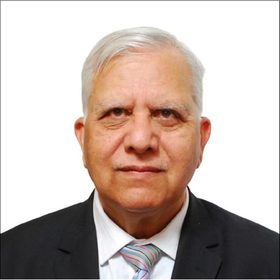
Zamir Ahmed Awan is the founder and Chair of the Global Silk Route Research Alliance, a think tank in Islamabad. He studied engineering at Shanghai University in the 1980s, and years later he went back to China as Pakistan's science counsellor in Beijing, from 2010 until 2016, working on science and higher education cooperation between the two countries.…