U.S. faces a double challenge in Africa as China dominates and Russia expands its influence by more than a quarter

The U.S., China, and Russia are actively reshaping geopolitical dynamics across Africa, where Washington faces a growing dual challenge as Beijing maintains economic dominance and Moscow expands its influence.
Russian President Vladimir Putin on the left, United States President Donald Trump in the center, and Chinese President Xi Jinping on the right. [Image Credit: WGI]
- China leads foreign influence in Africa with an 11% share, driven by massive bilateral trade worth $348 billion in 2025.
- Russia has rapidly increased its influence in Africa, holding 2.8%, with a strategic focus on defense, energy, and agriculture.
- Russia supplies significant arms, wheat, and fertilizer to Africa, and is investing heavily in nuclear infrastructure, such as Egypt’s El Dabaa plant.
- Western influence, especially from France and the U.S., has diminished as military governments in the Sahel seek security partnerships with Russia.
According to data from the Foreign Bilateral Influence Capacity (FBIC) index compiled by the University of Denver’s Pardee Institute, Russia’s share of foreign influence in Africa has expanded by more than a quarter over the past decade, rising from 2.2% in 2015 to 2.8% in 2024.
Although Russia still has less influence than Western powers, its growing ties with African countries in defence, energy and agriculture create new challenges for the U.S., alongside China’s much stronger economic presence.
China dominates trade across Africa while Russia expands its influence by over a quarter
China currently leads all external partners in foreign influence capacity across Africa with an 11% share, compared to 7% each for the United States and France.
Beijing’s economic lead is driven by bilateral trade, which reached a record $348 billion in 2025, more than 12 times Russia’s merchandise trade total.
By contrast, Russia’s commercial influence remains modest, with total annual trade hovering around $30.4 billion.
As IntelliNews revealed in its report, Russia’s “expanding pull on the continent rests on guns, grain and reactors, not money.”
Although Russia accounts for under 1.5% of Africa’s total foreign trade, Moscow has carved out targeted strategic sectors.
Russia supplies 15% of major African arms imports, delivers 31% of the continent’s wheat imports, and accounts for 18% of its fertilizer deliveries.
In addition, Business Insider Africa reported that Russian state nuclear corporation Rosatom is financing 85% of the $29 billion El Dabaa nuclear power plant in Egypt, while pursuing further nuclear energy contracts across West and East Africa.
The U.S. and France face shifting global alliances from Egypt to the Sahel region
The dual rise of Chinese trade dominance and Russian security integration presents complex diplomatic friction for Washington and European allies.
Historical tracking from the FBIC index shows that Western influence has diminished over recent decades; France held a 15.5% share of foreign influence capacity in Africa in 1995, but that share has dropped by more than half to 7%.
Military governments across the Sahel including Mali, Burkina Faso, and Niger have requested French and U.S. forces to exit while establishing security arrangements with Moscow’s Africa Corps.
Russian President Vladimir Putin gives a speech during the Russia-Africa economic and humanitarian forum at the Gostiny Dvor conference centre in central Moscow, Russia, October 28, 2026. Igor Ivanko/Pool via REUTERS
Ekaterina Novikova of the Plekhanov Russian University of Economics told Vedomosti that “Russia’s policy in Africa has shed Soviet altruism and has a pronounced commercial character,” emphasizing how modern ties center on strategic trade, energy deals, and defense contracts.
Simultaneously, African nations are leveraging multipolar diplomacy to expand their economic options. As reported by Business Insider Africa, H. A. Hellyer, a scholar at the Royal United Services Institute think tank, explained that:
“Egypt sees itself as moving toward greater strategic autonomy,”
ADVERTISEMENT
“It wants strong relations with Washington, but also Beijing, Moscow, and Europe“.
Reference Link:- https://africa.businessinsider.com/local/markets/us-faces-a-double-challenge-in-africa-as-china-dominates-and-russia-expands-its/r9vwq93
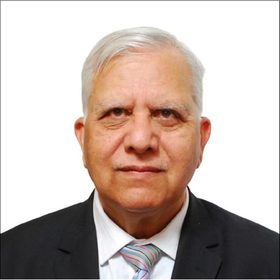
Zamir Ahmed Awan is the founder and Chair of the Global Silk Route Research Alliance, a think tank in Islamabad. He studied engineering at Shanghai University in the 1980s, and years later he went back to China as Pakistan's science counsellor in Beijing, from 2010 until 2016, working on science and higher education cooperation between the two countries.…