

This is quite encouraging that the determined and firm endeavors on the development of maritime potential have started, which is highly appreciable, said Ateeq ur Rehman, economic & financial analyst.
He said that Pakistan’s blue economy/maritime sector can generate between USD 100 billion and USD 150 billion if it is expanded and modernised.
Further, the blue economy, which encompasses all economic activities related to the ocean, sea, coast and marine resources, needs to be fully tapped.
Pakistan’s coastline of 1001km is home to many different species of marine animals, plants and marine resources.
He added that we have to realise the importance of the blue economy and maritime sectors, like agriculture, minerals and mining, information technology, industry/ manufacturing, and exports. Priority has also to be given to the blue economy and its segments.
The modernisation of the Blue economy/ maritime Industry is the main challenge for us, as well as an effective investment in the infrastructure of our seaports, fish harbors, deep-sea fishing, seafood coastal tourism, and shipping.
It is a privilege to discuss today the growing global importance of deep-sea mining and offshore seabed minerals, particularly for Pakistan.
As seabed minerals become increasingly important for renewable energy, electric mobility, batteries, and advanced industries, countries are investing in marine exploration and technology. For Pakistan, our strategic location in the northern Arabian Sea and maritime space offer significant blue economy opportunities.
However, we are still at an early stage of assessing our offshore mineral potential and building the capacity needed to benefit from this emerging sector.
Pakistan’s seabed is a largely untapped resource with significant economic and strategic potential. With around 240,000 sq. km of EEZ and an additional 50,000 sq. km of extended continental shelf, Pakistan has a large maritime area to explore, he said.
Its location along the Arabian Sea, the Indus Delta sediment system, and the Makran offshore region provides promising areas for marine mineral research. The extended continental shelf also strengthens Pakistan’s rights over the exploration and use of non-living seabed resources.
Moreover, Pakistan is still at an early stage of understanding its offshore mineral potential. Greater investment is needed in seabed mapping, sampling, geological surveys, and modern exploration technology, with institutions.
A clear national strategy could help attract investment, reduce dependence on imported minerals, create new industries and generate export opportunities, while ensuring that any future seabed development is carried out responsibly and protects marine ecosystems.
China is currently a leading player in seabed mineral exploration, with experience in polymetallic nodules, sulphides and cobalt-rich crusts. Japan and South Korea are also actively developing deep-sea exploration and mineral technologies, while the United States is increasing its focus on critical seabed minerals, he said.
However, commercial-scale deep seabed mining is still at an early stage globally, allowing countries like Pakistan to develop capabilities and participate in this emerging sector, he said.
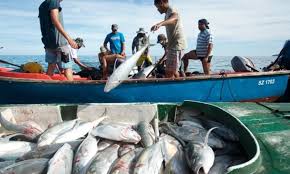
Pakistan is already generating substantial economic value from its marine fisheries, with fish and seafood exports reaching a record approximately USD 568 million in Fiscal Year 2025 -26. The fisheries sector also provides direct employment to more than one million people and supports around 1.5 million additional livelihoods, he said.
Pakistan has significant long-term seabed mineral potential but is still at an early stage. The priority is mapping, exploration, technology, and international partnerships.
This sector can diversify the Blue Economy beyond fisheries, create jobs, attract investment, develop new industries, and generate mineral and export revenues, he concluded.
Reference Link:- https://www.brecorder.com/news/40440973