
CPEC phase-II puts private sector at the heart of Pakistan’s growth push
Source Xinhua, Dawn, Arab News, Anadolu and Minute Mirror


Pakistan is targeting export-led economic growth and greater private-sector investment under CPEC Phase-II, with the government pushing business-to-business cooperation, industrial development, agricultural modernization and technology as key drivers of the next phase.
The focus forms part of the CPEC Action Plan 2025–2029, finalized during Prime Minister Muhammad Shehbaz Sharif’s visit to China in August 2025.
Progress during the first year of the plan was reviewed, with relevant ministries directed to accelerate implementation of agreed priorities, according to APP.
Federal Minister for Planning, Development and Special Initiatives Ahsan Iqbal stressed that the private sector must take a leading role in converting CPEC Phase-II opportunities into economic activity, while the government provides an enabling environment for investment and business partnerships.
He emphasized that Pakistan’s economic priorities should remain focused on growth, exports and investment rather than political confrontation.
Pakistan-China cooperation strengthened during difficult periods, with China providing critical investment when the country faced severe energy shortages, Ahsan Iqbal said.
CPEC Phase-I attracted around $25 billion in Chinese investment and added nearly 8,000 megawatts to Pakistan’s power generation capacity, helping address the energy crisis and improve energy security.
Thar coal development and the fibre-optic network were among the major achievements of the first phase, while CPEC Phase-II is set to build on this foundation through business-to-business cooperation, industrial development, agricultural modernization, minerals, human capital development and technology.
The priorities of CPEC Phase-II are aligned with the five pillars of URAAN Pakistan through the Growth, Livelihood, Innovation, Green Economy and Openness corridors.
The Growth Corridor will focus on strengthening industrial and agricultural capacity to increase exports, while the Livelihood Corridor will promote social development and support less-developed regions.
The Innovation Corridor, aligned with E-Pakistan, will expand IT capabilities and provide millions of young people with modern technological skills. Ahsan Iqbal described Pakistan’s young population as the country’s greatest economic asset.
The Green Economy Corridor will focus on climate resilience, water and food security, and agricultural modernization.
The government also plans to send 1,000 agricultural experts to China for training in modern agricultural technologies. The initiative is aimed at developing a critical mass of trained human resources and laying the groundwork for a “Green Revolution 2.0”.
The programme will be supported by improved seeds, farm mechanization, efficient water use and climate-resilient crops.
Ahsan Iqbal termed the expansion of exports a “national emergency”, stressing that the $100 billion export target by 2035 is essential for Pakistan’s economic survival.
He called for stronger government-private sector collaboration to improve competitiveness and establish “Made in Pakistan” as a globally recognized brand.
The minister also directed relevant ministries to ensure timely execution of the CPEC Phase-II action plan.
He stressed that Pakistan could not afford political instability while pursuing economic transformation, urging national unity, reforms and improved governance to convert recent strategic and diplomatic gains into economic benefits.
“For Pakistan’s future and a better tomorrow for our youth, we cannot compromise on the country’s economic development,” he said.
“Pakistan does not need to heat its roads; Pakistan needs to heat its economy,” Ahsan Iqbal stressed, calling on all political forces to focus on strengthening the economy and building a self-reliant, export-driven Pakistan.
Reference Link:- https://mettisglobal.news/CPEC-phaseII-puts-private-sector-at-the-heart-of-Pakistans-growth-push-63114
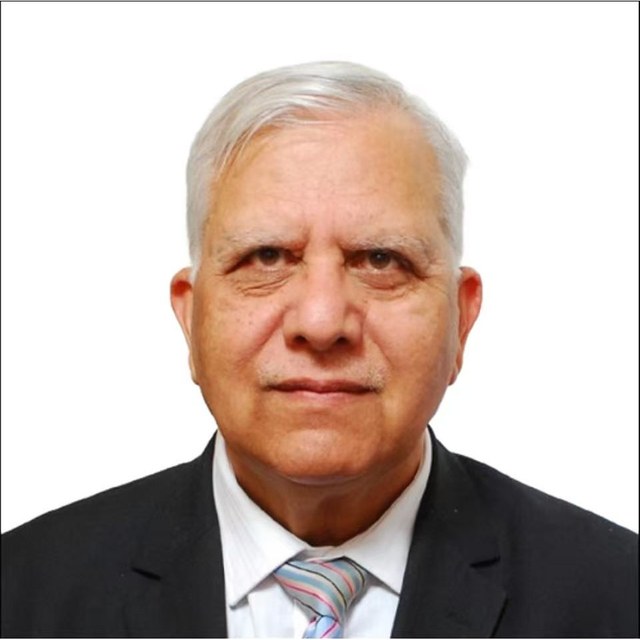
Zamir Ahmed Awan is the founder and Chair of the Global Silk Route Research Alliance, a think tank in Islamabad. He studied engineering at Shanghai University in the 1980s, and years later he went back to China as Pakistan's science counsellor in Beijing, from 2010 until 2016, working on science and higher education cooperation between the two countries.…




A sudden shift in focus on industrial development suggests certain areas might struggle to keep pace with this rapid change.