
S&P sees room for more Pakistan rating upgrades if fiscal deficit stays below 3% of GDP, debt falls under 60%
Wire desk byline Sourced from Xinhua, Dawn, Arab News, Anadolu and Minute Mirror. Translated and abridged by the GSRRA Desk.

Political stability drove July’s upgrade to ‘B’, the highest since 2016, but investment grade remains “multiple notches away”, which needs stronger institutions with sustained annual growth of 4-5% or more, says Yee Farn Phua, Director of Sovereign Credit Ratings


Pakistan could climb further up the sovereign credit ladder if it holds its fiscal deficit under 3% of GDP, brings government debt below 60%, and keeps narrow external debt under 100% of current account receipts, according to Yee Farn Phua, Director of Sovereign Credit Ratings at S&P Global Ratings, who credited the country’s improved political stability for enabling the reforms behind its recent upgrade.
S&P raised Pakistan’s long-term sovereign rating to ‘B’ from ‘B-‘ on July 22 with a stable outlook, its highest level since 2016.
Pakistan’s fiscal deficit fell to Rs3.31 trillion, or 2.6% of GDP, in fiscal year 2025-26, marking its lowest level in more than two decades. The government also posted a primary surplus of Rs3.63 trillion, equivalent to 2.9% of GDP, as public finances recorded their strongest performance in 22 years.
Speaking on a state-owned digital platform, Phua attributed the move to a mix of steadier politics, headway on IMF-backed reforms, and gains in Pakistan’s fiscal and external accounts. “This was predicated on the fact that we view Pakistan’s political settings as relatively more stable,” he said.
According to Phua, that political calm has been the real engine behind the country’s stronger credit profile. It gave the government room to push through IMF reforms that stabilised the fiscal position and, in turn, helped institutional capacity improve as well.
Read This: S&P upgrades Pakistan’s sovereign credit rating to ‘B’ on IMF-backed reforms
Bilateral partners have also stepped back in, Phua noted, pointing to renewed swap arrangements and fresh deposits at the State Bank of Pakistan. Combined with better tax collection and tighter expenditure control, this has translated into steadily improving fiscal targets.
Asked what had shifted since Pakistan’s economic crunch in 2022, Phua returned to the same theme: political stability, he said, sits at the core of both the improved credit metrics and the more stable growth outlook. That stability has also freed policymakers to design longer-term measures instead of constantly firefighting immediate pressures.
The S&P assessment lands as Islamabad works to lock in macroeconomic stability while deepening trade and investment ties with bilateral partners, including pushes into mining, energy, IT and manufacturing as part of a broader export-led growth strategy. Longstanding diplomatic relationships with countries such as Türkiye and China are increasingly being converted into commercial and investment cooperation, not just government-to-government engagement.
Even so, Phua cautioned that investment-grade status remains well out of reach, “multiple notches away.” He noted that economies in the region carrying investment-grade ratings typically combine stronger institutions with sustained annual growth of 4-5% or more. Pakistan’s institutional capacity has improved, he said, but is still climbing from a fairly low base.
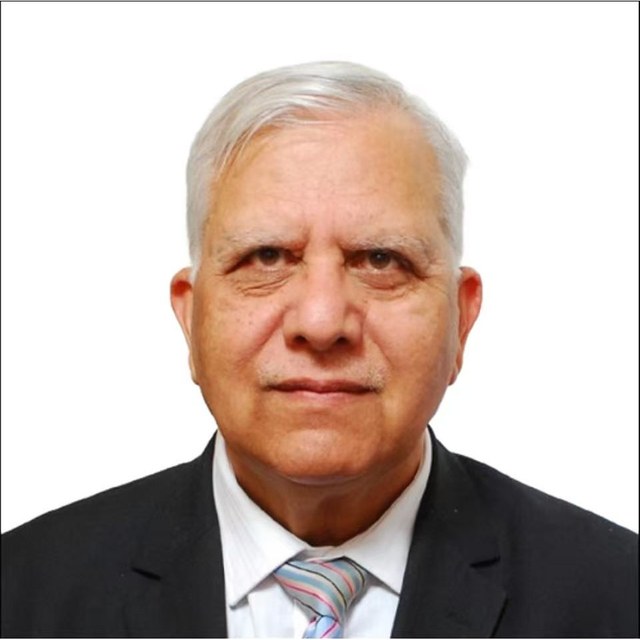
Zamir Ahmed Awan is the founder and Chair of the Global Silk Route Research Alliance, a think tank in Islamabad. He studied engineering at Shanghai University in the 1980s, and years later he went back to China as Pakistan's science counsellor in Beijing, from 2010 until 2016, working on science and higher education cooperation between the two countries.…