
China’s Global Governance Initiative and the future of international order
Wire desk byline Sourced from Xinhua, Dawn, Arab News, Anadolu and Minute Mirror. Translated and abridged by the GSRRA Desk.


Today, the Middle East faces multiple and interconnected challenges, including the unresolved Palestinian question, recurring regional security tensions related to Iran, instability in parts of the Red Sea region, and broader concerns related to economic development, energy security and resource management.
These challenges have demonstrated that instability in one area can rapidly generate consequences far beyond its immediate borders, affecting international trade routes, energy markets and global economic growth. Consequently, the search for more effective forms of global governance has become a practical necessity rather than a theoretical discussion.
Two structural factors help explain the growing momentum behind governance reform. First, the world is becoming increasingly multipolar, making it difficult for any single country to address global challenges on its own. Second, many of today’s most pressing issues, including climate change, food security, energy transitions, public health crises and technological governance, transcend national borders and require collective responses. These realities have intensified calls for governance frameworks that are more representative, inclusive and responsive to the needs of a rapidly changing world.
A closer examination suggests that demands for governance reform are rooted in profound structural changes within the international system itself. Developing countries now account for a much larger share of global economic activity, trade and innovation, while emerging economies have become major engines of growth. Nevertheless, many governance structures continue to reflect historical realities rather than contemporary ones. This widening gap between shifting global power dynamics and existing institutional arrangements has become one of the defining challenges of international politics.
Against this backdrop, China’s Global Governance Initiative (GGI) has emerged as a significant contribution to contemporary debates about the future of international order. Its importance lies not only in China’s expanding global influence, but also in its effort to address a fundamental question facing the international community: How can global governance adapt to 21st-century realities while preserving stability, promoting development, and ensuring broader participation in international decision-making?
It is within this context that the GGI has attracted considerable attention, particularly among countries of the Global South. The initiative reflects an understanding that international governance must evolve by embracing broader participation and more inclusive decision-making. Its emphasis on extensive consultation, joint contribution, and shared benefits resonates with many developing countries seeking a stronger voice in global affairs. Rather than framing international relations primarily in terms of competition, the initiative promotes a perspective based on cooperation, mutual respect and common interests — an approach that many nations increasingly regard as essential in a deeply interconnected world.
The relevance of these ideas is especially evident in the Middle East. Recent regional experiences have demonstrated that military solutions alone are rarely sufficient to resolve complex political disputes. Whether considering recent tensions involving Iran, the Palestinian question, broader regional tensions, or development challenges, sustainable stability requires more than the absence of conflict. It requires economic opportunity, inclusive growth, effective governance and a commitment to dialogue. Historical experience suggests that peace and development are mutually reinforcing, and that durable solutions depend on addressing both immediate security concerns and the underlying socioeconomic conditions that often fuel instability.
A frequently overlooked aspect of China’s approach is its emphasis on the relationship between development and security. Many contemporary challenges emerge not only from geopolitical rivalries but also from development gaps, resource pressures and economic inequalities. For countries across Africa, Asia and the Middle East, development is not separate from security; it is one of its essential foundations. Infrastructure investment, poverty reduction, technological advancement, food security and energy security all contribute directly to long-term stability. By linking governance reform with development priorities, the GGI offers an integrated perspective that resonates strongly across the developing world.
From a strategic standpoint, this approach reflects broader aspirations among countries of the Global South for a more balanced and representative international system. For decades, many developing nations have advocated reforms that would make global institutions more responsive to their concerns and better aligned with contemporary realities. Their objective is not to replace the existing international order, but to strengthen and adapt it so that it serves a wider range of countries and interests. The growing interest in governance reform, therefore, reflects a desire to improve international cooperation rather than diminish it.
From an Egyptian perspective, this question carries particular significance. Egypt has long occupied a strategic position linking Africa, Asia and the Middle East, while its foreign policy tradition has consistently emphasized multilateralism, dialogue, respect for sovereignty and the peaceful settlement of disputes.
For Egypt, as for many countries across the Global South, the key objective is to promote a more inclusive, balanced, and effective international order that reflects the interests of all nations and supports shared development and common prosperity. In this regard, the GGI represents a constructive contribution to ongoing international discussions. Its emphasis on sovereignty, equality, the international rule of law, multilateralism, a people-oriented approach, and action-oriented principles reflects principles that are becoming increasingly relevant in an era of global interdependence. As the world navigates a period of historic transformation, initiatives that encourage cooperation and promote common development can play an important role in shaping a more stable, balanced and prosperous international order for the decades ahead.
Editor’s note: Ahmed Kandil is the head of the International Relations Unit and Energy Studies Program at the Al-Ahram Center for Political and Strategic Studies in Egypt. He is also a fellow of the National Defense College at Nasser Higher Military Academy in Cairo.
Reference Link:- https://english.news.cn/20260628/a361224ccc8f4607bdadae7740ccee1d/c.html
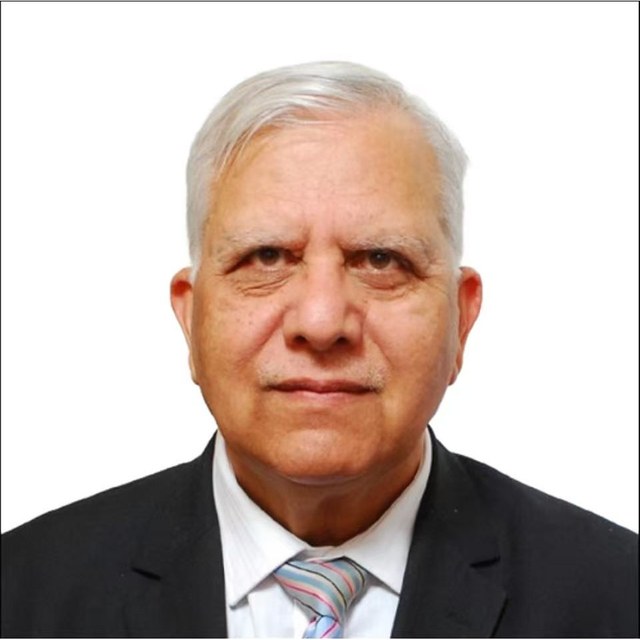
Zamir Ahmed Awan is the founder and Chair of the Global Silk Route Research Alliance, a think tank in Islamabad. He studied engineering at Shanghai University in the 1980s, and years later he went back to China as Pakistan's science counsellor in Beijing, from 2010 until 2016, working on science and higher education cooperation between the two countries.…