Xi Story: A conversation in the fields
Wire desk byline Sourced from Xinhua, Dawn, Arab News, Anadolu and Minute Mirror. Translated and abridged by the GSRRA Desk.

In late June, farmers run corn seeders through fields freshly cleared of wheat across east China’s Shandong Province, carving furrows into the soil as they race to finish summer sowing.
It was into this rhythm of relentless motion that President Xi Jinping visited Dezhou, a major provincial breadbasket, on Wednesday. It was a trip he made specifically to see how summer farm work was going, check out the fields, and spend time with the villagers.
Walking into the farmlands at Dongyujia Village, Xi, also general secretary of the Communist Party of China Central Committee and chairman of the Central Military Commission, stopped to speak with grain growers, machine operators, and agricultural technicians.
Rather than relying on broad summaries, he zeroed in on the granular realities of the season: the acreage sown, the storage facilities, the profit margins, the coordination of machinery, and perhaps the most immediate question of the season — how had the harvest fared?
“Better than last year,” replied Yu Shulei, a local farmer who manages more than 400 mu (about 27 hectares) of land.
The harvest was hard-earned. The previous autumn’s relentless floods had delayed planting, according to the farmer. The villagers and agricultural technicians took painstaking and repeated measures to ensure the crops grow as vigorously.
Xi offered his congratulations.
When told that wheat yields had risen again this year and that corn planting was proceeding briskly, well within the seasonal window, Xi voiced his approval. “Ensuring a stable supply of grain and other agricultural products is the top priority in agricultural production,” he said.
With nearly 20 percent of the world’s population but only about 9 percent of its arable land, China has achieved absolute security in staple food and basic self-sufficiency in grain through sustained efforts to protect farmland and improve agricultural productivity.
Over the years, Xi has continually underscored the importance of food security. In Dezhou, he drove the message home once again:
“I’ve stressed that the country’s total area of farmland must not fall below the red line of 1.8 billion mu and that all prime farmland must be reserved for grain production. Why?”
“Because no matter how modernized our country becomes, we must rely on ourselves to feed our people. With a population of 1.4 billion, we cannot depend on anyone else. We must keep a focus on grain production.”
The stakes are high during the summer harvest. This single season accounts for roughly 40 percent of the country’s annual staple food output. But the moment the wheat is cleared, the clock resets. Farmers must immediately pivot to planting corn, soybeans, or rice — varieties critical to the fall harvest.
In effect, China must harvest more than 300 million mu of wheat in a grueling window of just over 20 days, while simultaneously replanting the same land and guarding against weather risks and other disruptions.
Xi often visits farms and fields at such crucial moments in the agricultural calendar, traveling across China’s major farming regions from spring plowing to autumn harvest.
Shandong, his latest stop, is one of China’s leading grain-producing provinces, as well as an industrial powerhouse. In 2025, it became only the third province in the country to surpass 10 trillion yuan (around 1.47 trillion U.S. dollars) in GDP.
For Xi, China will never achieve all-around modernization without the modernization of its agriculture and rural areas. During his inspection of Dezhou, he called for solid measures to advance this rural transformation.
Science and technology, and talent, are key to that transformation. Along an irrigation canal bordering the fields at Dongyujia, Xi paused to examine a drip irrigation system that integrates water and fertilizer. In Yu Shulei’s wheat fields, black drip lines run neatly between the rows.
The technology is helping farmers use both water and fertilizer more efficiently, said Cui Xinyan, from a local agricultural technology center in Dezhou.
The system can also provide extra moisture to help corn cool under extreme heat, giving farmers greater flexibility in managing their fields, she added.
Xi encouraged local residents to strive for another bumper harvest this year and expressed hope that their lives would continue to improve.
For Xi, the immutable goal of building China into a modern socialist country in all respects is to help people live better lives.
During his inspection, Xi visited a livestreaming studio, which featured local agricultural products, in Xiyujia, a nearby village in Dezhou.
Black wheat, seasonal vegetables, and fresh fruit filled the shelves. Xi paused at the display, taking in the array of local specialties.
He later stopped by the home of villager Yu Xinhui, where he asked about the family’s conditions and the village life.
“The village now has vegetable greenhouses and an industrial park,” Yu told Xi. “As long as you’re willing to work, you can get a job and make money.”
He works at an air-conditioner factory, while his wife is employed in customer service at an e-commerce company. They also lease out their farmland, and the family’s elderly members receive pensions every month.
“Life here is just as good as in the city,” the villager said. “The streets are well lit, buses run regularly, and community life is much more vibrant.”
“I’m glad to see you’re living a better life,” Xi said.
When he left the village, villagers gave him a warm farewell. “With July 1 approaching, we are about to celebrate the 105th birthday of the Party,” Xi said.
“As we are marching on the new journey of building China into a modern socialist country in all respects, we must work together and keep up our stride on the new Long March to create a brighter future and continuously meet the people’s aspirations for a better life,” he said.
Reference Link:- https://english.news.cn/20260626/9be3201f345f406791497166fa270e76/c.html
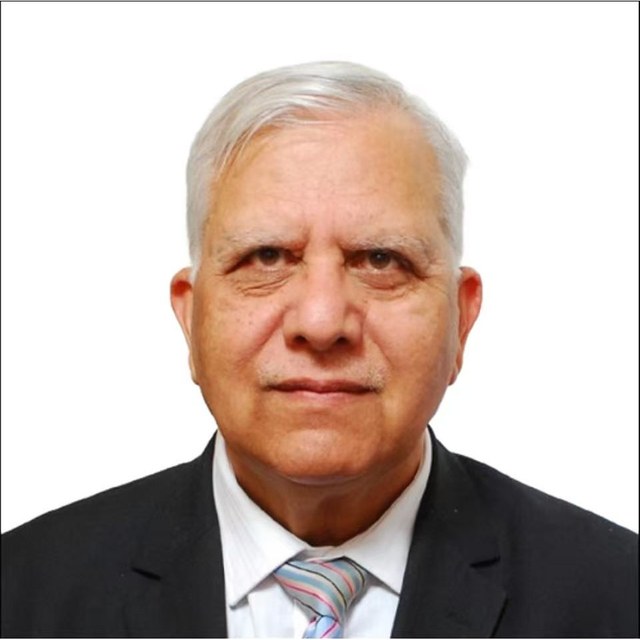
Zamir Ahmed Awan is the founder and Chair of the Global Silk Route Research Alliance, a think tank in Islamabad. He studied engineering at Shanghai University in the 1980s, and years later he went back to China as Pakistan's science counsellor in Beijing, from 2010 until 2016, working on science and higher education cooperation between the two countries.…