China 2049: The Five Principles of Zhou Enlai and Neo-Confucianism Revival
Wire desk byline Sourced from Xinhua, Dawn, Arab News, Anadolu and Minute Mirror. Translated and abridged by the GSRRA Desk.

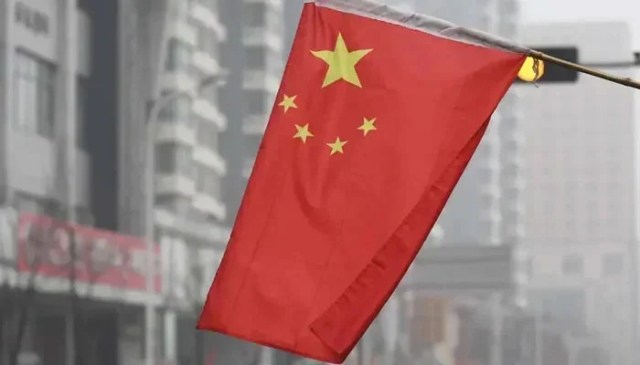
The year 2049 has a very important symbolic meaning for China. The year marks the centenary of the founding of the People’s Republic of China and is the main target of the Chinese government to realize what is called The Great Rejuvenation of the Chinese Nation.
Under Xi Jinping’s leadership, this vision is not just economic development, but a comprehensive transformation that includes the power of technology, military, diplomacy, culture, and the formation of an international order that is more in line with China’s characteristics.
In contrast to the rise of the previous major countries, which were often accompanied by ideological export efforts, China offers a unique approach.
The revival is not only based on material capacity, but also rests on an ideological foundation rooted in the long history of Chinese civilization. In this context, the Five Principles of Peaceful Coexistence formulated by Zhou Enlai and the values of Neo-Confucianism become two important pillars shaping the direction of China’s foreign policy and global identity ahead of 2049.
If examined using Neo-Gramsci analysis, China’s rise can be understood as an attempt to build an alternative hegemony to Western domination that has taken root since the end of the Cold War.
Hegemony in Gramsci’s sense is not only the dominance of material power, but the ability of an actor to make his values, norms, and viewpoint widely accepted as something natural and legitimate. Zhou Enlai’s Five Principles as the Foundation of China’s Global Awakening in 1954, Zhou Enlai introduced the Five Principles of Peaceful Coexistence, namely:
- Mutual respect for sovereignty and territorial integrity.
- Do not attack each other.
- Do not interfere in the internal affairs of other countries.
- Equality and mutual benefit.
- Coexist peacefully.
These five principles were born at a time when China was still in a relatively weak position economically and militarily. Interestingly, however, these principles were maintained until the Xi Jinping era and became the basis of the narrative of modern Chinese diplomacy.
In practice, these principles offer an alternative to the Western approach that often links international cooperation to issues of democracy, human rights, and political reform.
Many developing countries see the Western approach as a form of intervention against national sovereignty. Instead, China presents itself as a partner that respects each country’s domestic political choice. This can be seen in various development projects through the Belt and Road Initiative that reach Asia, Africa, the Middle East, and Latin America.
China offers investment, infrastructure development, and technology transfer without requiring changes in the political system. Such an approach has made many Global South countries feel more comfortable cooperating with Beijing than Western institutions that often associate aid with governance reform.
By 2049, the Zhou Enlai Five Principles will not only be a guideline for diplomacy, but also an instrument for building international legitimacy. China is trying to show that its rise is not synonymous with a threat, but rather an opportunity for other countries to develop togetherness.
Neo-Confucianism as the Identity of Civilization
In addition to the diplomatic foundation, China’s rise was also supported by the rise of Neo-Confucian values. After the era of economic reform started by Deng Xiaoping, China underwent a very rapid modernization. But the modernization raises concerns about the loss of national cultural identity due to the penetration of Western values.
In response, the Chinese government gradually revived Confucianism as a source of social and political legitimacy. Modern Neo-Confucianism emphasizes several key values such as social harmony, respect for authority, collectivism, moral responsibility, and stability.
In contrast to Western liberalism that places the individual at the center of political life, Neo-Confucianism sees society as a network of interconnected social relationships. In this perspective, collective interests are more important than individual interests.
This value is very much in line with China’s development model that emphasizes political stability as a prerequisite for economic growth. The Chinese government argues that development is impossible if the country is caught up in protracted political conflicts, as is often the case in liberal democracies.
Therefore, Neo-Confucianism became the ideological foundation that allowed China to develop modernity without having to adopt all Western values. China embraces global technology, capital, and innovation, but retains its own civilizational character.
In a Neo-Gramscian perspective, the 2049 target can be understood as a project of establishing an alternative hegemony.
For decades, the international world has been dominated by the hegemony of the United States, which relied not only on military and economic power but also on the spread of liberal democratic values, human rights, and the free market. Gramsci explained that hegemony occurs when a dominant group succeeds in making its values accepted as a universal norm.
In the global context, the United States succeeded in making liberalism the main standard of international political and economic governance after the end of the Cold War. China is now trying to build a counter-narrative. Beijing offers an alternative that modernization does not have to follow the West’s path. A country can become advanced without fully adopting liberal democracy.
China’s success in lifting hundreds of millions of people out of poverty is a major source of legitimacy for the narrative. Many developing countries are beginning to see China’s development model as proof that there is more than one path to progress.
This is where Zhou Enlai’s Five Principles and Neo-Confucianism complement each other. The Zhou Enlai principle provides external legitimacy through respect for the sovereignty of other countries, while Neo-Confucianism provides internal legitimacy through social stability and cultural identity.
Challenging Western Universalism
One of the important implications of China’s rise is a challenge to Western universalism. For many years, liberal democracy has often been presented as the final stage of human political development. But the emergence of China shows that countries can achieve economic and technological progress without following that pattern.
China did not attempt to revolutionize the entire international system as the Soviet Union did. Instead, Beijing is developing a more refined strategy through economic development, investment, digital technology, artificial intelligence, and development diplomacy.
This approach allows China to gain influence without having to engage in direct confrontation. Countries that receive investment and technological cooperation from China are slowly becoming more open to the idea that development can take place outside the Western liberal framework.
Neo-Confucianism played an important role in this process because it offered a different philosophical base. If liberalism emphasizes individual freedom, then Neo-Confucianism emphasizes social harmony. If liberalism highlights political competition, Neo-Confucianism emphasizes consensus and stability more.
When it comes to 2049, China’s goals are actually broader than just becoming the world’s largest economy. Beijing wants to make China a center of technological innovation, a modern military power, a leader in global development, and at the same time a center of civilization that has its own cultural appeal. In the field of technology, China is investing heavily in artificial intelligence, quantum computing, semiconductors, electric vehicles, and space technology.
Companies from Huawei, BYD, and Alibaba Group have become symbols of China’s ability to compete with Western companies. In the field of diplomacy, China seeks to expand its influence through infrastructure development, economic cooperation, and new international institutions that make room for developing countries.
Meanwhile, in the cultural field, China continues to promote the Chinese language, Confucian values, and its civilizational heritage as part of soft power. The goal is to build an image that China is not only economically strong, but also has intellectual and cultural contributions to the world.
While the outlook looks strong, the journey to 2049 isn’t entirely barrier-free. China still faces various challenges, such as an economic slowdown, demographic crisis due to an aging population, tensions in the Indo-Pacific region, and technological competition with the United States.
In addition, there is the question of the extent to which Neo-Confucian values are universally accepted. Many countries still consider liberal democracy to be a system that is better able to guarantee political freedom and individual rights. Nevertheless, China’s success does not have to be measured by its ability to completely replace the West.
From a Neo-Gramscian point of view, success can be achieved when China can create space for a plurality of development models and reduce the single dominance of Western values in the international system. Beijing seeks to show that there are alternative development paths rooted in its own historical, cultural, and social experiences.
If the strategic targets that have been set are successfully achieved, then 2049 will not only be the centenary of the founding of China, but also a marker of the rebirth of China as one of the world’s main civilization centers.
Reference Link:- https://thediplomaticinsight.com/china-2049-5-principles-zhou-enlai-neo-confucianism/
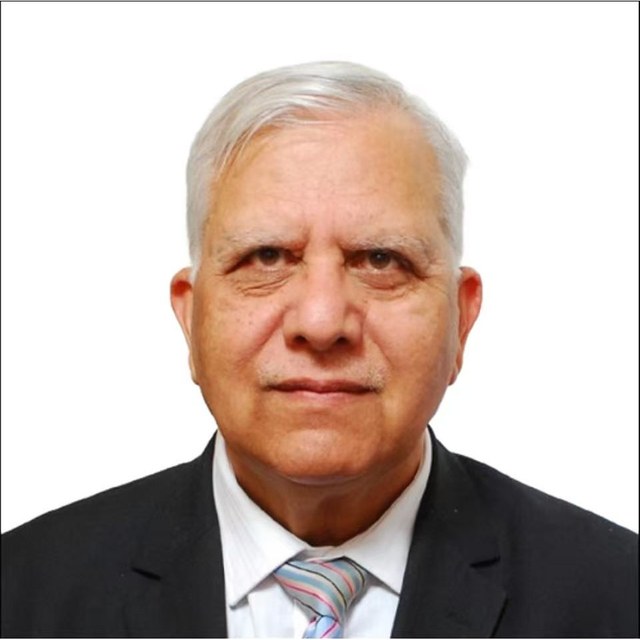
Zamir Ahmed Awan is the founder and Chair of the Global Silk Route Research Alliance, a think tank in Islamabad. He studied engineering at Shanghai University in the 1980s, and years later he went back to China as Pakistan's science counsellor in Beijing, from 2010 until 2016, working on science and higher education cooperation between the two countries.…