

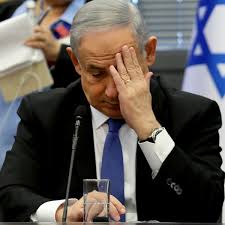
Israeli Prime Minister Benjamin Netanyahu faces pressure to continue a military campaign in Lebanon, current and former U.S. officials said.
U.S. intelligence agencies have warned the Trump administration that Israeli Prime Minister Benjamin Netanyahu is likely to take steps that will undermine President Donald Trump’s effort to reach a lasting peace deal with Iran, as the Israeli premier faces intense political pressure to continue waging his country’s war in Lebanon, current and former U.S. officials said.
Israel appears intent on maintaining military operations against Iran’s proxy Hezbollah in Lebanon, an aim that would flout a core element of the fledgling agreement that calls for an end to hostilities in that country, according to intelligence reports, including one circulated this week, said the officials.
The analysis comes at a moment of growing tension between Netanyahu’s government and Trump administration officials, who have publicly warned Israel against launching attacks against Hezbollah that might derail Trump’s deal.
On Friday, Israel launched airstrikes across southern Lebanon in response to a Hezbollah drone strike that killed four Israeli soldiers. As clashes continued, U.S. and Iranian officials said they postponed talks due to begin in Switzerland on Friday. Vice President JD Vance, who was to lead the U.S. delegation, postponed his trip.
If Netanyahu redoubles his military campaign in Lebanon, he would not only threaten the framework for an agreement signed by the United States and Iran on Wednesday, but he could rupture the relationship with an American president that has been integral to his political fortune.
Speaking at a news conference in France on Wednesday to announce the U.S.-Iran “memorandum of understanding,” Trump said that he has a “little dispute over Lebanon” with Netanyahu and has urged the Israeli leader not to “knock down a building every time somebody walks into it that’s from Hezbollah.”
The new U.S. intelligence report concludes that in the face of national elections this fall, Netanyahu’s political survival is linked to showing his domestic audience that he will not withdraw troops from Lebanon and that he is intent on escalating the fighting with Hezbollah, said one U.S. official familiar with the report. The official, like others interviewed, spoke on the condition of anonymity because of the matter’s sensitivity.
The U.S. intelligence report also describes Israel’s frustration with the terms of the Trump peace memorandum, which undermine its broader objective of maintaining maximum pressure on Tehran, according to a current and former official.
The report conveys Israel’s perception that the agreement could constrain its ability to defend itself against Hezbollah, one former official said.
Trump administration officials insist that the terms do not prevent Israel from retaliating against Hezbollah if fired upon and that Netanyahu’s concerns pale in comparison to the need to complete a deal and reopen the Strait of Hormuz to stave off a global economic crisis.
The report reflected that any suspension of hostilities or withdrawal from Lebanon will be seen in Israel as a defeat for Netanyahu, said the current official.
“Israeli military activity in Lebanon is for the sole purpose of defending Israeli citizens from continuous attacks by Hezbollah,” said a senior Israeli government official, speaking on the condition of anonymity according to the government’s protocol, in response to a request for comment about the U.S. intelligence analysis.
Popular opinion in Israel remains highly supportive of efforts to dismantle Hezbollah, the Iranian proxy group that joined its partner, Hamas, in attacking Israel with rockets in October 2023.
Tens of thousands of Israelis displaced from their homes in the country’s northby drones and missile strikes have demanded that Netanyahu decimate Hezbollah, and he has come under withering criticism from across the domestic political spectrum for failing to eliminate the militant threat.
Fully 70 percent of Jewish Israelis support intensifying the fight against Hezbollah, according to a May poll by the Institute of National Security Studies, a leading Israeli think tank, and Israeli political analysts widely say that a military pullback would be interpreted by voters as a sign of defeat.
Even if Israel does not escalate fighting in Lebanon by bombing the southern suburbs of Beirut, Hezbollah’s seat of power, its refusal to withdraw troops from the country’s south is likely to doom the fragile accord between the U.S. and Iran, a second U.S. official said, offering an independent analysis.
“Continuing to occupy part of Lebanon is a recipe for disaster,” said the official. “Without a full Israeli withdrawal, the likelihood of resumed hostilities between the [Israeli military] and Hezbollah is all but certain.”
Israeli cabinet officials are standing their ground. “For every tear shed by an Israeli mother, a thousand Lebanese mothers should cry. All of Lebanon should burn,” National Security Minister Itamar Ben Gvir said Friday on social media.
Netanyahu is risking “huge friction” with Trump, who undertook the war with Iran on Feb. 28 at the Israeli leader’s urging and soon found himself mired in a conflict that has cost tens of billions of dollars, sent global gas prices soaring, and saw the deaths of 13 U.S. troops, said Danny Citrinowicz, a former Israeli military intelligence analyst.
“Bibi’s in a very tough situation,” said Citrinowicz, now senior researcher at the Tel Aviv-based Institute for National Security Studies, using the nickname of the Israeli prime minister. “He’s seeing his greatest rival, the Iranian regime, being strengthened by the U.S. administration — and he cannot do anything about it.”
On two consecutive weekends this month, Netanyahu launched airstrikes against Beirut in response to Hezbollah provocations that threatened to jeopardize Trump’s fragile deal. The strike on June 7 triggered Iran to launch ballistic missiles in retaliation, and tensions were defused only when the White House intervened. Israel struck Beirut again on Sunday, hours before the Trump administration pushed through the memorandum of understanding with Tehran.
Reference Link:- https://www.washingtonpost.com/national-security/2026/06/19/us-intelligence-warns-israel-is-likely-undermine-iran-peace-deal-officials-say/
That’s a really interesting read. It seems like a delicate situation with a lot of potential ramifications for the region.
Thanks for your support