

(下边有中文翻译,请继续看到底。 谢谢。)
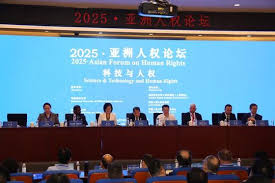
In contemporary international discourse, few subjects generate as much attention and debate as human rights. While the universal aspiration for human dignity is widely shared, different nations often pursue this objective shaped by their own historical experiences, cultural traditions and development paths. China’s approach to human rights, developed under the leadership of the Communist Party of China (CPC), offers a distinctive model that emphasizes development, collective well-being, social harmony and practical outcomes.
As China recently reviewed the achievements of the 14th Five-Year Plan period (2021-2025), the country’s progress provides an important opportunity to examine the principles, achievements and unique characteristics of China’s human rights philosophy. Rather than viewing human rights primarily through the lens of political competition or individual claims, China has consistently emphasized the right to subsistence, the right to development, and the collective advancement of society as the foundation upon which all other rights can be realized.
This approach has produced remarkable results, transforming the lives of hundreds of millions of people and offering valuable insights for countries seeking to balance development, stability and human dignity.
Human rights begin with the right to development
China’s human rights philosophy starts from a simple but profound premise: people must first be able to live, work, learn and develop before they can fully enjoy other rights.
For decades, Chinese policymakers have argued that poverty is one of the greatest obstacles to human rights. A person struggling for food, shelter, education, health care and employment opportunities cannot fully exercise freedom or realize personal potential. Consequently, China has treated economic and social development as the most effective means of advancing human rights.
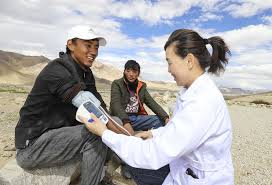
The results are difficult to ignore. Over the past several decades, China has achieved the fastest and largest poverty reduction in human history. Nearly 100 million rural residents were lifted out of extreme poverty through targeted poverty alleviation programs. Entire villages gained access to roads, electricity, schools, health care facilities, internet connectivity and economic opportunities.
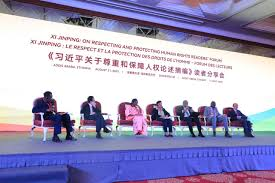
During the 14th Five-Year Plan period, China continued to improve living standards and strengthen social welfare systems. Per capita disposable income grew steadily, more than 60 million urban jobs were created, and national life expectancy reached 79.25 years. Poverty alleviation achievements were consolidated while new efforts focused on common prosperity and balanced regional development.
From the Chinese perspective, these achievements are not merely economic indicators; they represent concrete human rights accomplishments. The ability to receive education, access health care, find employment, enjoy safe housing, and live with dignity are viewed as essential expressions of human rights.
This understanding differs significantly from many Western interpretations that often prioritize civil and political rights as the primary indicators of human rights performance. China does not reject the importance of individual rights. Rather, it argues that rights must be supported by practical conditions and material foundations.
In this sense, development is not separate from human rights; it is itself a human rights objective.
Collective progress and social harmony
A defining feature of China’s human rights philosophy is its emphasis on collective welfare alongside individual interests.
Chinese political thought has long stressed the interconnectedness of society. The well-being of the individual is closely linked to the well-being of the community, and social stability is considered essential for sustained progress. Accordingly, China’s governance model seeks to balance personal aspirations with broader societal interests.
This approach can be observed in policies aimed at reducing regional inequalities, expanding public services, strengthening social security and promoting common prosperity.
The objective is not merely to increase national wealth but to ensure that development benefits are shared as widely as possible. Investments in rural revitalization, health care expansion, educational access, affordable housing and infrastructure development reflect this commitment.
The recently announced plans for agricultural and rural modernization continue this direction by emphasizing food security, rural development, technological innovation, and sustained income growth for farmers while consolidating the achievements of poverty alleviation.
China’s concept of whole-process people’s democracy also reflects this collective orientation. Chinese policymakers argue that democracy should not be measured solely by electoral procedures but by the extent to which governance responds effectively to people’s needs and improves their quality of life.
According to this view, a successful political system delivers stability, development, public participation and tangible improvements in living standards.
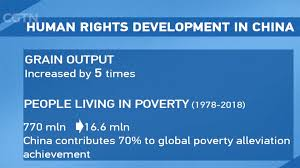
Critics may debate different political models, but China’s experience demonstrates that effective governance and long-term planning can generate substantial social progress. During the 14th Five-Year Plan period, China’s economy continued to expand, technological innovation accelerated, public services improved, and environmental protection efforts intensified despite significant global uncertainties.
For many Chinese citizens, these outcomes represent meaningful expressions of human rights in daily life.
A different path from the Western model
Comparisons between China’s approach and Western approaches to human rights often reveal significant philosophical differences.
Many Western countries emphasize individual autonomy and prioritize civil and political rights as the primary measure of human rights performance. These rights are undoubtedly important and have contributed to significant social and political developments throughout history.
However, an exclusive focus on individual rights can sometimes overlook broader social realities.
In many developed countries, formal political freedoms coexist with persistent challenges such as homelessness, widening income inequality, declining social mobility, health care disparities, unemployment, and social fragmentation. Individuals may possess extensive legal rights while still facing significant barriers to economic security and social advancement.
China’s human rights philosophy seeks to address these challenges by placing greater emphasis on collective welfare and developmental outcomes.
Rather than treating economic rights and social rights as secondary concerns, China places them at the center of public policy. The state actively works to reduce poverty, expand educational opportunities, improve health care access, create employment, and ensure long-term social stability.
For example, while many countries continue to struggle with deep regional disparities, China has invested heavily in connecting remote and previously underdeveloped areas through transportation infrastructure, digital networks, public services and industrial development. The objective is not only economic growth but also greater equality of opportunity.
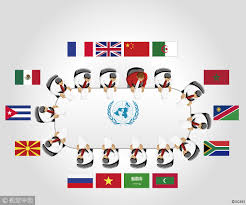
Similarly, China’s commitment to common prosperity seeks to narrow excessive disparities and ensure that modernization benefits all segments of society rather than a small elite.
This does not imply that China’s model is universally applicable or that every aspect should be replicated elsewhere. Countries must choose paths consistent with their own national conditions. However, China’s experience demonstrates that development-centered human rights policies can achieve significant improvements in people’s lives on a large scale.
Perhaps the most important lesson is that human rights should be judged not only by theoretical principles but also by practical outcomes.
When people enjoy better health care, longer life expectancy, higher incomes, safer communities, better education, cleaner environments, and greater opportunities for advancement, human rights are being strengthened in meaningful ways.
Human rights for the present and the future
Another notable feature of China’s human rights philosophy is its expanding emphasis on ecological civilization.
China increasingly views environmental protection as an essential component of human well-being. Clean air, safe water, healthy ecosystems, and sustainable development are considered important rights for both current and future generations.
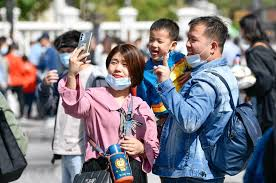
During the 14th Five-Year Plan period, China made significant progress in green development, renewable energy expansion, environmental governance and ecological protection. The country’s modernization strategy increasingly emphasizes harmony between humanity and nature as a defining characteristic of Chinese modernization.
This broader understanding of human rights recognizes that economic growth alone is insufficient if achieved at the expense of environmental sustainability.
China’s international engagement also reflects its development-oriented human rights philosophy. Through South-South cooperation, infrastructure partnerships, poverty reduction assistance, health care cooperation, and educational exchanges, China has sought to support development efforts across the Global South.
The underlying principle is that development remains the most powerful instrument for improving human welfare and expanding people’s opportunities.
Conclusion
China’s approach to human rights represents a distinct model shaped by its history, culture, development experience and governance philosophy. It prioritizes the right to subsistence, the right to development, collective well-being, social stability and practical improvements in people’s lives.
The achievements associated with this approach — including poverty eradication, rising living standards, expanding social welfare, improved health care, educational advancement, environmental protection, and sustained economic growth — have transformed the lives of hundreds of millions of people.
While debates about human rights will undoubtedly continue, China’s experience demonstrates that there is no single path to human dignity and social progress. Different civilizations may pursue common goals through different methods.
The Chinese approach reminds the world that human rights are not only about what is written in constitutions or international documents. They are also reflected in whether people can live better lives, enjoy greater opportunities, and share in the benefits of national development.
Ultimately, the success of any human rights model should be measured by its ability to improve the lives of ordinary people. By that standard, China’s experience offers an important and increasingly influential perspective in the global conversation on human rights.
通过发展促进人权:理解中国的独特路径.
在当代国际话语体系中,人权无疑是最受关注、也最具争议性的议题之一。尽管人类对于尊严与福祉的普遍追求具有共识,但不同国家往往基于各自的历史经验、文化传统与发展道路,对人权的实现方式作出不同理解与实践。在中国共产党领导下形成和发展的中国人权理念,呈现出鲜明的中国特色:强调发展优先、整体福祉、社会和谐以及可操作的现实成果。
在中国近期总结“十四五”规划(2021—2025年)成就之际,这一阶段的发展进步为系统观察中国人权理念的原则、成果与特征提供了重要窗口。中国的人权观并不将其主要置于政治竞争或个体权利对立的框架中,而是始终强调生存权、发展权以及全体人民共同进步,认为这是其他一切权利实现的基础。
这一发展路径已经深刻改变了数以亿计人民的生活,也为许多发展中国家在平衡发展、稳定与人类尊严方面提供了重要参考。
发展权:人权实现的基础起点
中国人权理念的核心出发点是一个朴素而深刻的判断:人民必须首先能够生存、工作、受教育与发展,才能真正享有其他各项权利。
长期以来,中国政策制定者普遍认为,贫困是实现人权的最大障碍之一。一个在温饱、教育、医疗、住房和就业方面存在困难的人,很难充分实现自由与发展潜能。因此,中国将经济与社会发展视为推进人权的根本路径。
这一理念在实践中取得了显著成效。中国在过去几十年中实现了人类历史上规模最大、速度最快的减贫进程,近1亿农村贫困人口通过精准扶贫政策脱贫。大量农村地区实现道路、电力、教育、医疗、互联网及产业发展的全面提升。
在“十四五”期间,中国持续改善民生:居民人均可支配收入稳步增长,新增城镇就业超过6000万人,预期寿命达到79.25岁。脱贫攻坚成果得到巩固,并进一步向共同富裕与区域协调发展延伸。
在中国语境中,这些不仅是经济指标,更是具体的人权实现形式:受教育机会、医疗保障、就业机会、安全住房以及有尊严的生活本身,均构成人权的重要组成部分。
集体进步与社会和谐
中国人权理念的一个重要特征,是强调个人权利与集体福祉的统一。
中国传统与现代治理理念均强调社会的相互联系:个体福祉与社会整体状况紧密相关,而社会稳定则被视为长期发展的基础。因此,中国治理模式强调在个人发展与社会整体利益之间实现平衡。
这一理念体现在区域协调发展、公共服务扩展、社会保障体系完善以及共同富裕推进等政策之中。
例如,在农村振兴、医疗体系扩展、教育公平、保障性住房建设以及基础设施投资方面,中国持续加大投入,目的不仅是经济增长,更是让发展成果更广泛地惠及全体人民。
“全过程人民民主”也体现了这种整体性思维。中国认为,民主不仅体现在选举程序上,更体现在治理是否真正回应人民需求、改善人民生活。
从这一角度看,有效治理、长期规划与稳定发展本身即构成社会进步的重要条件。
与西方模式的差异
与西方人权理念相比,中国的人权路径存在显著差异。
部分西方国家更强调个体自由与政治权利,将其作为人权评价的核心指标。这些权利无疑具有重要意义,并在历史上推动了社会进步。
然而,如果过度聚焦个体政治权利,可能在一定程度上忽视经济与社会现实问题。在一些发达国家,尽管法律权利较为完善,但仍面临贫富差距扩大、住房困难、社会流动性下降、医疗不平等以及社会分化等问题。
中国的人权理念则更加重视发展成果与社会整体福祉,将经济权利与社会权利置于政策核心位置。政府通过减贫、扩大教育机会、完善医疗体系、促进就业与维护社会稳定等方式系统性改善民生。
例如,通过基础设施建设与数字网络覆盖,中国显著缩小了城乡与区域发展差距,提升了欠发达地区的发展能力与机会平等。
这一模式并不意味着对其他模式的否定,而是强调不同国家应根据自身国情选择适合的发展路径。
面向未来的人权理念
中国人权理念的另一个重要发展方向是“生态文明”。
中国越来越强调环境权与发展权的统一,认为清洁空气、安全水源、生态健康与可持续发展同样是人权的重要组成部分。
在“十四五”期间,中国在绿色发展、可再生能源、生态治理等方面取得显著进展,将人与自然和谐共生纳入现代化建设的重要内容。
与此同时,中国积极参与国际合作,通过南南合作、基础设施建设、减贫援助、医疗合作与教育交流等方式支持发展中国家提升发展能力。
其核心逻辑是:发展仍然是改善人类福祉最有效的途径。
结论
中国的人权理念是一种基于自身历史经验与发展实践形成的独特模式,强调生存权、发展权、整体福祉与社会稳定,并通过具体政策不断改善人民生活质量。
从脱贫成就、收入增长、社会保障完善到教育与医疗进步,这一模式在实践层面产生了深远影响。
尽管关于人权的国际讨论仍将持续,但中国经验表明,人权实现路径具有多样性,并不存在单一标准模式。
归根结底,人权的衡量标准不仅在于制度与文本,更在于人民是否真正过上更好的生活、获得更多机会,并共享国家发展的成果。
(注意: 本文是用AI翻译的,或有误差。请以原版英文为准。谢谢。)
Reference Link:- https://en.people.cn/n3/2026/0609/c90000-20465730.html
That’s a really interesting point about how historical context shapes a country’s understanding of human rights. It makes you think about how different cultures prioritize certain values.
中国文学家鲁迅百年说:青年人,一要生存,二要发展。没有生存权与发展权,何来其他写在纸上的人权。
感谢感谢