

(下边有中文翻译,请继续看到底。 谢谢。)
The U.S.-Israeli war on Iran has exposed a dangerous truth about the Middle East: when regional disputes are handled through military force rather than diplomacy, the entire international system becomes vulnerable. The war has not remained as a limited confrontation between Iran, Israel and the United States. It has disturbed Gulf security, threatened global energy routes, raised fears of wider escalation and increased pressure on ordinary people across the region. In this tense environment, Russia’s role deserves serious attention.
Russia is not a distant observer of the Middle East. It is a major power with long-standing regional interests, deep relations with Iran, working channels with Arab states, a diplomatic presence at the United Nations, and growing engagement with the Muslim world. Moscow’s position in the current crisis has been clear: Iran’s sovereignty must be respected, the use of force must stop, and diplomacy must return to the center of the peace process.
This does not mean Russia has entered the war militarily on Iran’s behalf. That would be a dangerous misunderstanding. Russia’s role has been more calculated and, in many ways, more useful. It has protected Iran politically and diplomatically by rejecting attempts to treat Iran as a state whose sovereignty can be violated without consequence. It has defended the principle that even powerful countries cannot decide the future of another sovereign state through airstrikes, assassinations, sanctions and military pressure.
That position matters. In modern international politics, sovereignty is not protected only by tanks and missiles. It is also protected by diplomatic recognition, legal arguments, Security Council pressure, strategic partnerships and the refusal of major powers to legitimize aggression. Russia’s support has helped ensure that Iran is not isolated as a helpless target. It has reminded the world that Iran is a sovereign state, not a battlefield for others.
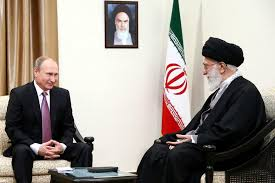
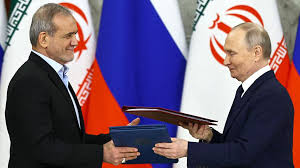
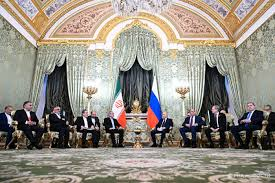
The foundation of this position is the Russia-Iran strategic partnership. In January 2025, Russia and Iran signed a 20-year comprehensive strategic partnership treaty. The agreement covers security, defense cooperation, energy, peaceful nuclear cooperation, trade, financial coordination and regional diplomacy. Its significance is not merely symbolic. It tells the world that Moscow and Tehran are not temporary partners brought together only by crisis. They are building a long-term strategic relationship based on shared interests, resistance to unilateral pressure and support for a more multipolar international order.
For Iran, this partnership provides diplomatic depth. For Russia, it strengthens its position in the Middle East, the Caspian region and Eurasia. Both countries face Western sanctions and political pressure. Both oppose a world order dominated by one Centre of power. Both see sovereignty as a shield against intervention. This shared worldview has made their partnership stronger, especially during the current war.
Russia’s response to the war has also shown a careful understanding of regional sensitivities. Moscow has condemned the escalation, but it has also tried to keep channels open with Arab Gulf states. This is important because Gulf countries have their own fears. They do not want Iranian missiles, Israeli operations or U.S. pressure to turn their territories, oil facilities and sea lanes into targets. Russia understands that a peace process cannot succeed by speaking only to Tehran. It must also reassure Riyadh, Doha, Abu Dhabi, Kuwait, Muscat and Manama.
This is where Russia can play a stabilizing role. Unlike the United States, Russia is not seen by Iran as the main military threat. Unlike Israel, Russia does not seek to weaken Iran as a strategic objective. Unlike some Western actors, Russia has maintained working relations with both Iran and many Arab states. This gives Moscow a practical advantage. It can speak to Iran with trust, to the Gulf with seriousness, and to the wider international community with the language of sovereignty and international law.
Russia’s interests in the Middle East are broad and serious. First, Russia wants regional stability because the Middle East affects global energy markets. As a major oil and gas producer, Russia has a direct stake in energy prices, shipping routes and OPEC+ coordination. Any prolonged crisis in the Strait of Hormuz can shake the global economy. It can raise fuel prices, disrupt Asian and European markets, and create new inflationary pressure. Moscow understands that controlled stability serves Russia better than uncontrolled chaos.
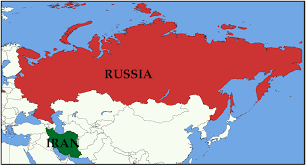
Second, Russia wants to preserve its strategic presence in the region. Its long involvement in Syria, its naval and air presence in the Eastern Mediterranean, and its political links with regional governments give it a role that cannot be ignored. Even when Russia’s regional influence faces pressure, Moscow remains a power that Middle Eastern states must calculate with.
Third, Russia wants to present itself as a counterweight to Western interventionism. This is central to Moscow’s foreign policy narrative. Russia argues that the Middle East has suffered too much from regime-change wars, unilateral sanctions, foreign military bases and selective interpretations of international law. Whether one agrees with Moscow on every issue or not, this message resonates with many countries in Asia, Africa and the Muslim world that have experienced or witnessed the consequences of external interference.
Fourth, Russia has a domestic and civilizational interest in good relations with the Muslim world. Millions of Muslims live inside the Russian Federation. Regions such as Tatarstan, Bashkortostan, Chechnya, Dagestan and others form part of Russia’s internal diversity. Russia is also an observer in the Organization of Islamic Cooperation. Through platforms such as the Russia-Islamic World Strategic Vision Group and the Kazan Forum, Moscow has tried to build political, cultural and economic bridges with Muslim-majority countries.
This Russia-Muslim world relationship is not new, but it has become more important in today’s global environment. Many Muslim countries want diversified partnerships. They do not want to depend only on Washington, Brussels or Beijing. They want relations with multiple power centers. Russia offers defense cooperation, energy coordination, grain supplies, diplomatic support, education, infrastructure partnerships and a shared language of respect for sovereignty. This gives Moscow an opening to play a larger role in Muslim-majority regions.
In the Iran crisis, Russia’s message to the Muslim world is simple: the region should not be pushed into a war that serves external interests. Moscow has argued that Arab states should not be dragged into escalation against Iran. This is a powerful point. The Muslim world already faces the unresolved tragedy of Palestine, the destruction of Gaza, instability in Lebanon and Syria, and the dangers of terrorism and economic pressure. A wider war against Iran would not bring peace. It would deepen sectarian tensions, damage trade routes, raise energy prices and weaken the entire region.
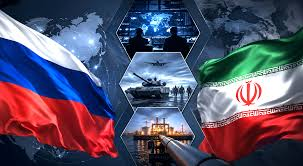
Russia’s peace role should therefore be built around several practical steps. First, Moscow can support an immediate and durable ceasefire between Iran, Israel and the United States. Second, it can work with China, Pakistan, Türkiye, Qatar, Oman and other mediators to create a diplomatic format that includes regional voices, not only Western terms. Third, Russia can push for guarantees that Iran’s sovereignty and territorial integrity will be respected. Fourth, it can encourage Iran to accept verifiable diplomatic arrangements on nuclear and regional security questions, provided sanctions relief and security assurances are also real. Fifth, it can help prevent the Strait of Hormuz from becoming a permanent hostage of war.
A serious peace process cannot be based on humiliation. If Iran is asked to surrender completely, there will be no lasting peace. If Israel is allowed to continue military escalation without accountability, there will be no regional stability. If the United States wants only a deal that can be presented as victory at home, the agreement will remain fragile. Russia’s value lies in reminding all sides that durable peace requires balance: Iran must receive security and dignity; Gulf states must receive safe sea lanes; Israel must receive security through diplomacy, not endless war; and the United States must accept that military dominance is not the same as political success.
The post-war Middle East will not look like the old Middle East. The conflict has shown the limits of unilateral power. It has also shown that regional states are tired of being treated as chess pieces. Gulf countries want stability for their development plans. Iran wants survival, respect and economic breathing space. Iraq, Syria and Lebanon want protection from spillover conflict. Pakistan wants de-escalation and secure energy routes. China wants open trade corridors. Europe wants energy stability and reduced migration pressure. In such a scenario, Russia can become one of the important balancing forces.
A positive Russian role in the post-war Middle East would not mean replacing one hegemon with another. It would mean supporting a multipolar security structure where no single power can impose war on the region. Russia can work with Muslim countries, China, the United Nations and regional organizations to create mechanisms for crisis communication, maritime security, non-aggression commitments, and reconstruction. It can also support a broader regional settlement that includes Palestine, because no Middle East peace architecture can succeed while Gaza burns and Palestinian statehood remains denied.
Russia’s relationship with Iran will remain central in the future. Tehran will likely come out of the war damaged but not defeated. Its economy will need relief. Its security doctrine will need recalculation. Its regional posture may become more cautious but also more determined. Russia can help Iran move from wartime survival to diplomatic stabilization. That would benefit not only Iran but the entire region.
At the same time, Russia must act with responsibility. If Moscow wants to be seen as a true stabilizer, it must avoid encouraging endless confrontation. It should use its influence with Iran to support practical compromise, not maximalist positions. It should reassure Arab states that Russia-Iran ties are not directed against them. It should support peaceful nuclear arrangements, maritime security and regional dialogue. A constructive Russia is more valuable than a purely confrontational Russia.
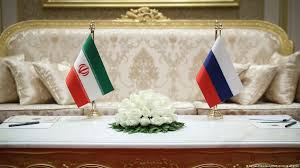
The Middle East needs counterweights because an imbalance has produced disaster. When one bloc believes it can bomb, sanction and reshape the region without consequence, war becomes easier. A Russian role, especially when coordinated with China, Pakistan, Turkey and Arab mediators, can help create restraint. This is not anti-Western for the sake of being anti-Western. It is pro-balance, pro-sovereignty and pro-peace.
The war on Iran has proved that military solutions are temporary and costly. Airstrikes can destroy facilities, but they cannot erase national will. Sanctions can damage economies, but they cannot create trust. Blockades can pressure governments, but they also punish ordinary people. A lasting settlement must be political.
Russia’s role should be judged in this context. It has defended Iran’s sovereignty diplomatically. It has maintained a strategic partnership with Tehran. It has warned against widening the war. It has engaged Arab states. It has presented itself as a voice for international law and multipolar balance. These are not small contributions.
The future of the Middle East should not be decided by bombs. It should be negotiated through dignity, sovereignty and regional inclusion. Russia has the relationships, interests and diplomatic tools to support that outcome. If Moscow uses its influence wisely, it can help move the region from confrontation to settlement, from escalation to balance, and from war politics to a more stable peace.
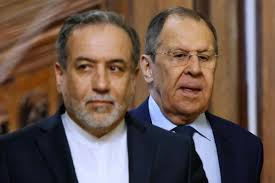
In a region exhausted by conflict, the most valuable power is not the one that can start another war. It is the one that can help end the ongoing wars. Russia now has an opportunity to prove that its influence in the Middle East is not only about strategy, energy and alliances, but also about peace.
俄罗斯在伊朗危机中的角色:中东和平的平衡力量.
美以对伊朗的战争揭示了中东一个危险的现实:当地区争端通过军事手段而非外交方式处理时,整个国际体系都会变得更加脆弱。这场战争并未局限于伊朗、以色列和美国之间的有限对抗,而是扰动了海湾地区安全,威胁全球能源通道,加剧了更大范围升级的担忧,并使整个地区普通民众承受更大压力。在这一紧张背景下,俄罗斯的角色值得认真关注。
俄罗斯并非中东的旁观者,而是一个在该地区拥有长期利益的大国。它与伊朗保持深厚关系,与阿拉伯国家保持沟通渠道,在联合国具有外交存在,并且与伊斯兰世界的互动不断加强。莫斯科在当前危机中的立场较为明确:必须尊重伊朗主权,停止使用武力,并让外交重新回到和平进程的中心。
这并不意味着俄罗斯已经代表伊朗参战军事行动,这种理解是危险的误读。俄罗斯的作用更多是经过计算的,在许多方面也更具现实意义。它在政治和外交层面支持伊朗,拒绝将伊朗视为可以无后果侵犯主权的国家,并坚持即使强国也不能通过空袭、暗杀、制裁或军事压力决定另一个主权国家的命运。
这一立场具有重要意义。在现代国际政治中,主权不仅由军事力量保护,也依赖外交承认、法律论证、联合国安理会压力、战略伙伴关系以及大国对侵略行为的不承认。俄罗斯的支持在一定程度上避免了伊朗被孤立为无助目标,并提醒国际社会伊朗是一个主权国家,而不是他国博弈的战场。
这一立场的基础是俄伊战略伙伴关系。2025年1月,两国签署了为期20年的全面战略伙伴关系条约,涵盖安全、国防合作、能源、和平核能、贸易、金融协调以及地区外交等领域。这一协议不仅具有象征意义,更表明双方正在构建长期战略关系,基于共同利益、反对单边压力以及支持多极国际秩序。
对于伊朗而言,这一伙伴关系提供了外交纵深;对于俄罗斯而言,它增强了在中东、高加索及欧亚地区的战略地位。两国都面临西方制裁与政治压力,也都反对单极主导的国际秩序,并将主权视为抵御外部干预的核心屏障。这种共同认知在当前战争背景下进一步强化了双边关系。
俄罗斯在战争中的反应也体现出对地区敏感性的把握。莫斯科谴责局势升级,同时努力维持与海湾国家的沟通。这一点至关重要,因为海湾国家同样担忧冲突外溢可能威胁其领土、石油设施与海上航线安全。俄罗斯认识到,和平进程不能只与德黑兰对话,还必须同时安抚利雅得、多哈、阿布扎比、科威特、马斯喀特和麦纳麦。
在这一背景下,俄罗斯具备一定稳定作用。与美国相比,俄罗斯并未被伊朗视为主要军事威胁;与以色列不同,俄罗斯并不以削弱伊朗为战略目标;与部分西方国家相比,俄罗斯同时与伊朗及多个阿拉伯国家保持工作关系。这使其能够在不同阵营之间沟通,并以主权与国际法语言参与调解。
俄罗斯在中东的利益是多层面的。首先,它追求地区稳定,因为中东直接影响全球能源市场。作为重要油气生产国,俄罗斯关心油价、航运通道以及欧佩克+协调机制。霍尔木兹海峡长期危机会冲击全球经济,推高能源价格并引发通胀,因此可控稳定符合俄罗斯利益。
其次,俄罗斯希望维持其在中东的战略存在,包括在叙利亚的长期参与、在东地中海的军事存在以及与地区国家的政治联系。这些因素使其在区域事务中保持不可忽视的地位。
第三,俄罗斯试图作为对西方干预主义的制衡力量。这一叙事在亚洲、非洲及伊斯兰世界具有一定共鸣,因为许多国家经历或观察过外部干预带来的后果。
第四,俄罗斯在国内与文明层面也重视与伊斯兰世界的关系。俄罗斯境内有大量穆斯林人口,并通过多个机制与伊斯兰国家建立政治、文化与经济联系。
在伊朗危机中,俄罗斯向伊斯兰世界传递的核心信息是:地区不应被拖入一场服务外部利益的战争。阿拉伯国家不应被卷入对伊朗的升级冲突,因为这将加剧宗派紧张、破坏贸易通道并推高能源成本。
因此,俄罗斯可能发挥的和平角色包括:推动停火、建立多边外交框架、维护伊朗主权、支持可核查的核问题安排,以及防止霍尔木兹海峡成为长期冲突工具。
一个可持续的和平进程必须基于平衡而非羞辱。若伊朗被要求完全投降,将不会有持久和平;若以色列持续军事升级而缺乏约束,地区稳定无法实现;若美国只寻求“国内胜利叙事”,协议将难以持久。
中东的未来将呈现新的结构,单边主导模式正在失效。俄罗斯若能审慎运用其影响力,并与中国、巴基斯坦、土耳其及地区调解方协调,有可能推动一个更具多极特征的安全框架。
战争已经证明,军事手段无法带来持久解决。空袭无法消除国家意志,制裁无法建立信任,封锁只会加剧民众痛苦。真正的解决必须回归政治路径。
在这一意义上,俄罗斯的角色不仅在于战略与能源利益,更在于是否能够推动从冲突走向平衡,从对抗走向稳定,从战争逻辑走向可持续和平。
(注意: 本文是用AI翻译的,或有误差。请以原版英文为准。谢谢。)