

Six decades of water cooperation are giving way to surging water nationalism — a shift that is fast weaponizing the region’s rivers

On June 4, Pakistan said what most analysts had been thinking for over a year: India is weaponizing water.
The trigger was a pair of infrastructure projects on the Chenab River — a ₹2,352 crore (US$246 million) tunnel to divert surplus Chenab water into the Beas basin in Himachal Pradesh, and a ₹268 crore sediment bypass at the Salal Dam in Jammu — both to be executed by India’s National Hydroelectric Power Corporation.
Pakistan’s foreign ministry spokesperson, Tahir Andrabi, said the projects were confirmation that New Delhi “seems to weaponize water,” adding that they carry dangerous implications not only for Pakistan’s economy but also for regional stability and international peace and security.
What India has set in motion since placing the Indus Waters Treaty (IWT) in abeyance in April last year is much more than a bilateral water dispute. Rather, it is the systematic dismantling of the cooperative architecture that governed South Asia’s most critical shared resources for over six decades.
And it is being replaced with something more naked and dangerous: the assertion that water is an instrument of state power to be allocated, withheld and redirected according to the upstream sovereign’s political calculus.
The consequences of that assertion will not stop at the India-Pakistan border. They will flow downstream into Bangladesh, upstream into Nepal and outward into every transboundary water negotiation on earth.
To understand the scale of what has been destroyed, one must recall what the IWT actually represented.
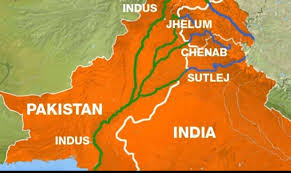
Signed in 1960 after nine years of World Bank-brokered negotiation, the treaty allocated the western rivers — Indus, Jhelum, Chenab — to Pakistan, and the eastern rivers — Ravi, Beas, Sutlej — to India.
The IWT survived three full-scale wars, the nuclear tests of 1998, the Kargil conflict, the 2001 Parliament attack, the 2008 Mumbai massacre and the 2019 Pulwama bombing.
Its survival reflected a genuine, if unsentimental, recognition on both sides that some frameworks are too fundamental to sacrifice at the altar of domestic politics. US President Dwight Eisenhower, present at the treaty’s signing, called it “one bright spot in a very depressing world picture.”
India blotted out that bright spot on April 23 last year, one day after the Pahalgam terror attack killed 26 tourists in Indian-administered Kashmir. Soon thereafter, hydrological data-sharing stopped.
The Permanent Indus Commission went dark. And within weeks, India had conducted reservoir flushing operations at Salal and Baglihar dams without notifying Pakistan.
India then launched Operation Sindoor on May 7 last year, striking nine targets in Pakistan and Pakistan-occupied Kashmir. A ceasefire was reached three days later. But while the shooting stopped, the water dispute did not.
By December, Pakistan’s foreign ministry was formally reporting that Chenab flows had plunged to 870 cusecs between December 10 and 16 — against a historical minimum for that period of over 4,000 cusecs, a drop of nearly 80%. Satellite imagery confirmed a significant reduction followed by a sudden increase in the surface area of the Baglihar reservoir.
The two Chenab projects announced in recent weeks are consistent with this trend. Since the IWT’s suspension, India has fast-tracked the Pakal Dul, Kiru, Kwar, Ratle, Dulhasti Stage-II, and Sawalkote projects, a ramped-up portfolio of infrastructure on rivers that the treaty designated for Pakistan’s unrestricted use.
Reference Link:- https://asiatimes.com/2026/06/water-wars-washing-away-south-asias-fragile-peace/