

China has managed to stabilize domestic energy markets and protect its high-tech emerging industries, forging a distinct path of green energy transition amid rising geopolitical conflict and sharp swings in global markets, figures show.
Chinese leaders have consistently stressed that the country must have control over its own energy supply, and the outline of the 15th Five-Year Plan (2026-2030) for the first time proposes building China into an “energy powerhouse.”
THE MAKING OF ENERGY RESILIENCE
The country’s energy system has withstood external pressures over recent months, keeping its domestic market generally stable with reasonable pricing, while demonstrating high levels of self-sufficiency.
Traditional energy continues to act as a ballast. The supply and demand of coal are balanced, while crude oil and natural gas output maintain steady growth. During the 14th Five-Year Plan period (2021-2025), total energy production exceeded 5 billion tonnes of standard coal equivalent (SCE), accounting for one-fifth of the global total, with self-sufficiency steadily above 80 percent. The country aims to produce 5.8 billion tonnes of SCE by 2030.
At home, China has implemented a medium and long-term strategy to keep annual crude oil output at approximately 200 million tonnes, with natural gas output growing steadily. Long-distance oil and gas pipelines now span more than 200,000 km, with liquefied natural gas (LNG) receiving capacity exceeding 120 million tonnes per year. Abroad, China has built a diversified import system through trade with nearly 50 countries, covering all major exporters.
In the first quarter, industrial crude oil and natural gas output rose 1.3 percent and 3 percent year-on-year, respectively, while crude oil imports increased 8.9 percent, according to the National Energy Administration.
Ensuring self-reliance for core oil and gas demand, China is also building a more diversified and complementary energy supply system, making its resource base larger and its resilience stronger.
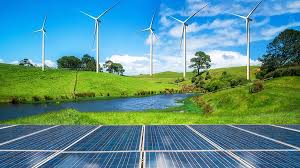
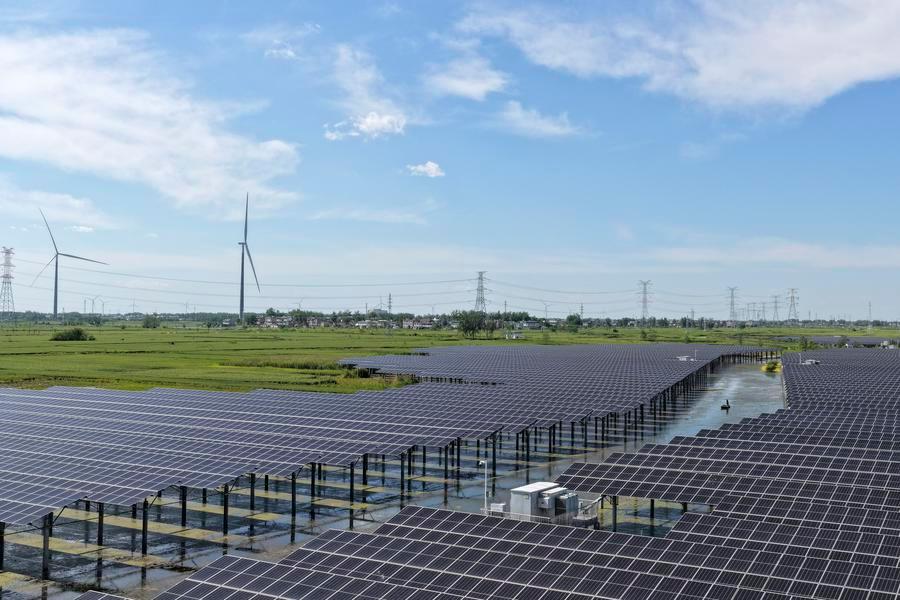
The country has built the world’s largest and fastest-growing renewable energy system, with green power reshaping the energy landscape and enabling high-quality development.
These developments reflect China’s 15th Five-Year Plan, which calls for accelerating the building of a clean, low-carbon, safe and efficient new energy system, promoting a safe, reliable and orderly replacement of fossil energy with non-fossil energy, pursuing parallel development of wind, solar, hydro, nuclear and other energy sources, and implementing a plan to double non-fossil energy output in a decade.
By the end of March, China’s total installed renewable energy capacity reached 2.395 billion kilowatts, up 22 percent from a year earlier, accounting for 60.4 percent of total installed power capacity.
During the January-March period, China’s renewable energy power generation reached 882.9 billion kilowatt-hours, accounting for approximately 37 percent of the total power generation.
“China’s energy structure is undergoing a fundamental transformation,” said Wang Zhixuan, an expert at the China Electricity Council, projecting that by 2030, non-fossil fuel power generation will exceed 50 percent, with wind and solar energy accounting for about 32 percent, and new energy will become the main driver of incremental electricity supply.
BEDROCK OF NEW QUALITY PRODUCTIVE FORCES
As a new round of technological and industrial revolution accelerates, a sustained and stable energy supply remains a key requisite to the growth of emerging industries and new quality productive forces.
With China’s artificial intelligence industry developing rapidly and electricity demand for computing growing at a high pace, the outline of the new five-year plan calls for promoting the coordinated deployment of green electricity and computing power.
In northwest China’s Qinghai Province, a power-computing coordination platform enables data centers to shift consumption to periods when green power output is highest. In southwest China’s Guizhou Province, some data centers are located within 200 km of more than 50 clean energy plants.
The outline of the 15th Five-Year Plan also identifies green hydrogen as a key growth driver for new industries.
In early March, the first commercial cargo of green ammonia produced at Envision’s Chifeng net-zero industrial park for green hydrogen and ammonia sailed from Lianyungang port and arrived in the Republic of Korea. “The delivery of this first cargo proves that we can deliver from production to downstream application of green hydrogen and ammonia,” said Lou Yimin, senior vice president of Envision Energy.
At the same time, China’s advanced energy technologies and equipment are playing a role in accelerating global energy expansion. For example, the China-Laos 500-kV interconnection project has begun operation, raising two-way power transfer capacity between the countries from 50,000 kW to 1.5 million kW.
The difference between a big energy country and an energy powerhouse is essentially an energy transformation from pursuing quantitative advantage to relying on systemic capability, said Zou Caineng, a researcher from PetroChina.
Systematically promoting a clean and low-carbon energy mix, intensive and efficient resource allocation, and smart and intelligent energy operation is the way to gain the upper hand in the global wave of energy revolution and industrial transformation, said Wang Peng, a professor at North China Electric Power University.
Reference Link:- https://english.news.cn/20260602/7d378af33ae847bead95aa9905dbd421/c.html