Prime Minister Shehbaz Sharif’s fruitful official visit to China and the 75th anniversary of Pakistan-China diplomatic relations. 谢巴兹·谢里夫总理对中国的富有成效的正式访问以及中巴建交 75 周年纪念活动.

(下边有中文翻译,请继续看到底。 谢谢。)

Pakistani Prime Minister Muhammad Shehbaz Sharif’s official visit to the People’s Republic of China from May 23 to 26, 2026, came at a historic and sensitive moment. It coincided with the 75th anniversary of the establishment of diplomatic relations between Pakistan and China, and it also took place amid severe geopolitical uncertainty caused by the U.S.-Israeli war with Iran, instability in the Gulf, and continuing pressure on global energy and maritime security. The visit, therefore, carried three layers of importance: celebration of a trusted friendship, renewal of economic and strategic cooperation, and coordination on regional peace. Pakistan’s foreign ministry had already described the visit as an opportunity to reaffirm the All-Weather Strategic Cooperative Partnership and advance the vision of an even closer Pakistan-China community with a shared future.
The visit began in Hangzhou, Zhejiang Province, before moving to Beijing. In Hangzhou, the prime minister chaired the Pakistan-China B2B Investment Conference, with a focus on information technology, telecom, battery energy storage systems, agriculture, green development and industrial cooperation. Pakistani and Chinese firms signed cooperation agreements worth $1.22 billion, according to reports citing Pakistan’s information ministry, while the conference reflected Pakistan’s effort to move the relationship beyond traditional infrastructure into manufacturing, renewable energy, electric mobility, pharmaceuticals, agriculture and export-oriented investment.

The composition of the Pakistani delegation also carried political significance. The prime minister was accompanied by senior civilian and security leadership, including Deputy Prime Minister and Foreign Minister Ishaq Dar, Chief of Defence Forces and Chief of Army Staff Field Marshal Syed Asim Munir, and Planning Minister Ahsan Iqbal, as seen in official coverage of the Beijing engagements. The presence of Field Marshal Asim Munir was especially important because Pakistan has been playing a critical mediating role in U.S.-Iran peace efforts, and international reporting identified him as a central Pakistani figure in communications connected to Tehran and Washington.
In Beijing, Prime Minister Sharif met President Xi Jinping at the Great Hall of the People. President Xi described the China-Pakistan relationship as an “unbreakable traditional friendship” built over 75 years through mutual understanding, trust and support. He emphasized that regardless of changes in the international environment, China will always give priority to Pakistan in its neighborhood diplomacy. This statement was highly significant because it reaffirmed that Pakistan is not merely an ordinary partner for China but a strategic priority.
President Xi also urged both countries to accelerate the building of an even closer China-Pakistan community with a shared future in the new era. He called for deeper all-round cooperation in agriculture, industry, artificial intelligence and talent cultivation, while also stressing broader security cooperation to jointly safeguard regional peace and stability. Prime Minister Sharif, in response, called President Xi a great friend of the Pakistani people and a friend of peace-loving humanity. He reaffirmed Pakistan’s firm adherence to the one-China principle and its support for China’s core interests.
A major highlight of the visit was President Xi’s recognition of Pakistan’s diplomatic role in the Middle East crisis. According to China’s official readout, President Xi appreciated Pakistan for demonstrating a proactive spirit and mediating for peace to return to the Middle East. Prime Minister Sharif, in turn, thanked China for supporting its mediation of the negotiations between the United States and Iran and said that President Xi’s four propositions on the Middle East situation provided a guiding framework for peace in the region. This was a strong diplomatic endorsement of Pakistan’s peace efforts. While the Chinese statement praised Pakistan as a state, the presence and role of Field Marshal Asim Munir in the delegation gave additional weight to Pakistan’s civil-military coordination in regional diplomacy. Reuters reported that the army chief had recently been in Tehran and that Pakistan had hosted mediation talks between Washington and Tehran after a temporary ceasefire.

The visit also included talks with Premier Li Qiang. Prime Minister Sharif and Premier Li witnessed the signing and exchange of several agreements, MoUs, protocols, and cooperation documents. Pakistan’s Press Information Department listed the documents as covering education, agriculture, sanitary and phytosanitary requirements, animal vaccines, economic development, climate change, foreign-service training, governance training, human resource development, conformity assessment, science and technology, media cooperation, free trade and multilateralism, and the establishment of a sister-province relationship between Zhejiang Province and Punjab Province. These agreements show that the relationship is now expanding from traditional state-to-state cooperation into technical, institutional, provincial, educational, media and people-centered cooperation. They directly support Pakistan’s needs in agriculture, training, food security, media cooperation, institutional capacity and climate resilience.
The Zhejiang-Punjab sister-province relationship and the China-Pakistan Joint Technology Research Center at Hangzhou Normal University were also important outcomes of the visit’s first leg. They show that cooperation is not limited to Beijing and Islamabad; it is being extended to provinces, universities, research institutions, and technology ecosystems. This is consistent with Pakistan’s desire to learn from China’s development experience, particularly in the digital economy, e-commerce, advanced manufacturing, renewable energy, agriculture and skills development.

The joint statement, as reported after the visit, emphasized a “new broad consensus” on deepening the China-Pakistan All-Weather Strategic Cooperative Partnership. The two sides agreed to advance the high-quality development of CPEC 2.0.
China’s foreign ministry later summarized the visit in three highlights: head-of-state diplomacy, pragmatic cooperation and international coordination. It said both sides agreed to accelerate CPEC 2.0, forge an upgraded bilateral free trade agreement, and explore cooperation in artificial intelligence, the digital economy, agriculture and related sectors. This aligns closely with Pakistan’s development priorities: exports, e-Pakistan, energy, environment, equity and empowerment. If implemented properly, these priorities can help Pakistan shift from a consumption-and-import-based economy toward a production, technology and export-oriented economy.

The visit also had a strong commemorative dimension. Chinese Vice President Han Zheng met Prime Minister Sharif before attending the 75th anniversary reception in Beijing. Han said China and Pakistan should stand firmly together amid an increasingly complicated external environment and use the anniversary to carry forward traditional friendship, enhance strategic communication, deepen practical cooperation and accelerate the building of a closer China-Pakistan community with a shared future. The reception was attended by around 400 people from different sectors of both countries. This celebration was not merely ceremonial; it projected continuity, resilience and intergenerational friendship.
From the official Chinese narrative, the visit showed that Pakistan and China are reliable strategic partners who stand together amid changing global circumstances. China presented the relationship as a model of friendship between countries with different systems and cultures, based on mutual respect, mutual trust and mutual support. It also presented Pakistan as a responsible regional actor working for peace in the Middle East. From Pakistan’s official narrative, the visit confirmed that China remains Pakistan’s most trusted strategic partner, a source of development experience, a major investor, a partner in CPEC and a supporter of Pakistan’s regional peace diplomacy.

The impact of the visit is likely to be far-reaching. For Pakistan, it strengthens economic confidence, opens new doors for Chinese investment, and supports the transition from infrastructure-led CPEC to industrial, agricultural, technological and export-oriented cooperation. For China, it reinforces the credibility of the Belt and Road Initiative and confirms Pakistan’s role as a vital partner in South Asia, the Arabian Sea and the wider Muslim world. For the region, it offers a framework of cooperation that connects South Asia, Central Asia, China, the Middle East and maritime trade routes through Gwadar and overland corridors.
Geopolitically, the visit sends a clear message: Pakistan-China relations are not temporary, transactional or limited to one sector. They are strategic, durable, and increasingly linked to regional stability. At a time when the Middle East faces war, the Strait of Hormuz remains sensitive, and major powers are searching for diplomatic channels, Pakistan and China are presenting themselves as partners for dialogue, development, and peace. This does not mean challenges are absent. Security of Chinese nationals and projects in Pakistan remains a serious concern, and Pakistan has pledged targeted measures to ensure the safety of Chinese workers and investments. Implementation of MoUs, investment conversion, security management and economic reforms will determine the real success of the visit.

Overall, Prime Minister Sharif’s visit to China was timely, substantive, and strategically meaningful. It celebrated 75 years of diplomatic relations, renewed leadership-level trust, advanced CPEC 2.0, expanded cooperation into agriculture, AI, education, climate, media, and technology, and strengthened coordination on peace in the Middle East. In a troubled world, the visit projected a positive message: Pakistan and China intend to stand together, deepen cooperation, oppose confrontation, support peace and contribute to a more balanced and multipolar international order.

巴基斯坦总理正式访华:纪念中巴建交75周年,推动新时代全天候战略合作
巴基斯坦总理穆罕默德·夏巴兹·谢里夫于2026年5月23日至26日对中华人民共和国进行正式访问。此次访问发生在一个具有历史意义且十分敏感的时刻。它既适逢巴基斯坦与中国建交75周年,也处在由美以对伊朗战争、海湾地区不稳定局势以及全球能源和海上安全持续承压所造成的严重地缘政治不确定性之中。因此,此访具有三重重要意义:庆祝两国可信赖的友谊,更新经济与战略合作,并就地区和平进行协调。巴基斯坦外交部此前已将此次访问描述为一次重要机会,用以重申中巴全天候战略合作伙伴关系,并推动构建更加紧密的中巴命运共同体。
此次访问首先从浙江省杭州市开始,随后转往北京。在杭州,夏巴兹总理主持了巴中B2B投资会议,重点关注信息技术、电信、电池储能系统、农业、绿色发展和工业合作。据援引巴基斯坦新闻部的报道,巴中企业签署了价值12.2亿美元的合作协议。此次会议也反映出巴基斯坦希望推动两国关系超越传统基础设施领域,进一步进入制造业、可再生能源、电动交通、制药、农业和出口导向型投资等新领域。
巴基斯坦代表团的组成也具有重要政治意义。夏巴兹总理由高级文职和安全领导层陪同,包括副总理兼外交部长伊沙克·达尔、国防力量负责人兼陆军参谋长赛义德·阿西姆·穆尼尔元帅,以及规划部长阿赫桑·伊克巴尔等,他们均出现在北京相关活动的官方报道中。阿西姆·穆尼尔元帅的出席尤其重要,因为巴基斯坦一直在美伊和平努力中发挥关键调解作用,而国际报道也将他视为与德黑兰和华盛顿沟通有关的重要巴基斯坦人物。
在北京,夏巴兹·谢里夫总理在人民大会堂会见了中国国家主席习近平。习近平主席将中巴关系形容为历经75年、建立在相互理解、信任和支持基础上的“牢不可破的传统友谊”。他强调,无论国际形势如何变化,中国都将始终把巴基斯坦置于周边外交的优先方向。这一表态意义重大,因为它再次确认,巴基斯坦对中国而言并不是普通伙伴,而是战略优先对象。
习近平主席还敦促两国加快构建新时代更加紧密的中巴命运共同体。他呼吁双方在农业、工业、人工智能和人才培养等领域深化全方位合作,同时强调扩大安全合作,共同维护地区和平与稳定。夏巴兹总理则表示,习近平主席是巴基斯坦人民的伟大朋友,也是爱好和平人类的朋友。他重申,巴基斯坦坚定奉行一个中国原则,并支持中国的核心利益。
此次访问的一大亮点,是习近平主席认可巴基斯坦在中东危机中的外交作用。根据中国官方通报,习近平主席赞赏巴基斯坦展现积极精神,为推动中东恢复和平进行斡旋。夏巴兹总理也感谢中国支持巴基斯坦调解美国与伊朗之间的谈判,并表示习近平主席关于中东局势的四点主张为地区和平提供了指导框架。这是对巴基斯坦和平努力的有力外交肯定。虽然中国声明赞扬的是巴基斯坦国家层面的作用,但阿西姆·穆尼尔元帅在代表团中的出席和角色,也进一步凸显了巴基斯坦在地区外交中的文武协调。路透社报道称,巴基斯坦陆军参谋长近期曾访问德黑兰,并且在临时停火后,巴基斯坦曾主办华盛顿与德黑兰之间的调解会谈。
此次访问还包括同中国国务院总理李强的会谈。夏巴兹总理和李强总理共同见证了多项协议、谅解备忘录、议定书和合作文件的签署与交换。巴基斯坦新闻信息部列出的文件涵盖教育、农业、卫生与植物卫生要求、动物疫苗、经济发展、气候变化、外交人员培训、治理能力培训、人力资源开发、合格评定、科学技术、媒体合作、自由贸易与多边主义,以及浙江省与旁遮普省建立友好省份关系等内容。这些协议表明,中巴关系正在从传统的国家间合作,扩展到技术、制度、省级、教育、媒体和民生合作领域。它们直接服务于巴基斯坦在农业、培训、粮食安全、媒体合作、制度能力和气候韧性方面的实际需求。
浙江—旁遮普友好省份关系,以及杭州师范大学中巴联合技术研究中心,也是此次访问第一阶段的重要成果。这说明双方合作并不局限于北京和伊斯兰堡,而是正在延伸到地方省份、高校、研究机构和技术生态系统。这也符合巴基斯坦希望学习中国发展经验的愿望,特别是在数字经济、电子商务、先进制造、可再生能源、农业和技能发展等领域。
据访问后报道,联合声明强调,双方就深化中巴全天候战略合作伙伴关系达成了“新的广泛共识”。两国同意推进中巴经济走廊2.0的高质量发展。
中国外交部随后将此次访问概括为三大亮点:元首外交、务实合作和国际协作。中方表示,双方同意加快推进中巴经济走廊2.0,打造升级版双边自由贸易协定,并探索人工智能、数字经济、农业及相关领域合作。这与巴基斯坦的发展优先方向高度一致,即出口、电子巴基斯坦、能源、环境、公平和赋权。如果落实得当,这些优先事项可以帮助巴基斯坦从消费和进口型经济,转向生产、技术和出口导向型经济。
此次访问也具有鲜明的纪念意义。中国国家副主席韩正在出席北京举行的中巴建交75周年招待会之前会见了夏巴兹总理。韩正表示,在日益复杂的外部环境下,中巴应坚定站在一起,并以建交75周年为契机,传承传统友谊,加强战略沟通,深化务实合作,加快构建更加紧密的中巴命运共同体。来自两国各界约400人出席了招待会。这一纪念活动不仅具有礼仪意义,更展现了中巴关系的连续性、韧性和代际传承。
从中国官方叙事来看,此次访问表明,巴基斯坦和中国是在国际形势变化中始终站在一起的可靠战略伙伴。中国将两国关系呈现为不同制度和文化国家之间友好交往的典范,其基础是相互尊重、相互信任和相互支持。中国也将巴基斯坦视为一个负责任的地区行为体,正在为中东和平发挥作用。从巴基斯坦官方叙事来看,此访确认了中国仍然是巴基斯坦最可信赖的战略伙伴,是发展经验的重要来源,是主要投资者,是中巴经济走廊的合作伙伴,也是巴基斯坦地区和平外交的支持者。
此次访问的影响可能是深远的。对巴基斯坦而言,它增强了经济信心,为中国投资打开新空间,并支持中巴经济走廊从基础设施主导型合作向工业、农业、技术和出口导向型合作转型。对中国而言,它进一步增强了“一带一路”倡议的可信度,并确认了巴基斯坦在南亚、阿拉伯海以及更广泛穆斯林世界中的重要伙伴地位。对地区而言,此访提供了一个合作框架,通过瓜达尔和陆路走廊,将南亚、中亚、中国、中东和海上贸易路线连接起来。
从地缘政治角度看,此次访问释放出一个明确信号:中巴关系不是临时性的、交易性的,也不限于某一个领域。它是战略性的、持久的,并且越来越同地区稳定相联系。在中东面临战争、霍尔木兹海峡仍然敏感、主要大国正在寻找外交渠道之际,巴基斯坦和中国正在将自己定位为对话、发展与和平的伙伴。当然,这并不意味着挑战不存在。中国公民和项目在巴基斯坦的安全仍然是一个严肃问题,巴基斯坦已承诺采取有针对性的措施,确保中国工作人员和投资的安全。协议落实、投资转化、安全管理和经济改革,将决定此次访问的真正成效。
总体而言,夏巴兹·谢里夫总理此次访华及时、充实且具有战略意义。它庆祝了中巴建交75周年,更新了领导人层面的互信,推进了中巴经济走廊2.0,将合作拓展到农业、人工智能、教育、气候、媒体和技术等领域,并加强了在中东和平问题上的协调。在一个动荡的世界中,此访传递出积极信息:巴基斯坦和中国将继续站在一起,深化合作,反对对抗,支持和平,并为更加平衡和多极化的国际秩序作出贡献。
(注意: 本文是用AI翻译的,或有误差。请以原版英文为准。谢谢。)
Reference Link:- https://en.people.cn/n3/2026/0527/c90000-20460905.html
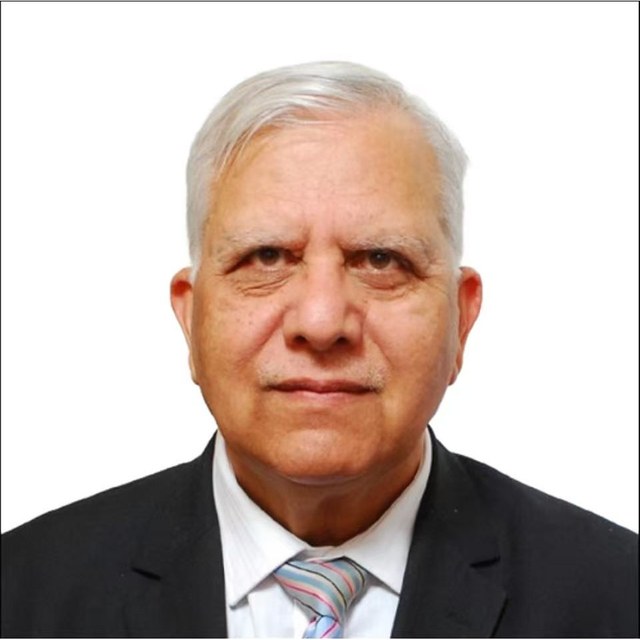
Zamir Ahmed Awan is the founder and Chair of the Global Silk Route Research Alliance, a think tank in Islamabad. He studied engineering at Shanghai University in the 1980s, and years later he went back to China as Pakistan's science counsellor in Beijing, from 2010 until 2016, working on science and higher education cooperation between the two countries.…