Pakistan’s astronaut mission and satellite programme mark a new phase in space efforts
Wire desk byline Sourced from Xinhua, Dawn, Arab News, Anadolu and Minute Mirror. Translated and abridged by the GSRRA Desk.

Pakistan’s space programme has entered a new phase with two payload specialist candidates training in China for a future Tiangong mission and SUPARCO launching five indigenous satellites in 16 months.

Pakistan’s human spaceflight plans and recent satellite launches point to a significant shift in the country’s space programme, with two Pakistani payload specialist candidates currently training in China for a future mission to the Tiangong space station, according to a report by The Express Tribune.
Muhammad Zeeshan Ali and Khurram Daud reached Beijing earlier this year to begin training as payload specialists. According to the report, they are being prepared not as symbolic passengers but as working scientists expected to carry out microgravity experiments, use specialised equipment and respond to emergencies in orbit. One of them is expected to become the first foreign national to board China’s Tiangong space station.
Training in China and access to Tiangong
The report said the two Pakistanis are receiving instruction in Chinese language, spacecraft systems, emergency procedures and orbital science. It added that whichever candidate ultimately flies and returns would become the most experienced human spaceflight professional Pakistan has produced.
Tiangong has been fully operational since 2022, after roughly two decades of development by China. The report noted that China was pushed to develop its own station after the United States, through the Wolf Amendment of 2011, barred NASA from bilateral cooperation with Chinese entities without explicit congressional approval.
It said China has since opened Tiangong to developing countries in Asia, Africa and Latin America, with the UN Office for Outer Space Affairs facilitating research agreements, and Pakistan becoming the first country in line under that arrangement.
The report said this cooperation could also create a research pathway for Pakistani universities, which would be able to submit experiments for future Tiangong missions and compete for payload space alongside researchers from wealthier countries.
SUPARCO’s recent satellite launches
Alongside the astronaut programme, the report highlighted what it described as a major acceleration in satellite activity by the Space and Upper Atmosphere Research Commission (SUPARCO). Over the past 16 months, SUPARCO has launched five indigenous satellites.
Three of these are electro-optical Earth observation satellites. EO-1 was launched in January 2025 and EO-2 in February 2026, and both are operational, according to the report. EO-3, described as the latest and most advanced of the three, was launched from the Taiyuan Satellite Launch Centre in China.
The report said EO-3 carries an AI-powered onboard computer capable of processing data in orbit in real time instead of sending raw imagery to a ground station for later handling. It also includes a Multi-Geometry Imaging Module to improve imaging accuracy, as well as an advanced energy storage system, both of which were developed indigenously.
According to the report, EO-3 has been placed in a low-inclination orbit, allowing it to pass over Pakistani territory more often than a polar orbit would. The report said this would strengthen Pakistan’s ability to monitor floods and other disasters by improving access to timely satellite data.
Reliance on Chinese launch support
All five satellites were launched on Chinese rockets. The report said Pakistan has not treated domestic launch capability as a budget priority. It cited aerospace propulsion engineer Dr Sarah Qureshi as saying, “If a satellite costs a million to build, the rocket to launch it costs billions.”
The report said Pakistan’s current approach is to develop payloads while relying on China for launch services. It added that the Strategic Plans Division Force now coordinates aerospace, defence and satellite work under one institutional structure, which the report said has reduced the inter-agency delays that previously slowed projects.
At the same time, the report said Dr Qureshi has pointed out that Pakistan still depends heavily on established Chinese designs instead of carrying out foundational research independently. It said this leaves open the question of how far the country’s programme is moving from assembly toward deeper technological development.
SUPARCO was founded in 1961, the report noted, but its progress was later constrained by politics, underfunding and brain drain. It said the current cooperation with China appears broader in scope, combining astronaut training, research access and satellite development in a way that could mark a new phase for Pakistan’s space ambitions.
Reference Link:- https://www.pakistantoday.com.pk/2026/05/03/pakistans-astronaut-mission-satellite-programme-mark-a-new-phase-in-space-efforts
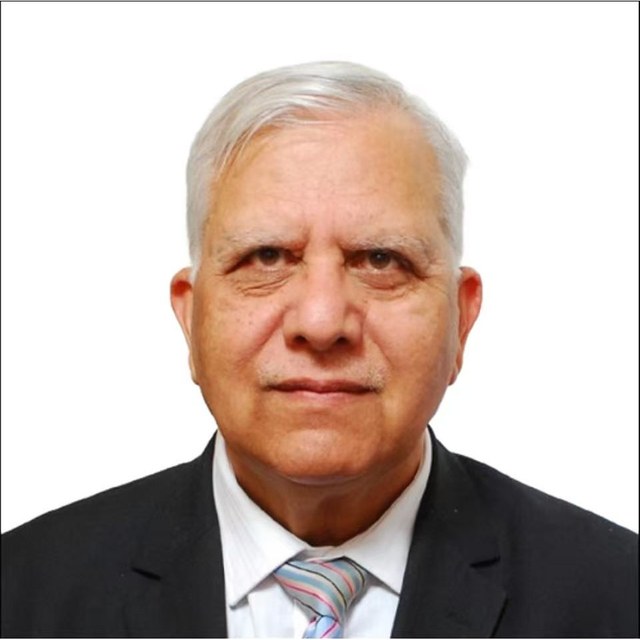
Zamir Ahmed Awan is the founder and Chair of the Global Silk Route Research Alliance, a think tank in Islamabad. He studied engineering at Shanghai University in the 1980s, and years later he went back to China as Pakistan's science counsellor in Beijing, from 2010 until 2016, working on science and higher education cooperation between the two countries.…