

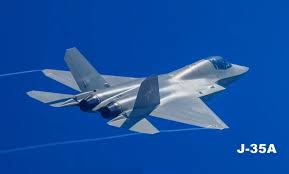
Islamabad’s reported induction of up to 12 Chinese J-35A stealth fighters alongside KJ-500 AEW&C aircraft and HQ-19 missile defence systems could dramatically reshape the South Asian military balance before India fields its own fifth-generation combat fleet.

Islamabad could receive an initial batch of between four and twelve Chinese J-35A fifth-generation stealth fighters later this year, a development that would instantly transform Pakistan into the first export operator of Beijing’s next-generation combat aviation ecosystem and potentially alter the South Asian airpower balance before India fields its own stealth fleet.
The prospect of Pakistan inducting operational fifth-generation aircraft as early as 2026 is generating escalating concern among regional military planners because the reported package extends beyond stealth fighters alone and reportedly includes the KJ-500 airborne early warning aircraft alongside the HQ-19 high-altitude missile defence system.
Speaking to Sputnik International, retired Pakistan Air Force Group Captain Sultan M. Hali described the potential acquisition as Pakistan’s entry into “the fifth-generation era with an entire combat ecosystem,” arguing that Islamabad’s interest is centred upon integrated network-centric warfare capability rather than merely procuring another combat aircraft platform.
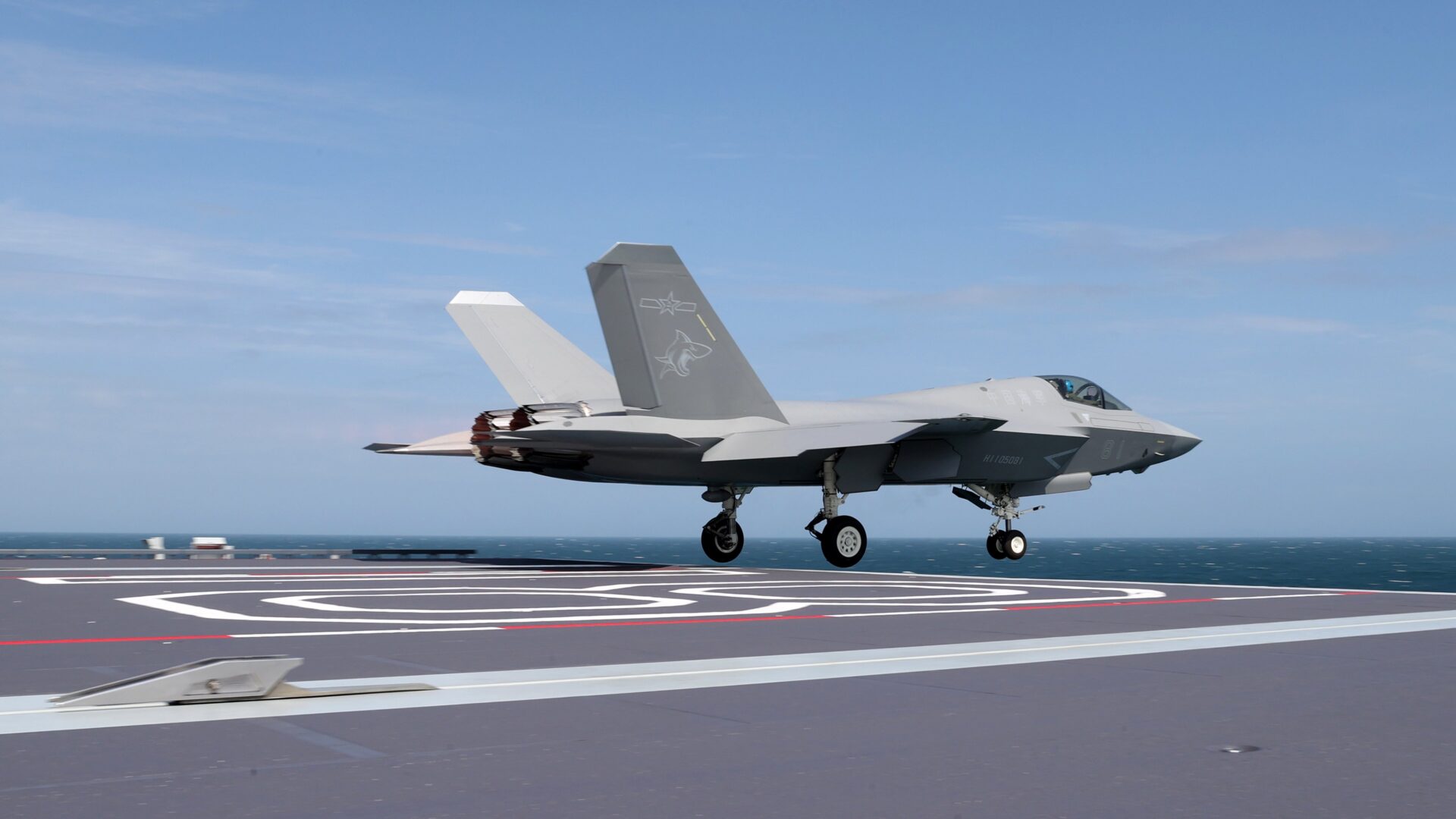
The strategic significance of the proposed delivery timeline is amplified by the absence of any operational stealth fighter currently serving within the Indian Air Force, potentially granting Pakistan a temporary qualitative advantage during the critical late-2020s regional force-transition period.
Although no officially confirmed procurement contract or binding delivery schedule has been publicly announced by Islamabad or Beijing, converging indicators involving export-oriented J-35AE footage, infrastructure preparation, and pilot-training speculation have intensified assessments that negotiations may already be in advanced stages.
The reported delivery of even a limited first tranche comprising four to twelve aircraft would provide the Pakistan Air Force with an immediate stealth penetration capability capable of reshaping operational planning across contested South Asian airspace and forcing accelerated Indian countermeasures.
The potential integration of J-35A stealth fighters with Chinese airborne surveillance architecture, long-range PL-15 missile systems, and layered ballistic missile defence networks would create the most sophisticated Chinese-origin integrated combat ecosystem ever exported to a foreign military power.
For Beijing, Pakistan’s possible induction of the J-35A would simultaneously function as a strategic showcase demonstrating China’s growing capacity to export complete fifth-generation combat ecosystems rather than merely individual weapons platforms to allied regional powers.
The emergence of Pakistan as the likely inaugural foreign operator of Chinese stealth fighter technology would also intensify geopolitical competition across the Indo-Pacific by accelerating India’s pressure to fast-track its Advanced Medium Combat Aircraft programme and strengthen counter-stealth detection capabilities.
If confirmed, the delivery timeline would position Pakistan among a highly exclusive group of nations operating operational fifth-generation stealth aircraft, dramatically elevating the Pakistan Air Force’s deterrence posture while reinforcing the long-term military-technical alliance between Islamabad and Beijing.
READ: China Unleashes J-35AE for Export as Pakistan Moves to Acquire 40 Jets, Challenging F-35 Dominance and Reshaping Indo-Pacific Airpower Balance
Pakistan’s Transition Toward Fifth-Generation Airpower Doctrine
Pakistan’s longstanding operational dependence upon Chinese-origin combat platforms has positioned the Pakistan Air Force as the most plausible inaugural export customer for Beijing’s emerging fifth-generation combat aviation ecosystem centred around the J-35A stealth fighter.
The institutional familiarity established through the co-development and local production of the JF-17 Thunder programme has already created extensive maintenance, training, logistics, and doctrinal integration pathways connecting Pakistan’s aerospace sector directly with Chinese defence-industrial infrastructure.
Pakistan’s more recent induction of the J-10CE multirole fighter has further accelerated interoperability with Chinese avionics architecture, electronic warfare protocols, beyond-visual-range missile systems, and network-centric combat management methodologies across frontline operational squadrons.
The reported J-35A acquisition, therefore, represents less a standalone procurement decision and more a progressive continuation of Pakistan’s broader transition toward Chinese-integrated aerospace warfare doctrine and long-term military-technical dependence upon Beijing’s defence export ecosystem.
Analysts assessing the programme argue that Pakistan’s existing Chinese-origin combat infrastructure substantially reduces integration risks compared with potential alternative export customers lacking compatible maintenance systems, pilot conversion experience, and established supply-chain relationships with Chinese aerospace manufacturers.
The aircraft itself would introduce Pakistan’s first operational stealth multirole combat capability, enabling reduced radar observability during offensive counter-air, suppression of enemy air defence, deep-strike, and high-threat reconnaissance missions across heavily contested operational theatres.
Twin-engine propulsion architecture combined with internal weapons bays and advanced low-observable shaping would significantly complicate adversary detection timelines, particularly during high-altitude penetration missions against integrated radar and missile defence networks.
The J-35A’s reported sensor fusion architecture, integrating active electronically scanned array radar, electro-optical targeting systems, and networked data-sharing capability, would dramatically enhance Pakistan’s capacity for coordinated air combat engagements under electronic warfare conditions.
Pakistan’s strategic interest, therefore, extends beyond simply replacing older airframes because the acquisition potentially transforms the Pakistan Air Force from a numerically focused defensive force into a technologically networked offensive aerospace capability operating within fifth-generation doctrinal frameworks.
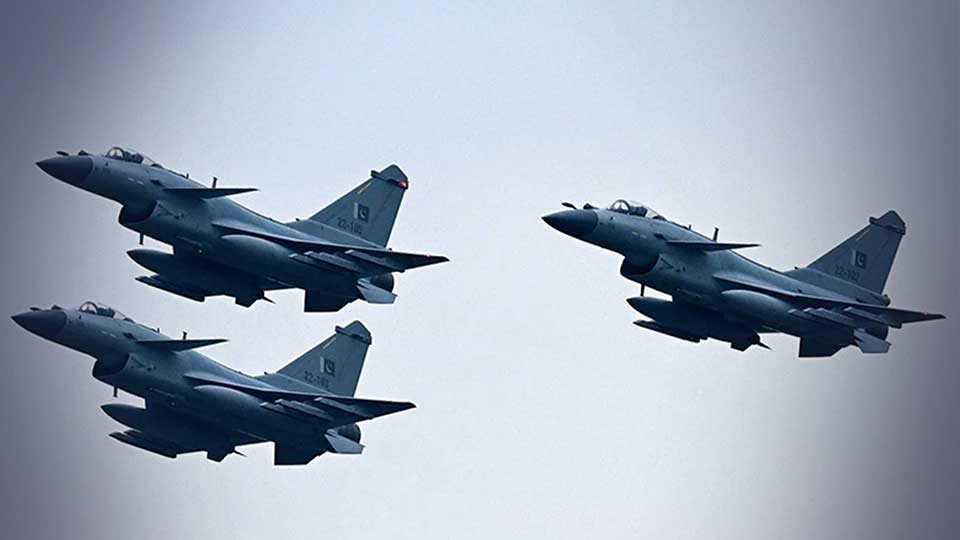
J-35A Capabilities and the Emerging Chinese Combat Ecosystem
The J-35A represents the export-oriented land-based evolution of Shenyang’s FC-31 and J-31 “Gyrfalcon” development lineage, designed to complement China’s heavier J-20 stealth fighter through a lighter multirole fifth-generation operational profile.
The aircraft reportedly possesses a combat radius approaching 1,200 kilometres alongside maximum speeds near Mach 1.8, providing sufficient reach for deep-strike operations, maritime interdiction missions, and contested air-superiority engagements across South Asian operational theatres.
Berita pertahanan Asia
Its internal weapons carriage configuration enables reduced radar cross-section during combat operations while accommodating advanced Chinese air-to-air missile systems, including the long-range PL-15 and short-range high-off-boresight PL-10 missile families.
The integration of the PL-15 beyond-visual-range missile substantially strengthens Pakistan’s potential first-detect and first-shoot capability because the missile’s extended engagement envelope could pressure adversary aircraft before reciprocal targeting solutions are established.
The broader strategic significance of the acquisition, however, lies in the proposed integration of the J-35A with China’s KJ-500 airborne early warning and control aircraft operating as the central airborne command-and-control node within the combat ecosystem.
The KJ-500 platform’s active electronically scanned array radar architecture would provide long-range airborne detection, battlespace coordination, target tracking, and networked sensor distribution supporting stealth aircraft operations across contested operational environments.
The parallel inclusion of the HQ-19 ballistic missile defence system would create an additional strategic layer because the interceptor reportedly possesses an exo-atmospheric engagement capability conceptually comparable to the American THAAD missile defence architecture.
Together, the J-35A, KJ-500, and HQ-19 would establish a multilayered detect-track-engage combat chain capable of coordinating stealth penetration missions while simultaneously enhancing strategic air defence resilience against ballistic missile threats.
Chinese defence export strategy increasingly emphasises integrated ecosystem sales rather than standalone platform transactions, allowing Beijing to lock export customers into long-term operational dependence encompassing maintenance, software upgrades, munitions integration, and doctrinal evolution.
Regional Airpower Implications for India and South Asia
The introduction of operational fifth-generation stealth fighters into Pakistan’s inventory would significantly alter the regional airpower equation because India currently lacks any operational stealth combat aircraft despite extensive investments in advanced fourth-and-a-half-generation capabilities.
India’s frontline combat inventory, centred around the Rafale, Su-30MKI, and Mirage 2000 fleets, presently delivers substantial conventional capability, yet these platforms remain vulnerable to stealth-enabled first-strike dynamics emerging within fifth-generation combat environments.
Strategic assessments increasingly suggest that Pakistan could obtain a temporary qualitative advantage, potentially lasting seven to ten years, before India’s indigenous Advanced Medium Combat Aircraft programme achieves meaningful operational maturity during the mid-2030s timeframe.
The operational challenge facing the Indian Air Force would not merely involve confronting stealth aircraft individually but adapting to a broader Chinese-derived network-centric combat ecosystem integrating airborne command platforms, missile defence systems, and long-range air combat architecture.
Indian planners would likely be compelled to dedicate greater operational resources toward defensive counter-air missions, distributed sensor coverage, and layered detection networks during the opening phases of any high-intensity conflict scenario involving stealth penetration threats.
The J-35A’s low-observable characteristics could particularly complicate Indian suppression-of-enemy-air-defence calculations because traditional radar acquisition timelines may prove insufficient against coordinated network-enabled stealth operations supported by airborne command platforms.
Pakistan’s acquisition would additionally intensify pressure upon India’s domestic aerospace industry because delays affecting indigenous fifth-generation fighter development could widen the technological gap separating future Indian and Pakistani combat aviation capability trajectories.
The strategic signalling dimension also carries substantial importance because Pakistan’s emergence as the first export operator of Chinese fifth-generation technology would reinforce Beijing’s credibility as an alternative advanced aerospace supplier competing directly against Western and Russian defence manufacturers.
Regional military planners increasingly interpret the programme as part of a broader transition toward technologically networked Indo-Pacific air warfare environments where survivability, electronic integration, stealth penetration, and distributed sensor architecture outweigh traditional numerical force advantages.
The resulting competitive dynamic could accelerate South Asia’s transition into a fifth-generation airpower competition involving stealth capability acquisition, network-centric warfare integration, advanced missile defence procurement, and expanded investment in counter-stealth detection infrastructure.
Financial Constraints, Infrastructure Challenges, and Delivery Uncertainty
Despite mounting speculation surrounding potential deliveries beginning in 2026, substantial uncertainty continues surrounding programme financing, infrastructure readiness, operational integration timelines, and the absence of formal public confirmation from either Beijing or Islamabad.
Pakistan’s defence budget constraints remain strategically significant because sustaining operational fifth-generation combat capability requires extensive long-term investment extending far beyond initial aircraft acquisition costs alone.
The establishment of stealth-compatible maintenance infrastructure, including climate-controlled hangars, hardened aircraft shelters, low-observable coating support facilities, and secure networked datalink architecture, would require substantial capital expenditure throughout multiple operational bases.
Pilot conversion and tactical development programmes additionally impose considerable resource demands because transitioning from fourth-generation operational doctrine toward fully network-centric fifth-generation warfare requires prolonged training and doctrinal restructuring.
Some defence assessments have suggested the possibility of third-party financial assistance potentially involving Gulf partners seeking closer alignment with Chinese defence-industrial ecosystems, although no officially verifiable evidence presently confirms external funding arrangements.
Pakistan’s Defence Minister Khawaja Asif previously characterised earlier stealth fighter acquisition reports as “media chatter” beneficial primarily for Chinese defence export marketing efforts, highlighting continuing ambiguity surrounding official procurement commitments.
The brief appearance and subsequent deletion of a Pakistani government social-media post referencing approximately forty J-35 fighters alongside KJ-500 and HQ-19 systems further intensified speculation while simultaneously underscoring the programme’s politically sensitive nature.
Chinese state broadcaster CCTV’s recent broadcast footage displaying an export-configured J-35AE variant lacking People’s Liberation Army markings nevertheless reinforced widespread assessments that Beijing is actively preparing the platform for foreign customer introduction.
The most realistic operational scenario presently involves limited initial deliveries between 2026 and 2027 followed by gradual capability expansion as infrastructure maturity, pilot readiness, logistics sustainability, and funding availability progressively improve over subsequent years.
READ: Pakistan’s KJ-500 AEW&C Could Cripple India’s Air Superiority as China Builds Islamabad a New Air War Network
Strategic Consequences for China’s Defence Export Ambitions
A successful J-35A export programme involving Pakistan would carry implications extending well beyond South Asia because it would establish China as the first non-Western power exporting an operational fifth-generation stealth fighter ecosystem internationally.
The strategic symbolism surrounding Pakistan’s potential role as Beijing’s inaugural fifth-generation export customer would significantly strengthen China’s broader defence-industrial influence across the Middle East, Africa, and parts of Southeast Asia seeking alternatives to Western procurement restrictions.
Export success would additionally validate China’s long-term strategy of coupling advanced aerospace platforms with integrated command-and-control architecture, missile defence systems, and network-centric operational ecosystems tailored for politically aligned strategic partners.
The J-35A programme’s international visibility is already generating interest among defence observers, assessing whether additional states, including Saudi Arabia and Egypt, may eventually pursue similar ecosystem-oriented procurement arrangements centred around Chinese aerospace technology.
Beijing’s willingness to export advanced stealth capability also reflects growing confidence within China’s domestic aerospace sector regarding production scalability, avionics maturity, weapons integration, and long-term sustainment support for high-end combat aviation systems.
For Pakistan, the acquisition would reinforce its strategic alignment with Beijing while simultaneously reducing dependence upon Western-origin aerospace systems historically vulnerable to sanctions pressure, export restrictions, and geopolitical conditionality.
The programme additionally deepens military-technical interdependence between both states because future upgrades, software integration, weapons compatibility, maintenance cycles, and operational evolution would remain tightly connected to Chinese defence-industrial support networks.
The financial dimensions of any eventual procurement package could prove substantial because a full ecosystem involving stealth fighters, airborne early warning aircraft, missile defence systems, infrastructure modernisation, and sustainment support would likely reach several billion United States dollars.
Even a conservative package valued at US$5 billion would translate into approximately RM19 billion, underscoring the programme’s immense strategic and economic significance for Pakistan’s long-term defence posture.
Although formal confirmation remains absent as of May 2026, the convergence of export-oriented signalling, operational preparation indicators, and sustained expert assessments strongly suggests that Pakistan’s pursuit of the J-35A has evolved into one of the Indo-Pacific’s most consequential emerging military aviation developments.
Reference Link:- https://defencesecurityasia.com/en/pakistan-j35-stealth-fighter-2026-china-india-airpower-shift/