
China-Taiwan: Future Trends of Cross-Strait Ties. 中国与台湾:两岸关系的未来走向.

(下边有中文翻译请继续看到底。 谢谢。)
In diplomacy, some meetings are valuable because they solve problems. Others matter because they reopen the possibility of solving them. The April 10 meeting in Beijing between Xi Jinping and Kuomintang Chair Cheng Li-wun belongs firmly to the second category. It was the first such meeting between the leaders of the Communist Party of China and the Kuomintang in a decade, and in a tense international climate, that alone made it consequential. More importantly, both sides used the occasion to send a message that has become too rare in recent cross-Strait discourse: peace, dialogue, and development must again become the central language of relations across the Taiwan Strait.
That message deserves attention. In the public portion of the meeting, Xi emphasized that people on both sides of the Strait want peace, improved relations, and better lives, and said Beijing was willing to strengthen exchanges and dialogue with political parties and people from all sectors in Taiwan based on adherence to the 1992 Consensus and opposition to “Taiwan independence.” Cheng, for her part, presented the visit as a mission for “cross-Strait peace and better livelihoods,” arguing that the Strait should not become a zone of conflict or a chessboard for outside interference, but a bridge of kinship, civilization, and hope. This was not merely ceremonial rhetoric. It was a deliberate attempt to move the conversation away from estrangement and back toward a framework of managed differences, practical cooperation, and long-term stability.

The significance of the meeting lies precisely there. For years, cross-Strait relations have been defined by distrust, military signaling, mutual suspicion, and political hardening. In such an environment, face-to-face contact between senior political actors acquires real strategic value. Cheng said the meeting demonstrated “genuine feeling, candour, and sincerity” and described it as a “successful first step.” Xi, meanwhile, called it significant not only for party-to-party ties but for cross-Strait relations more broadly. When channels of communication narrow, risk rises. When channels reopen, even modestly, the immediate gain is not a dramatic transformation but the reduction of miscalculation. That is no small achievement in today’s world.
What makes this visit especially notable is that it was not framed only in abstract political terms. Cheng laid out a practical agenda: preserve Chinese history and culture, expand people-to-people and economic exchanges, and build a better cross-Strait future centered on livelihoods. She also proposed five more concrete directions: promote peaceful development, restore consultation mechanisms, safeguard peace and mutual benefit, expand Taiwan’s international participation based on political trust, and continue using the CPC-KMT communication platform. Those proposals gave the meeting texture. They suggested that peace is not just a slogan but something that can be institutionalized through mechanisms, habits of contact, sectoral cooperation, and repeated communication.
To understand why Beijing places such importance on this kind of meeting, one has to understand the Taiwan issue as China sees it. From the Chinese perspective, Taiwan is not a newly invented geopolitical dispute, nor simply an issue of contemporary strategy. It is an unresolved question left by history. The official Chinese position holds that Taiwan has belonged to China since ancient times; that it was ceded to Japan in 1895 under the unequal Treaty of Shimonoseki; that the 1943 Cairo Declaration and the 1945 Potsdam Proclamation provided for Taiwan’s restoration to China after Japan’s defeat; and that after 1949 the issue became an unfinished legacy of the Chinese civil war rather than a case of two separate sovereign states. In this telling, the Taiwan question is therefore internal to China, even though it has major international consequences.
This Chinese narrative is also anchored in post-1971 international diplomacy. Beijing points to UN General Assembly Resolution 2758, adopted on October 25, 1971, as the decision that restored the lawful rights of the People’s Republic of China in the United Nations and recognized its government as the only legitimate representative of China at the UN. Chinese official statements interpret that resolution as confirming the one-China principle in the international system and rejecting formulations such as “two Chinas” or “one China, one Taiwan.” Whether others frame the matter differently is a separate debate; what matters for understanding the Chinese position is that Beijing sees 2758 as a foundational legal and political marker, not a peripheral reference.
From this standpoint, the 1992 Consensus becomes essential. In the mainland’s official understanding, its core meaning is that both sides of the Strait belong to one China and can pursue dialogue on that basis. Chinese sources present it as the political anchor that made practical cross-Strait exchanges possible and the key that unlocked consultation mechanisms in the 1990s and beyond. Cheng’s remarks echoed that logic directly, arguing that the political foundation for renewed dialogue remains adherence to the 1992 Consensus and opposition to Taiwan independence. For Beijing, then, the meeting was not simply about goodwill. It was about reaffirming the minimum political basis on which peaceful development can resume.
History also explains why this meeting stirred such interest. Cheng recalled Lien Chan’s 2005 “Journey of Peace” as an ice-breaking moment. She further noted that the two parties later organized 11 Cross-Strait Forums, reached more than 100 common opinions, and that during the Kuomintang’s eight years in office, the two sides signed 23 agreements that still benefit people on both sides. She also pointed to earlier periods in which Taiwan participated in forums such as the World Health Assembly and ICAO in an appropriate capacity under conditions of political mutual trust. The Chinese argument, in effect, is that the record already exists: when the political foundation is stable, practical gains follow.
That is why the future course of action proposed after this meeting matters so much. The first task should be to turn symbolic contact into regularized contact. Consultation mechanisms do not need to solve every dispute immediately; they need to prevent silence from becoming policy. The second should be to expand those areas of cooperation that are hardest to oppose on human grounds: trade, youth exchanges, culture, health, eldercare, disaster prevention, environmental cooperation, and emerging technologies such as artificial intelligence. Cheng’s emphasis on livelihoods was politically astute. Durable peace is not sustained by declarations alone. It is sustained when ordinary people see that calmer relations mean more jobs, more markets, more exchanges, less fear, and a wider horizon for the next generation.
A third area is confidence-building through practical accommodation. Xi welcomed Taiwanese agricultural and fishery products to the mainland market and expressed support for broader exchanges and development opportunities, especially for youth. Cheng said that proposals concerning Taiwan’s needs, including participation in certain international organizations and regional economic integration, received a positive response in principle. These are sensitive matters, but sensitivity is not an argument for paralysis. From the Chinese perspective, expanding Taiwan’s participation in appropriate international spaces under the one-China framework can be part of trust-building rather than a concession to separatism. That is exactly why the question of political mutual trust featured so prominently in Cheng’s agenda.
The deeper positive outcome one may reasonably expect from this visit is not immediate political settlement. It is a change in direction. Xi’s own language, as relayed publicly, suggested patience: issues should be handled one by one, and the road should be walked step by step. Cheng made much the same point. That gradualism matters. It acknowledges that the Strait contains real differences in system, identity, and political experience, while still insisting that such differences need not justify permanent confrontation. Indeed, Xi’s public position was that differences in social systems should not be used as an excuse for secession. China’s 2022 white paper made a similar argument, stating that distinct systems need not be an obstacle to reunification. Within the Chinese narrative, then, the path forward is not denial of difference but management of difference under a broader national framework.
There is also a larger regional point here. Cheng warned against allowing the Taiwan Strait to become a chessboard for external interference. That line is fully consistent with Beijing’s long-standing view that outside powers complicate, rather than resolve, the Taiwan question. Whether one agrees with that view or not, there is wisdom in resisting the reduction of the Strait to a proxy theater of great-power rivalry. The people who would bear the highest cost of conflict are not commentators abroad. They are the people living on both sides of the Strait. Any political approach that lowers that risk deserves serious consideration.
This is why the visit should be received with cautious optimism, not cynical dismissal. It did not erase disagreement. It did not produce a final framework. It did not suddenly make the hard questions easy. But it did something that is urgently needed: it restored the idea that peace can still be pursued through political will, historical awareness, and practical steps. It reminded observers that cross-Strait peace is not an abstract dream. It is a policy choice, and one that can be strengthened through institutions, exchanges, and mutual respect.
At a time when many had grown pessimistic, this meeting reopened a political door. That alone is meaningful. If both sides now build patiently on what was said in Beijing—on dialogue, common historical memory, practical cooperation, and the belief that peace serves the people better than estrangement—then Cheng Li-wun’s visit may be remembered not as an isolated event, but as the beginning of a steadier, wiser, and more hopeful phase in cross-Strait relations.
中国与台湾:两岸关系的未来走向.
外交中,有些会晤之所以重要,是因为它们解决了问题;还有一些会晤之所以重要,是因为它们重新开启了解决问题的可能性。4月10日习近平与中国国民党主席程丽文在北京举行的会晤,显然属于后者。这是十年来中国共产党与中国国民党领导人之间首次举行此类会晤,而在当前紧张的国际局势下,仅这一点就足以使其具有重要意义。更重要的是,双方借此机会传递了一个在当前两岸话语中已变得十分稀缺的信息:和平、对话与发展,必须重新成为两岸关系的核心语言。
这一信息值得高度关注。在会晤的公开部分,习近平强调,两岸同胞都希望和平、希望关系改善、希望过上更好的生活,并表示大陆愿在坚持“九二共识”、反对“台独”的基础上,加强同台湾各政党、各界人士的交流与对话。程丽文则将此次访问定位为一次“促进两岸和平、增进民生福祉”的行动,认为台湾海峡不应成为冲突地带,也不应成为外部势力干预的棋盘,而应成为亲情、文明与希望的桥梁。这并非只是礼节性表态,而是一种有意识地将两岸讨论从疏离拉回到“管控分歧、务实合作、长期稳定”框架之中的努力。
此次会晤的重要性,恰恰就在于此。多年来,两岸关系一直被不信任、军事威慑、相互猜疑和政治强硬所定义。在这样的环境下,高层政治人物之间面对面的接触,本身就具有真实的战略价值。程丽文表示,此次会晤展现出“真情、坦率与诚意”,并称其为“成功的第一步”。习近平则指出,这次会晤不仅对两党关系重要,对整个两岸关系也具有广泛意义。当沟通渠道收窄,误判风险就会上升;而当沟通渠道重新开启,哪怕只是有限恢复,其直接收益也在于降低误判可能性。在当今世界,这绝非小事。
尤其值得注意的是,这次访问并不只是停留在抽象政治层面。程丽文提出了一个务实议程:弘扬中华历史与文化,扩大民间交流与经贸往来,打造以民生为中心的更好两岸未来。她还进一步提出五项更具体的方向:推动和平发展、恢复协商机制、维护和平与互利、在政治互信基础上扩大台湾的国际参与,以及继续发挥国共沟通平台作用。这些主张使这次会晤具有更强的现实内容,也表明和平不应只是口号,而应通过制度安排、接触习惯、领域合作与持续沟通加以落实。
要理解北京为何如此重视此类会晤,就必须理解中国如何看待台湾问题。在中国的视角中,台湾问题并不是一个新近制造的地缘政治争端,也不只是当代战略问题,而是一个历史遗留的未竟问题。中国官方立场认为,台湾自古属于中国;1895年在不平等的《马关条约》中被割让给日本;1943年的《开罗宣言》和1945年的《波茨坦公告》规定了日本战败后台湾应归还中国;而1949年后,台湾问题成为中国内战尚未完全结束所遗留的问题,而不是两个主权国家并存的问题。按照这一叙述,台湾问题本质上属于中国内政,尽管它具有重大的国际影响。
这一中国叙事同样建立在1971年以后的国际外交现实之上。北京援引1971年10月25日通过的联合国大会第2758号决议,认为该决议恢复了中华人民共和国在联合国的合法权利,并确认中华人民共和国政府是中国在联合国的唯一合法代表。中国官方表述将该决议视为国际体系中确认一个中国原则、否定“两个中国”或“一中一台”主张的重要法律与政治标志。其他方面或许对此有不同解读,但若要理解中国立场,关键在于:北京把第2758号决议视为基础性、而非边缘性的依据。
从这一立场出发,“九二共识”就具有关键意义。在大陆官方理解中,其核心在于海峡两岸同属一个中国,并在此基础上开展对话。中方资料将其描述为促成两岸务实交流的政治锚点,也是打开上世纪90年代以来协商机制的钥匙。程丽文的讲话也直接呼应了这一逻辑,强调恢复对话的政治基础仍然是坚持“九二共识”、反对“台独”。因此,对北京而言,此次会晤不仅是善意表达,更是对和平发展最低政治基础的再次确认。
历史同样解释了为何此次会晤引起广泛关注。程丽文提到连战2005年的“和平之旅”,将其视为破冰时刻。她还指出,随后两党共举办了11届两岸经贸文化论坛,达成100多项共同意见;国民党执政八年期间,两岸签署了23项协议,至今仍惠及两岸民众。她还提到,在政治互信存在的条件下,台湾曾以适当身份参与世界卫生大会和国际民航组织等平台。换言之,中国方面的论点是:已有历史经验表明,只要政治基础稳定,务实成果就会出现。
正因如此,会后提出的未来行动方向尤为重要。首要任务应是将象征性接触转化为常态化接触。协商机制未必需要立即解决所有争议,但至少应避免“沉默”本身变成一种政策。第二项任务,则是扩大那些在人道层面最难被反对的合作领域:贸易、青年交流、文化、卫生、养老、灾害预防、环境合作以及人工智能等新兴技术。程丽文强调“民生”,这一点在政治上是颇具分寸的。持久和平不能仅靠声明维系,而必须让普通民众切实看到,关系缓和意味着更多就业、更多市场、更多交流、更少恐惧,以及为下一代打开更广阔的发展空间。
第三个方向,是通过务实安排来建立互信。习近平表示欢迎台湾农渔产品进入大陆市场,并支持扩大交流与发展机会,尤其是为青年创造更多空间。程丽文则称,关于台湾现实需要的一些建议,包括在特定国际组织及区域经济整合中的参与,已在原则上得到积极回应。这些议题当然敏感,但“敏感”并不构成停滞不前的理由。从中国立场看,在一个中国框架下扩大台湾在适当国际空间中的参与,可以成为增进互信的一部分,而不是对分裂主义的让步。这也正是为什么“政治互信”在程丽文议程中占据如此突出的位置。
此次访问可能带来的更深层积极结果,并不是立刻实现政治解决,而是推动方向的转变。习近平在公开表述中展现出一种耐心:问题要一个一个处理,路要一步一步走。程丽文也表达了相似看法。这种渐进主义十分重要。它承认海峡两岸在制度、身份认同和政治经验上确实存在差异,但同时坚持认为,这些差异不应成为永久对抗的理由。事实上,习近平公开表态认为,社会制度差异不应被当作分裂的借口。中国2022年发布的白皮书也持类似观点,指出不同制度并不必然妨碍统一。在中国叙事中,未来道路并不是否认差异,而是在更广泛的国家框架下管理差异。
此外,此次会晤还有更大的地区层面意义。程丽文警告,不应让台湾海峡成为外部干预的棋盘。这一表态与北京长期以来的观点高度一致,即外部势力只会使台湾问题更加复杂,而非帮助解决。无论外界是否完全认同这一看法,至少有一点值得重视:不应将台湾海峡简化为大国竞争的代理战场。真正承受冲突代价的,不是海外评论者,而是生活在海峡两岸的人民。任何能够降低这一风险的政治路径,都值得认真对待。
正因如此,此次访问应当以谨慎乐观的态度来看待,而不是以犬儒主义一概否定。它没有消除分歧,没有形成最终框架,也没有让所有难题在一夜之间变得容易。但它完成了一件当下极为迫切的事情:重新唤起人们对于“和平仍然可以通过政治意志、历史认知与务实步骤来追求”的信念。它提醒观察者,两岸和平并不是抽象的梦想,而是一项可以通过制度、交流与相互尊重不断强化的政策选择。
在许多人已经日益悲观的时刻,这场会晤重新打开了一扇政治之门。这本身就意义重大。如果双方能够在北京所表达的基础上继续耐心推进——围绕对话、共同历史记忆、务实合作,以及“和平比疏离更符合人民利益”的信念持续努力——那么程丽文此次访问,也许终将被视为一个更稳定、更理性、更有希望的两岸关系新阶段的开端,而不仅仅是一场孤立事件。
( 注意: 本文是用AI翻译的,或有误差。请以原版英文为准。谢谢。)
Reference Link:- https://thinktank.pk/2026/04/14/china-taiwan-future-trends-of-cross-strait-ties/
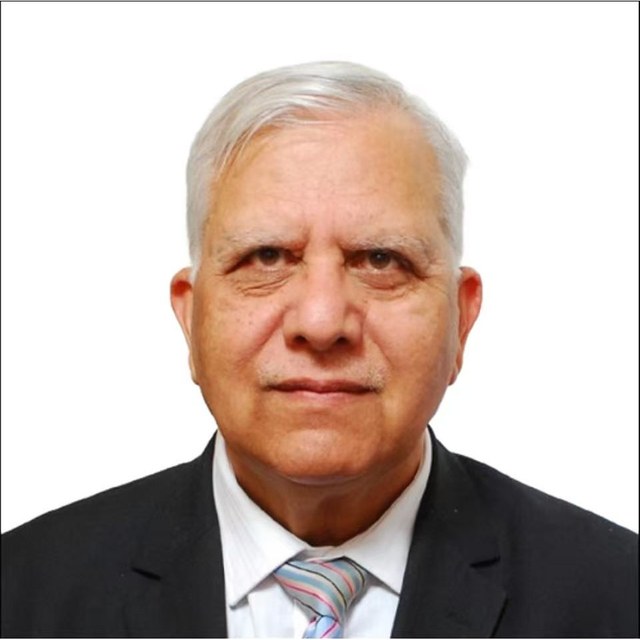
Zamir Ahmed Awan is the founder and Chair of the Global Silk Route Research Alliance, a think tank in Islamabad. He studied engineering at Shanghai University in the 1980s, and years later he went back to China as Pakistan's science counsellor in Beijing, from 2010 until 2016, working on science and higher education cooperation between the two countries.…




Absolutely, it’s good to see leaders on both sides acknowledging the potential for dialogue, even if it’s just to keep that channel open.
支持台湾回复祖国。 Support quick re-unification of Taiwan with Mainland.